Institute of Molecular Virology, Ulm University Medical Center, Ulm 89081, Germany.
Molecular Biology Division, Biomedical Center, Ludwig-Maximilians-University Munich, Planegg-Martinsried 82152, Germany.
Nucleic Acids Res. 2020 Nov 4;48(19):10890-10908. doi: 10.1093/nar/gkaa832.
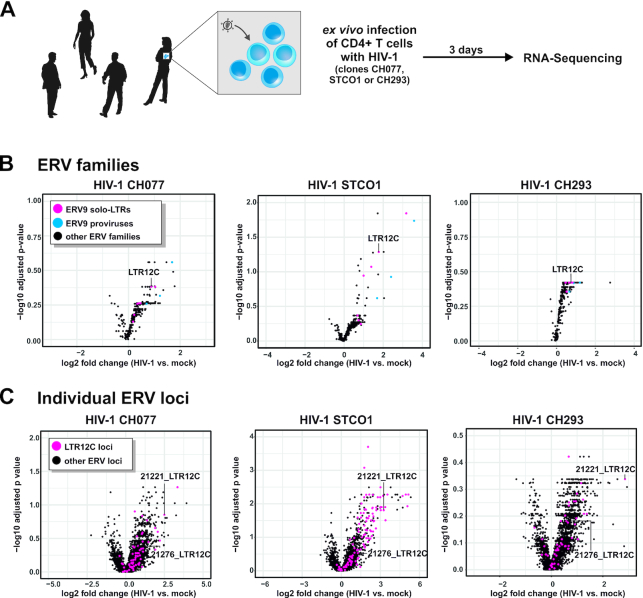
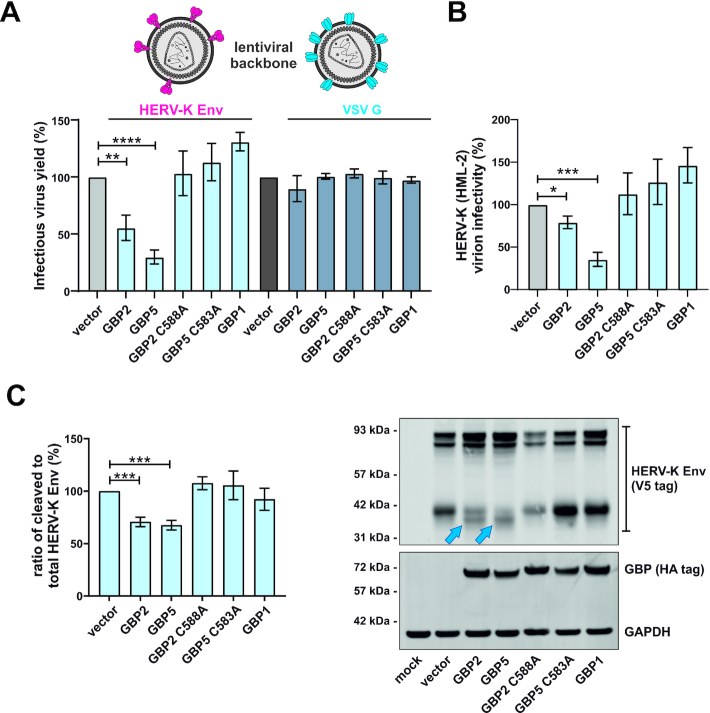
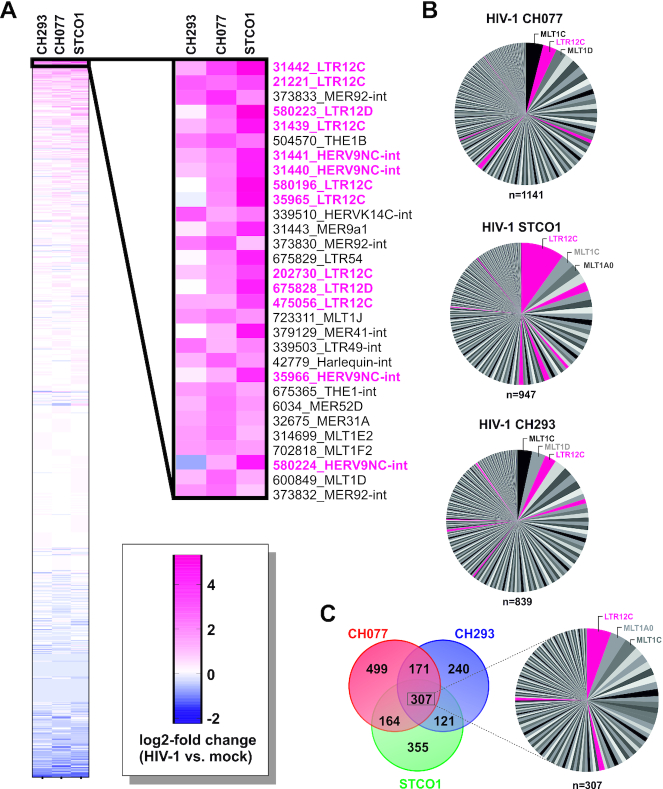
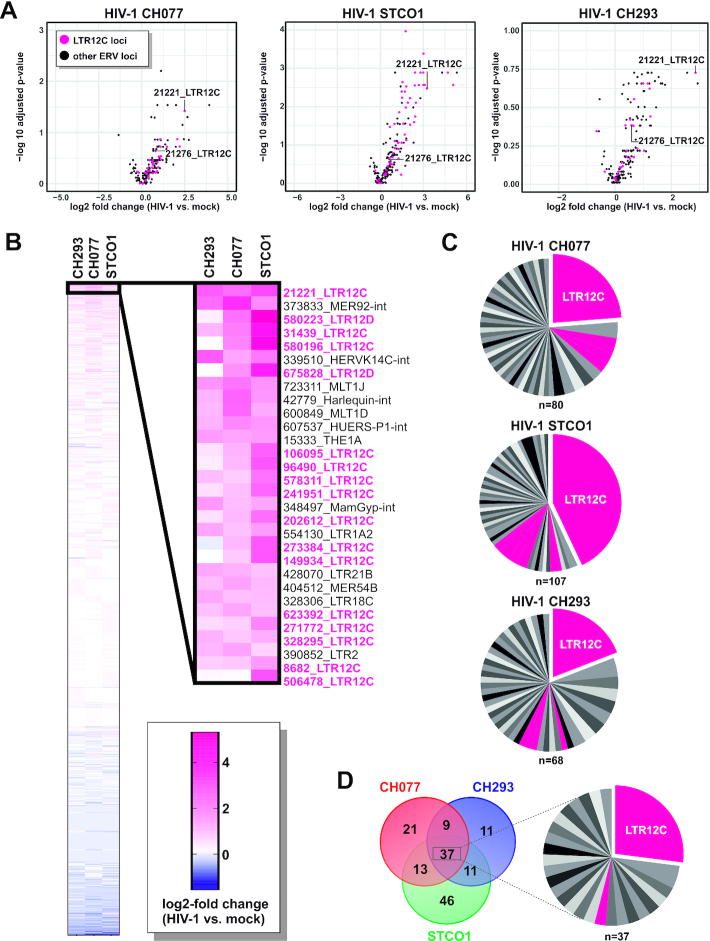
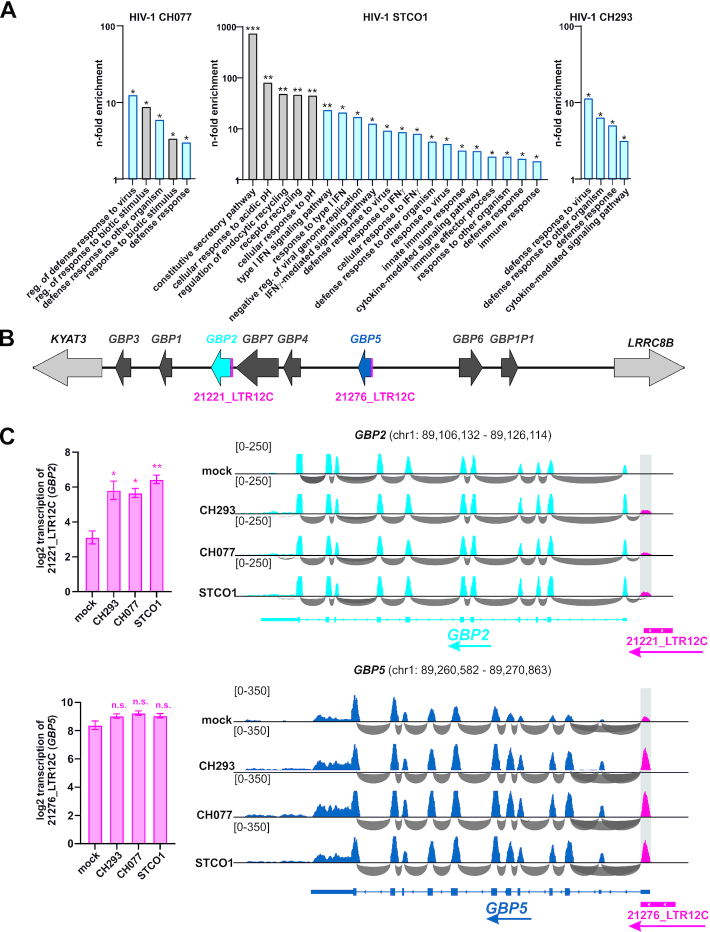
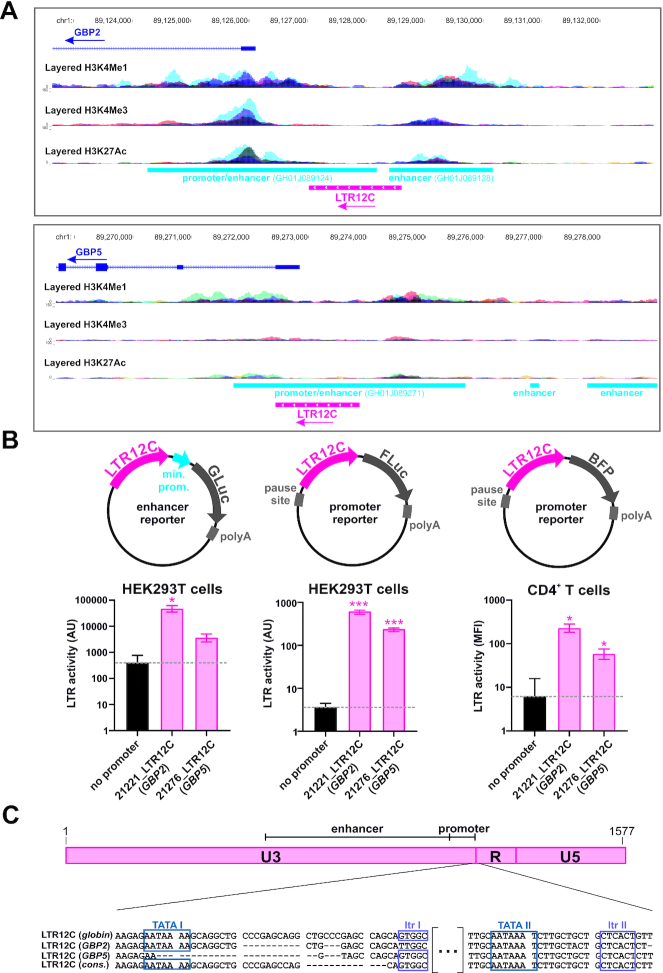
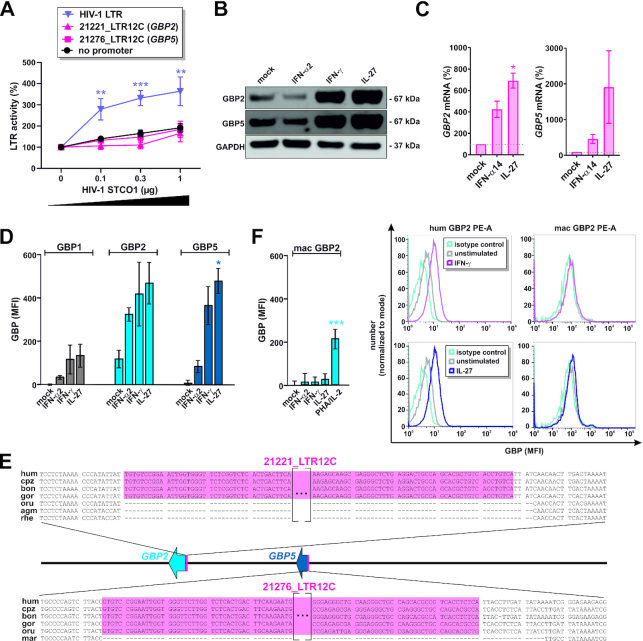
Although endogenous retroviruses (ERVs) are known to harbor cis-regulatory elements, their role in modulating cellular immune responses remains poorly understood. Using an RNA-seq approach, we show that several members of the ERV9 lineage, particularly LTR12C elements, are activated upon HIV-1 infection of primary CD4+ T cells. Intriguingly, HIV-1-induced ERVs harboring transcription start sites are primarily found in the vicinity of immunity genes. For example, HIV-1 infection activates LTR12C elements upstream of the interferon-inducible genes GBP2 and GBP5 that encode for broad-spectrum antiviral factors. Reporter assays demonstrated that these LTR12C elements drive gene expression in primary CD4+ T cells. In line with this, HIV-1 infection triggered the expression of a unique GBP2 transcript variant by activating a cryptic transcription start site within LTR12C. Furthermore, stimulation with HIV-1-induced cytokines increased GBP2 and GBP5 expression in human cells, but not in macaque cells that naturally lack the GBP5 gene and the LTR12C element upstream of GBP2. Finally, our findings suggest that GBP2 and GBP5 have already been active against ancient viral pathogens as they suppress the maturation of the extinct retrovirus HERV-K (HML-2). In summary, our findings uncover how human cells can exploit remnants of once-infectious retroviruses to regulate antiviral gene expression.
虽然内源性逆转录病毒(ERVs)已知含有顺式调控元件,但它们在调节细胞免疫反应中的作用仍知之甚少。我们采用 RNA-seq 方法,发现在 HIV-1 感染原代 CD4+T 细胞时,ERV9 谱系的几个成员,特别是 LTR12C 元件被激活。有趣的是,HIV-1 诱导的含有转录起始位点的 ERV 主要位于免疫基因附近。例如,HIV-1 感染激活了干扰素诱导基因 GBP2 和 GBP5 上游的 LTR12C 元件,这些基因编码广谱抗病毒因子。报告基因实验表明,这些 LTR12C 元件在原代 CD4+T 细胞中驱动基因表达。与此一致的是,HIV-1 感染通过激活 LTR12C 内的一个隐蔽转录起始位点,触发了独特的 GBP2 转录本变体的表达。此外,用 HIV-1 诱导的细胞因子刺激会增加人类细胞中 GBP2 和 GBP5 的表达,但在天然缺乏 GBP5 基因和 GBP2 上游 LTR12C 元件的食蟹猴细胞中则不会。最后,我们的研究结果表明,GBP2 和 GBP5 已经针对古老的病毒病原体发挥作用,因为它们抑制了已灭绝的逆转录病毒 HERV-K(HML-2)的成熟。总之,我们的研究结果揭示了人类细胞如何利用曾经感染性的逆转录病毒的残余物来调节抗病毒基因表达。