The Roslin Institute & Royal (Dick) School of Veterinary Studies, University of Edinburgh, Easter Bush, Midlothian EH25 9RG, UK.
Int J Mol Sci. 2020 Oct 2;21(19):7299. doi: 10.3390/ijms21197299.
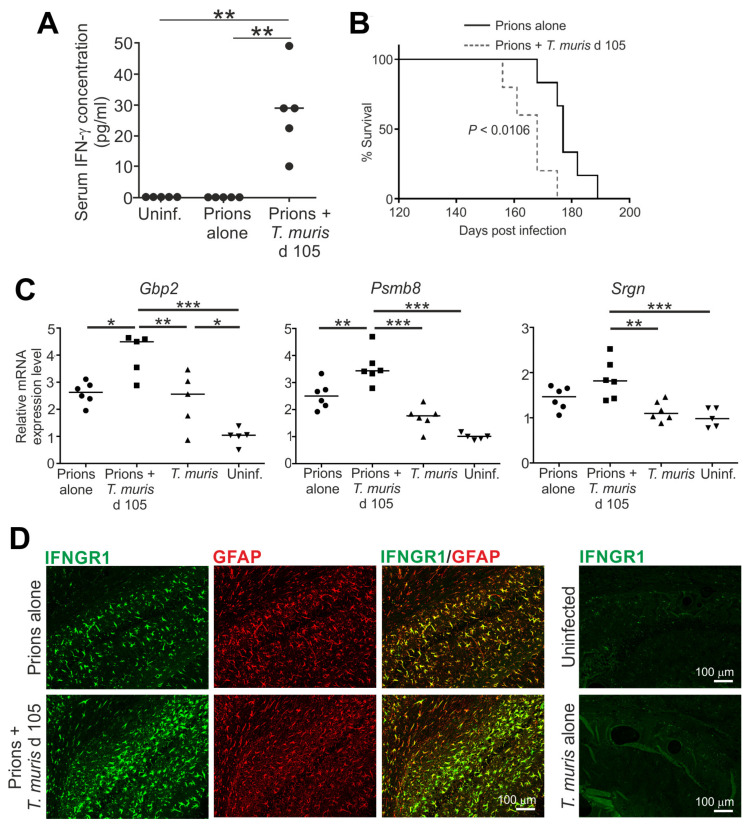
Prion diseases are a unique group of infectious chronic neurodegenerative disorders to which there are no cures. Although prion infections do not stimulate adaptive immune responses in infected individuals, the actions of certain immune cell populations can have a significant impact on disease pathogenesis. After infection, the targeting of peripherally-acquired prions to specific immune cells in the secondary lymphoid organs (SLO), such as the lymph nodes and spleen, is essential for the efficient transmission of disease to the brain. Once the prions reach the brain, interactions with other immune cell populations can provide either host protection or accelerate the neurodegeneration. In this review, we provide a detailed account of how factors such as inflammation, ageing and pathogen co-infection can affect prion disease pathogenesis and susceptibility. For example, we discuss how changes to the abundance, function and activation status of specific immune cell populations can affect the transmission of prion diseases by peripheral routes. We also describe how the effects of systemic inflammation on certain glial cell subsets in the brains of infected individuals can accelerate the neurodegeneration. A detailed understanding of the factors that affect prion disease transmission and pathogenesis is essential for the development of novel intervention strategies.
朊病毒病是一组独特的传染性慢性神经退行性疾病,目前尚无治愈方法。尽管朊病毒感染不会刺激感染个体的适应性免疫反应,但某些免疫细胞群体的作用可能对疾病发病机制产生重大影响。感染后,外周获得的朊病毒靶向次级淋巴器官(SLO)中的特定免疫细胞,如淋巴结和脾脏,对于疾病向大脑的有效传播至关重要。一旦朊病毒到达大脑,与其他免疫细胞群体的相互作用可以提供宿主保护或加速神经退行性变。在这篇综述中,我们详细阐述了炎症、衰老和病原体共感染等因素如何影响朊病毒病的发病机制和易感性。例如,我们讨论了特定免疫细胞群体的丰度、功能和激活状态的变化如何通过外周途径影响朊病毒病的传播。我们还描述了系统性炎症如何影响感染个体大脑中某些神经胶质细胞亚群,从而加速神经退行性变。详细了解影响朊病毒病传播和发病机制的因素对于开发新的干预策略至关重要。