The Seventh People's Hospital of Shanghai University of Traditional Chinese Medicine, 358 Datong Road, Pudong, Shanghai, 200137, China.
Shanghai University of Traditional Chinese Medicine, 1200 Cailun Road, Shanghai, 201203, China.
BMC Complement Med Ther. 2020 Oct 6;20(1):298. doi: 10.1186/s12906-020-03086-0.
Diabetic retinopathy (DR) is a common and serious microvascular complication of diabetes. Taohong Siwu decoction (THSWD), a famous traditional Chinese medicine (TCM) prescription, has been proved to have a good clinical effect on DR, whereas its molecular mechanism remains unclear. Our study aimed to uncover the core targets and signaling pathways of THSWD against DR.
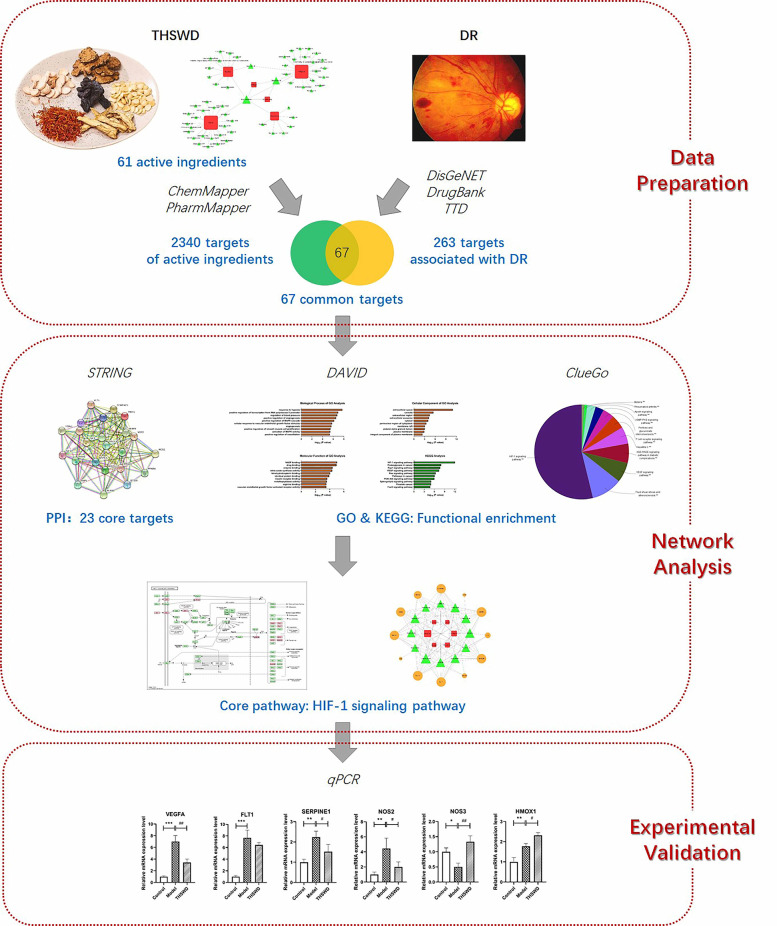
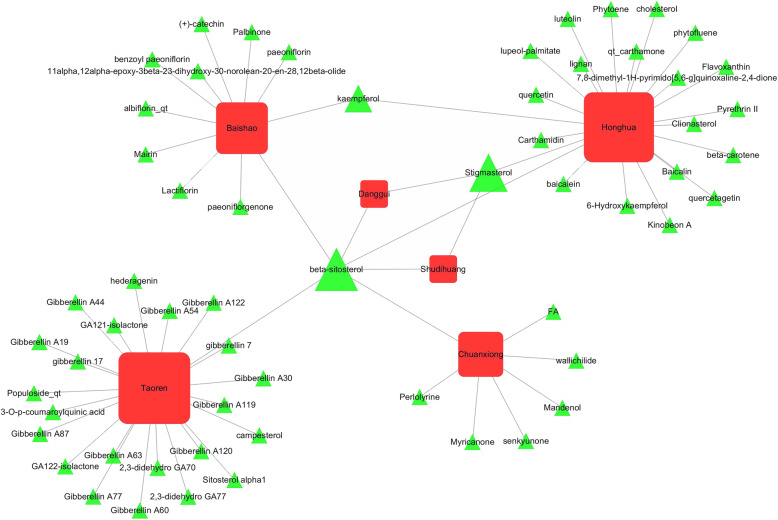
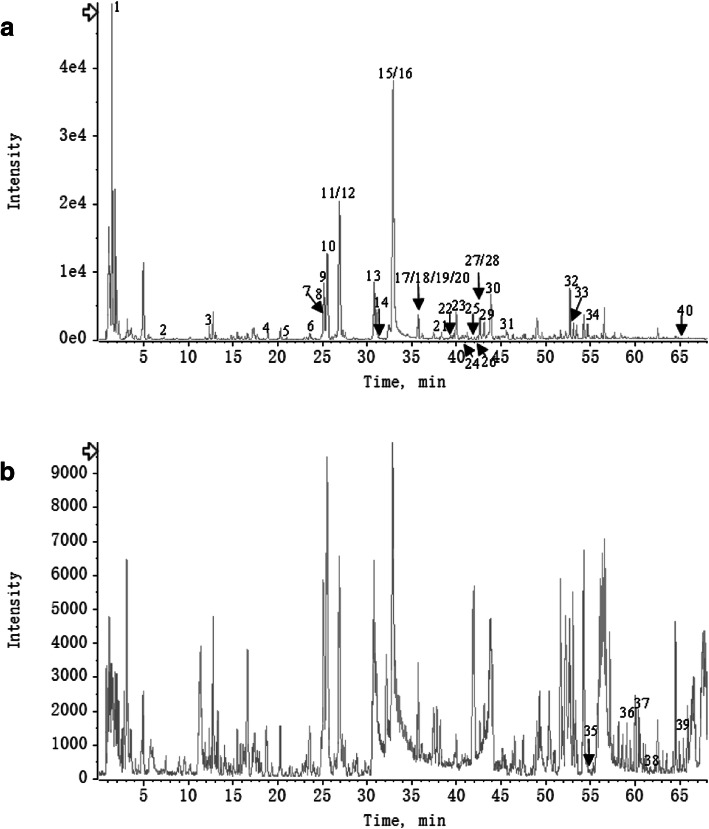
First, the active ingredients of THSWD were searched from Traditional Chinese Medicine Systems Pharmacology (TCMSP) Database. Second, the targets of active ingredients were identified from ChemMapper and PharmMapper databases. Third, DR associated targets were searched from DisGeNET, DrugBank and Therapeutic Target Database (TTD). Subsequently, the common targets of active ingredients and DR were found and analyzed in STRING database. DAVID database and ClueGo plug-in software were used to carry out the gene ontology (GO) and KEGG enrichment analysis. The core signaling pathway network of "herb-ingredient-target" was constructed by the Cytoscape software. Finally, the key genes of THSWD against DR were validated by quantitative real-time PCR (qRT-PCR).
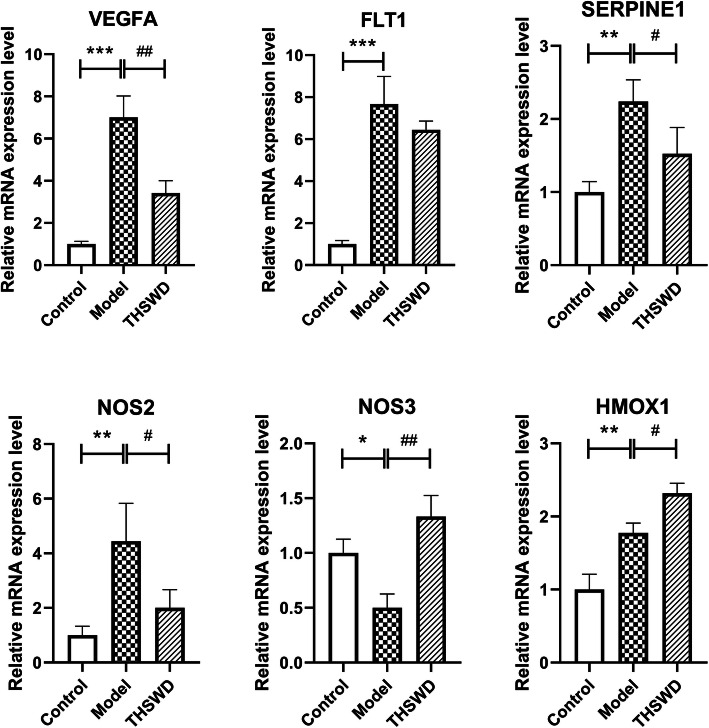
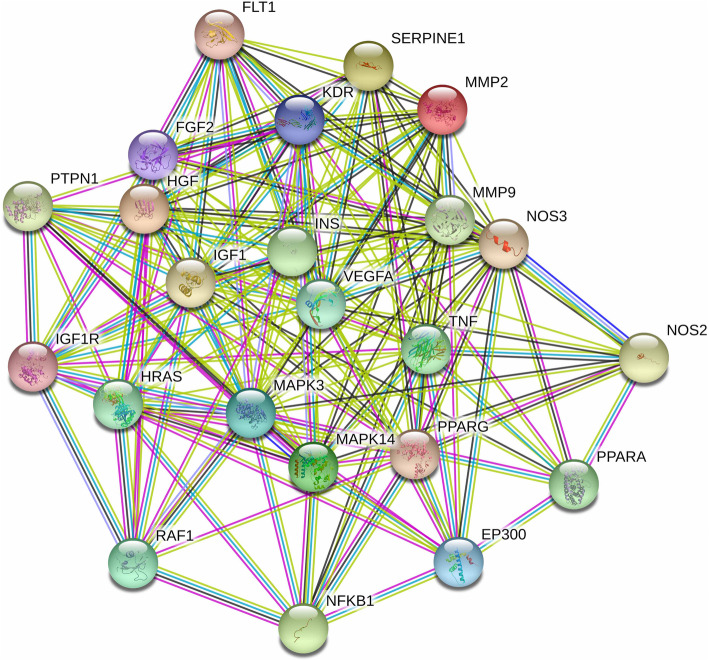
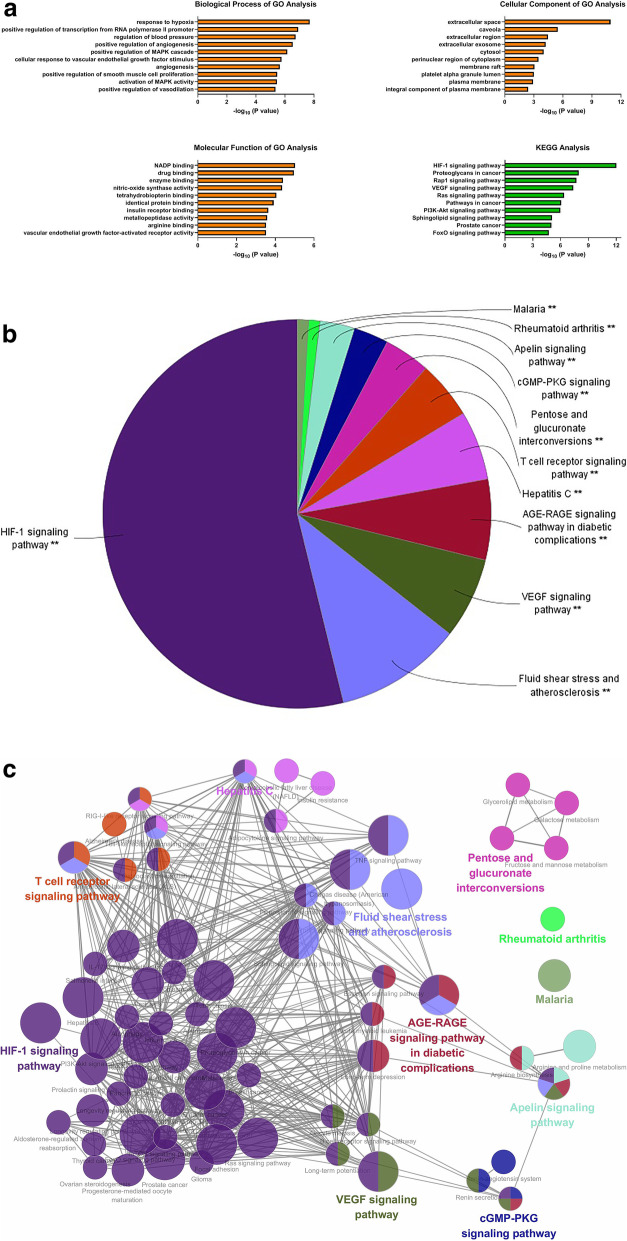
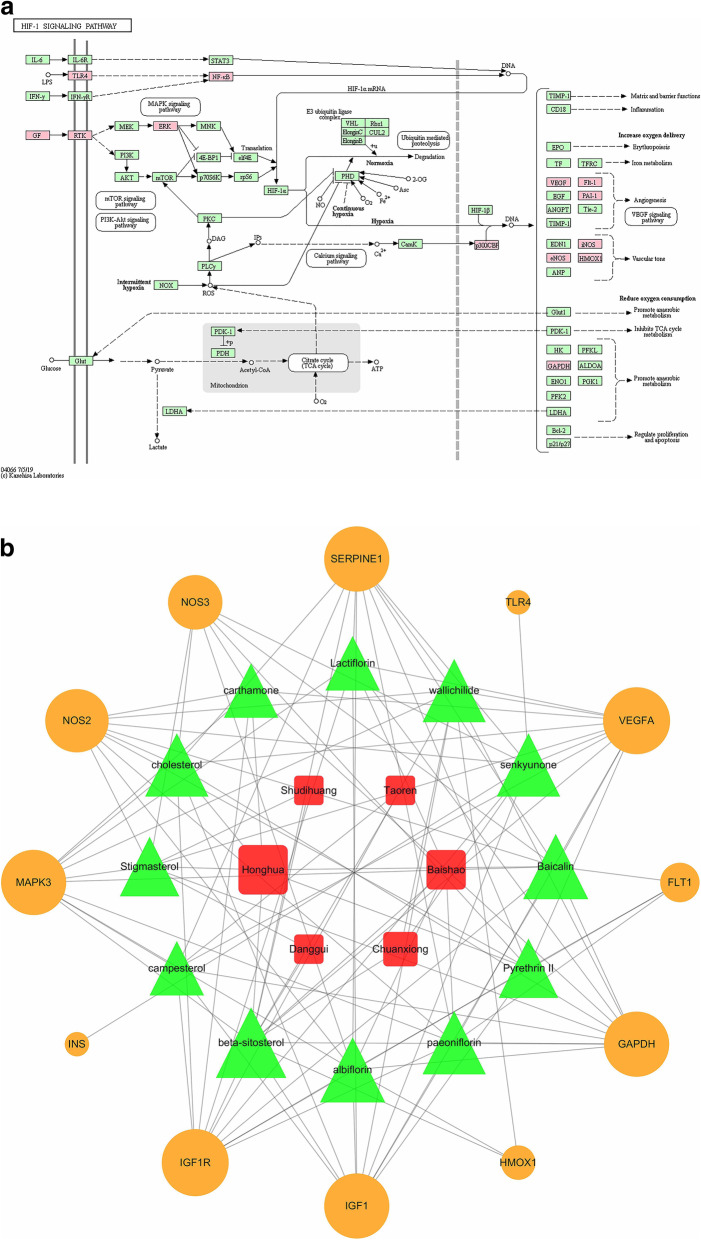
A total of 2340 targets of 61 active ingredients in THSWD were obtained. Simultaneously, a total of 263 DR-associated targets were also obtained. Then, 67 common targets were found by overlapping them, and 23 core targets were identified from protein-protein interaction (PPI) network. Response to hypoxia was found as the top GO term of biological process, and HIF-1 signaling pathway was found as the top KEGG pathway. Among the key genes in HIF-1 pathway, the mRNA expression levels of VEGFA, SERPINE1 and NOS2 were significantly down-regulated by THSWD (P < 0.05), and NOS3 and HMOX1 were significantly up-regulated (P < 0.05).
THSWD had a protective effect on DR via regulating HIF-1 signaling pathway and other important pathways. This study might provide a theoretical basis for the application of THSWD and the development of new drugs for the treatment of DR.
糖尿病视网膜病变(DR)是糖尿病常见且严重的微血管并发症。桃红四物汤(THSWD)是一种著名的中药(TCM)方剂,已被证明对 DR 具有良好的临床疗效,但其分子机制尚不清楚。我们的研究旨在揭示 THSWD 治疗 DR 的核心靶点和信号通路。
首先,从中药系统药理学(TCMSP)数据库中搜索 THSWD 的活性成分。其次,从 ChemMapper 和 PharmMapper 数据库中鉴定活性成分的靶点。第三,从 DisGeNET、DrugBank 和治疗靶点数据库(TTD)中搜索 DR 相关靶点。随后,在 STRING 数据库中发现并分析活性成分和 DR 的共同靶点。使用 DAVID 数据库和 ClueGo 插件软件进行基因本体(GO)和 KEGG 富集分析。通过 Cytoscape 软件构建“草药-成分-靶点”核心信号通路网络。最后,通过定量实时 PCR(qRT-PCR)验证 THSWD 治疗 DR 的关键基因。
共获得 THSWD 61 种活性成分的 2340 个靶点,同时还获得了 263 个 DR 相关靶点。然后,通过重叠获得 67 个共同靶点,并从蛋白质-蛋白质相互作用(PPI)网络中鉴定出 23 个核心靶点。生物过程的 GO 术语中发现缺氧反应为顶级术语,KEGG 途径中发现 HIF-1 信号通路为顶级途径。在 HIF-1 通路的关键基因中,VEGFA、SERPINE1 和 NOS2 的 mRNA 表达水平经 THSWD 处理后显著下调(P<0.05),NOS3 和 HMOX1 显著上调(P<0.05)。
THSWD 通过调节 HIF-1 信号通路和其他重要途径对 DR 具有保护作用。本研究可为 THSWD 的应用和治疗 DR 的新药开发提供理论依据。