Institute of Chemical Biology and Fundamental Medicine, Siberian Branch of Russian Academy of Sciences, 630090 Novosibirsk, Russia.
Medical Research and Education Center, Lomonosov Moscow State University, 119991 Moscow, Russia.
Int J Mol Sci. 2020 Oct 5;21(19):7341. doi: 10.3390/ijms21197341.
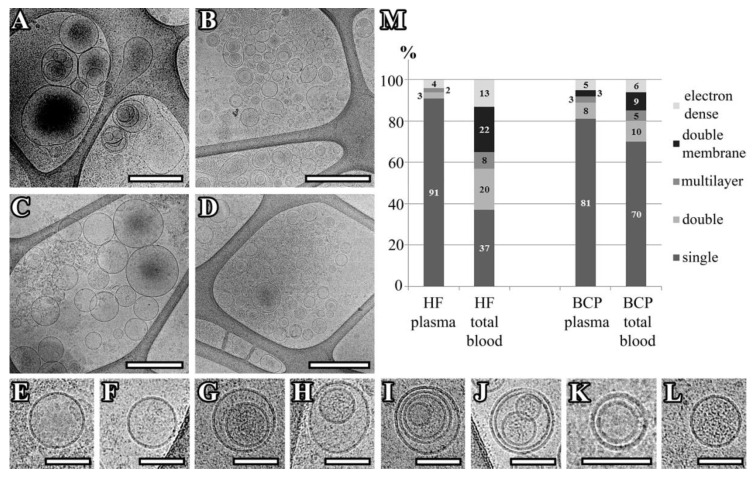
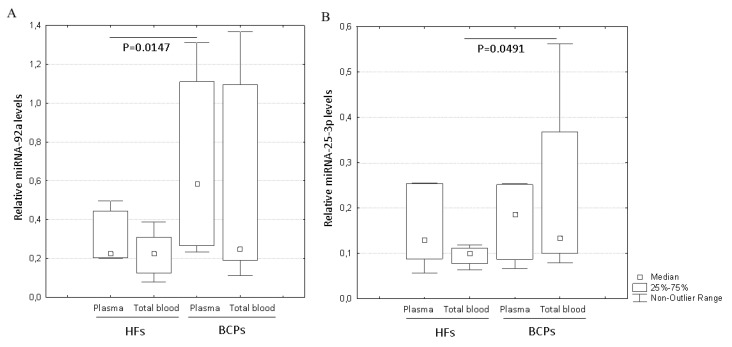
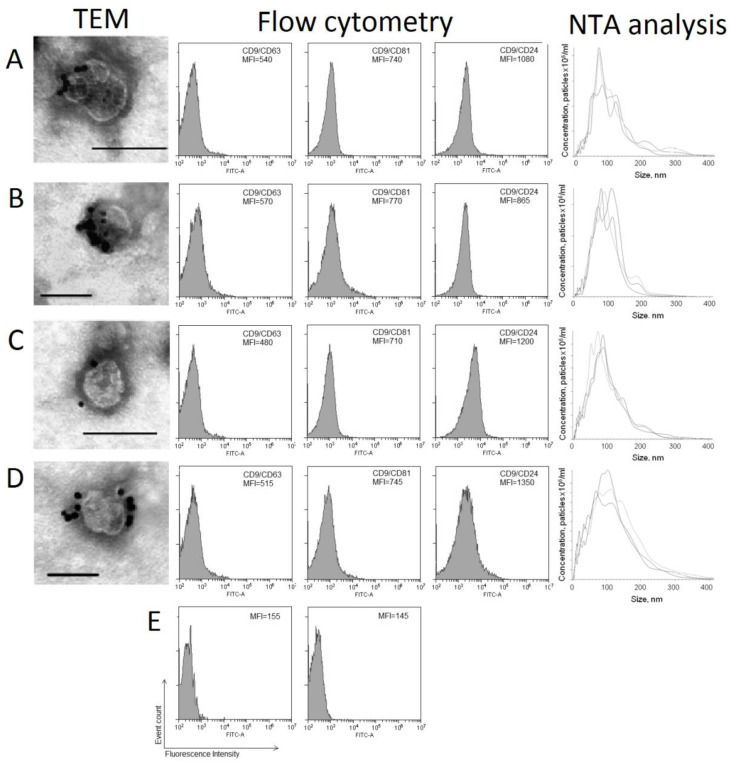
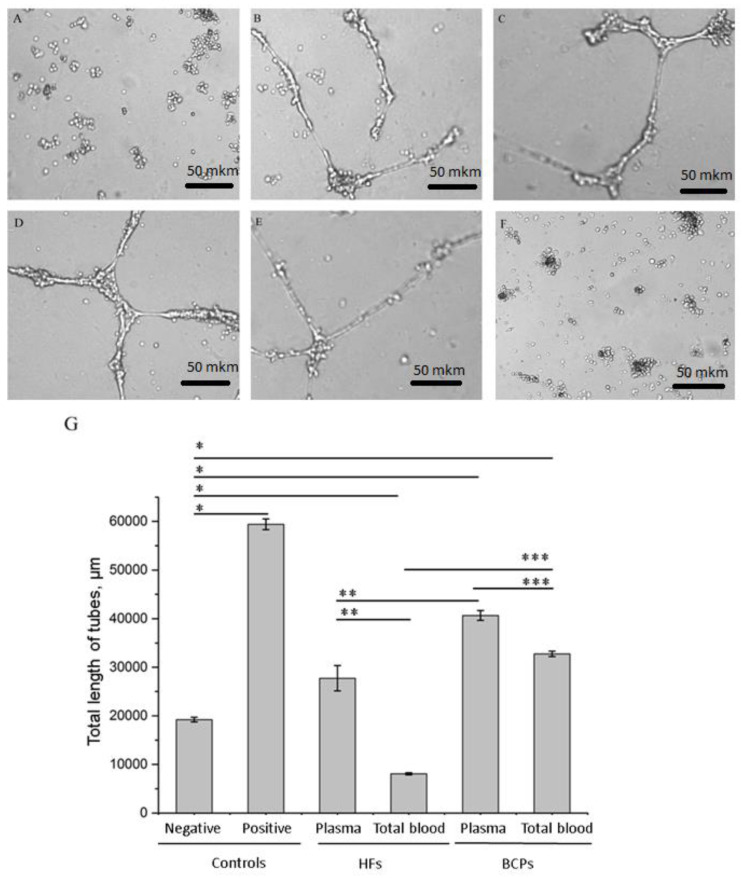
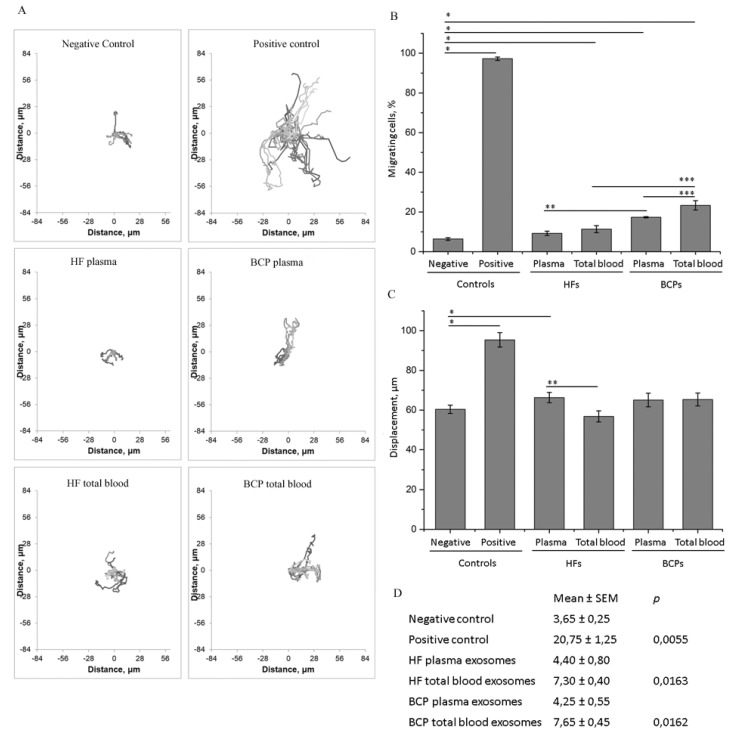
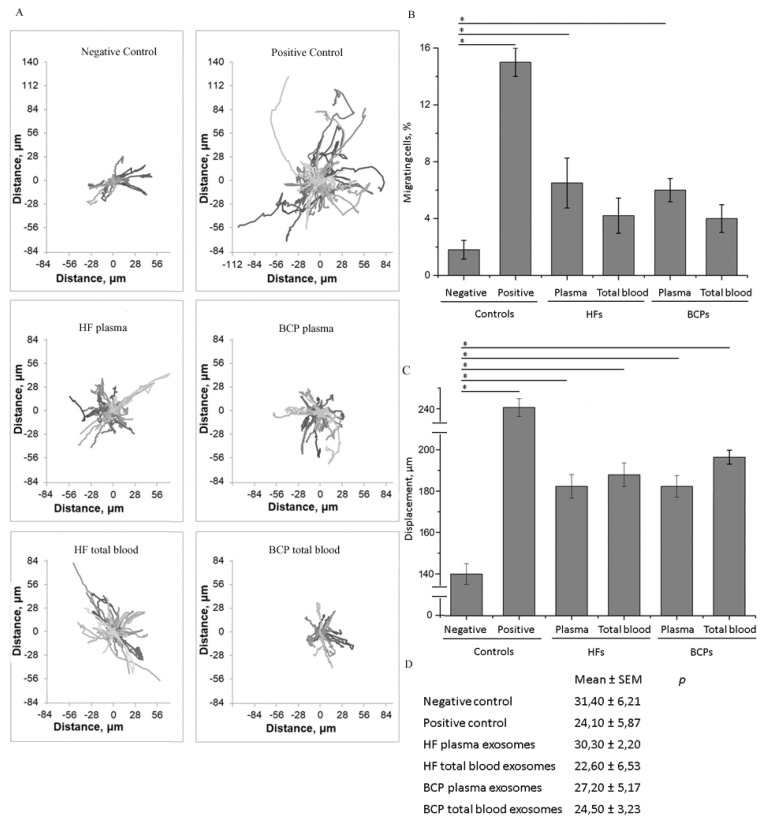
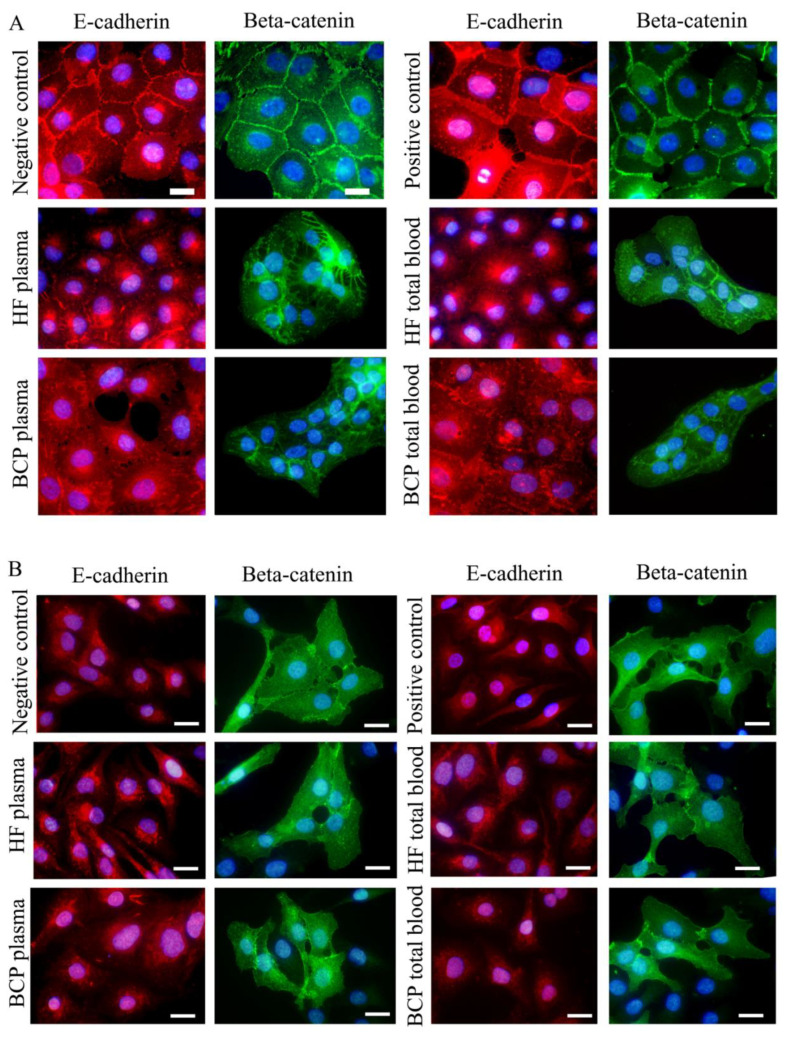
Exosomes are crucial players in cell-to-cell communication and are involved in tumorigenesis. There are two fractions of blood circulating exosomes: free and cell-surface-associated. Here, we compared the effect of total blood exosomes (contain plasma exosomes and blood cell-surface-associated exosomes) and plasma exosomes from breast cancer patients (BCPs, = 43) and healthy females (HFs, = 35) on crucial steps of tumor progression. Exosomes were isolated by ultrafiltration, followed by ultracentrifugation, and characterized by cryo-electron microscopy (cryo-EM), nanoparticle tracking analysis, and flow cytometry. Cryo-EM revealed a wider spectrum of exosome morphology with lipid bilayers and vesicular internal structures in the HF total blood in comparison with plasma. No differences in the morphology of both exosomes fractions were detected in BCP blood. The plasma exosomes and total blood exosomes of BCPs had different expression levels of tumor-associated miR-92a and miR-25-3p, induced angiogenesis and epithelial-to-mesenchymal transition (EMT), and increased the number of migrating pseudo-normal breast cells and the total migration path length of cancer cells. The multidirectional effects of HF total blood exosomes on tumor dissemination were revealed; they suppress the angiogenesis and total migration path length of MCF10A, but stimulate EMT and increase the number of migrating MCF10A and the total path length of SKBR3 cells. In addition, HF plasma exosomes enhance the metastasis-promoting properties of SKBR3 cells and stimulate angiogenesis. Both cell-free and blood cell-surface-associated exosomes are involved in the crucial stages of carcinogenesis: the initiation of EMT and the stimulation of proliferation, cell migration, and angiogenesis. Thus, for the estimation of the diagnostic/prognostic significance of circulating exosomes in the blood of cancer patients more correctly, the total blood exosomes, which consist of plasma exosomes and blood cell-surface-associated exosomes should be used.
外泌体是细胞间通讯的关键参与者,参与肿瘤发生。循环外泌体有两种形式:游离和细胞表面相关。在这里,我们比较了来自乳腺癌患者(BCP,n=43)和健康女性(HF,n=35)的总血外泌体(包含血浆外泌体和血细胞膜表面相关外泌体)和血浆外泌体对肿瘤进展关键步骤的影响。外泌体通过超滤分离,然后通过超速离心,通过冷冻电子显微镜(cryo-EM)、纳米颗粒跟踪分析和流式细胞术进行表征。cryo-EM 显示 HF 全血中外泌体形态的光谱更宽,与血浆相比,有更多的脂质双层和囊泡内部结构。BCP 血液中外泌体的形态没有差异。BCP 的血浆外泌体和总血外泌体的肿瘤相关 miR-92a 和 miR-25-3p 表达水平不同,诱导血管生成和上皮-间质转化(EMT),并增加伪正常乳腺细胞的迁移数量和癌细胞的总迁移路径长度。揭示了 HF 总血外泌体对肿瘤扩散的多向影响;它们抑制 MCF10A 的血管生成和总迁移路径长度,但刺激 EMT 并增加 MCF10A 的迁移数量和 SKBR3 细胞的总路径长度。此外,HF 血浆外泌体增强了 SKBR3 细胞的促转移特性并刺激血管生成。无细胞和血细胞膜表面相关的外泌体都参与了致癌作用的关键阶段:EMT 的启动和增殖、细胞迁移和血管生成的刺激。因此,为了更正确地估计癌症患者血液中循环外泌体的诊断/预后意义,应使用包含血浆外泌体和血细胞膜表面相关外泌体的总血外泌体。