Immunology Division, The Walter and Eliza Hall Institute of Medical Research, Parkville, VIC 3052, Australia.
Department of Medical Biology, The University of Melbourne, Parkville, VIC 3052, Australia.
Int J Mol Sci. 2020 Oct 5;21(19):7357. doi: 10.3390/ijms21197357.
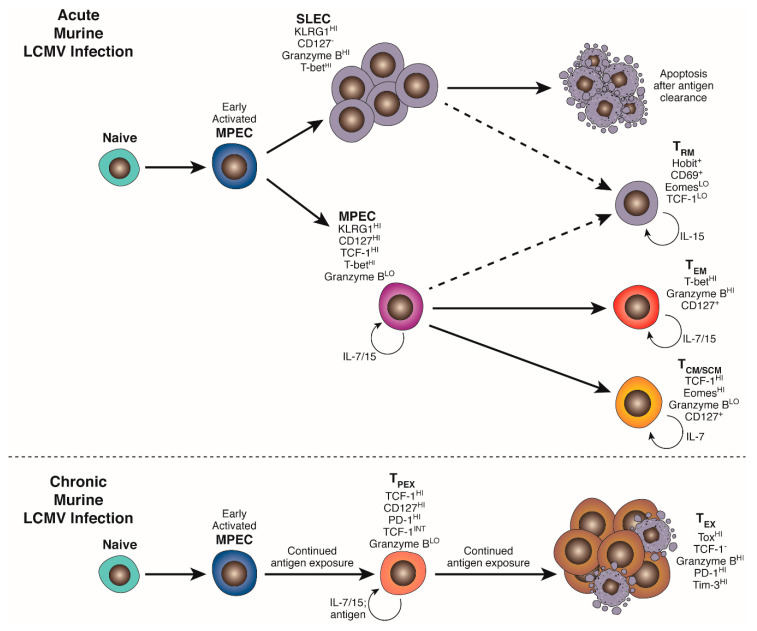
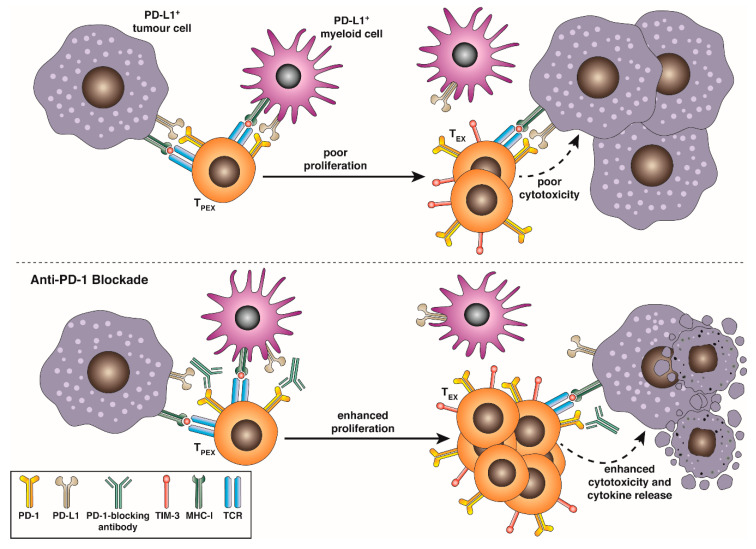
T cells follow a triphasic distinct pathway of activation, proliferation and differentiation before becoming functionally and phenotypically "exhausted" in settings of chronic infection, autoimmunity and in cancer. Exhausted T cells progressively lose canonical effector functions, exhibit altered transcriptional networks and epigenetic signatures and gain constitutive expression of a broad coinhibitory receptor suite. This review outlines recent advances in our understanding of exhausted T cell biology and examines cellular and molecular mechanisms by which a state of dysfunction or exhaustion is established, and mechanisms by which exhausted T cells may still contribute to pathogen or tumour control. Further, this review describes our understanding of exhausted T cell heterogeneity and outlines the mechanisms by which checkpoint blockade differentially engages exhausted T cell subsets to overcome exhaustion and recover T cell function.
T 细胞在慢性感染、自身免疫和癌症等情况下,经历了激活、增殖和分化的三阶段明显途径,最终变得功能和表型上“衰竭”。衰竭的 T 细胞逐渐丧失典型的效应功能,表现出改变的转录网络和表观遗传特征,并获得广泛共抑制受体的组成型表达。这篇综述概述了我们对衰竭 T 细胞生物学的理解的最新进展,并研究了建立功能障碍或衰竭状态的细胞和分子机制,以及衰竭的 T 细胞仍能有助于病原体或肿瘤控制的机制。此外,这篇综述描述了我们对衰竭 T 细胞异质性的理解,并概述了检查点阻断如何通过不同方式使衰竭 T 细胞亚群参与,以克服衰竭并恢复 T 细胞功能的机制。