Department of Anesthesiology, Peking University Third Hospital, No. 49 North Garden Road, Haidian District, Beijing 100191, China.
Department of Anesthesiology, National Cancer Center/National Clinical Research Center for Cancer/Cancer Hospital, Chinese Academy of Medical Sciences and Peking Union Medical College, No. 17 Pan-Jia-Yuan nanli Road, Chaoyang District, Beijing 100021, China.
Oxid Med Cell Longev. 2020 Sep 22;2020:4751349. doi: 10.1155/2020/4751349. eCollection 2020.
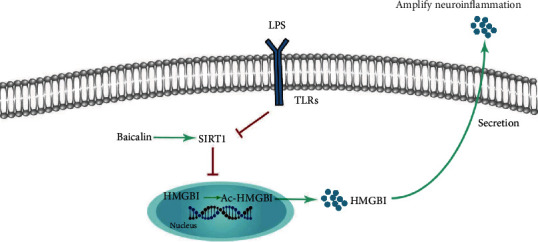
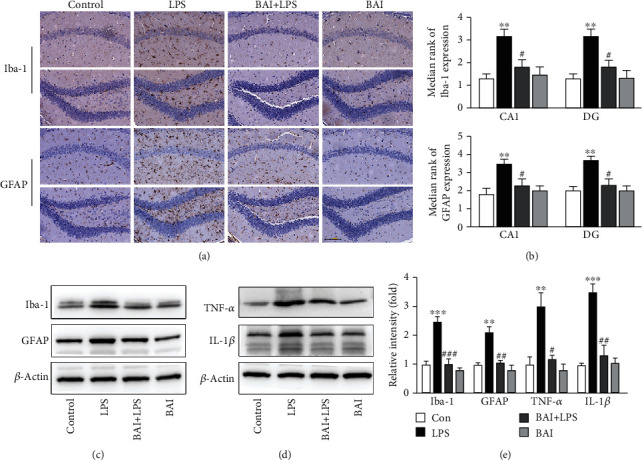
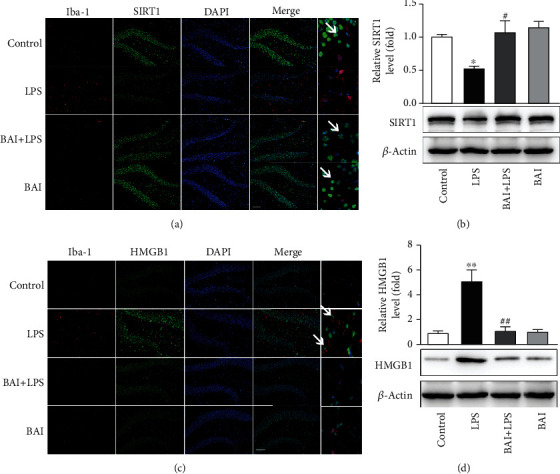
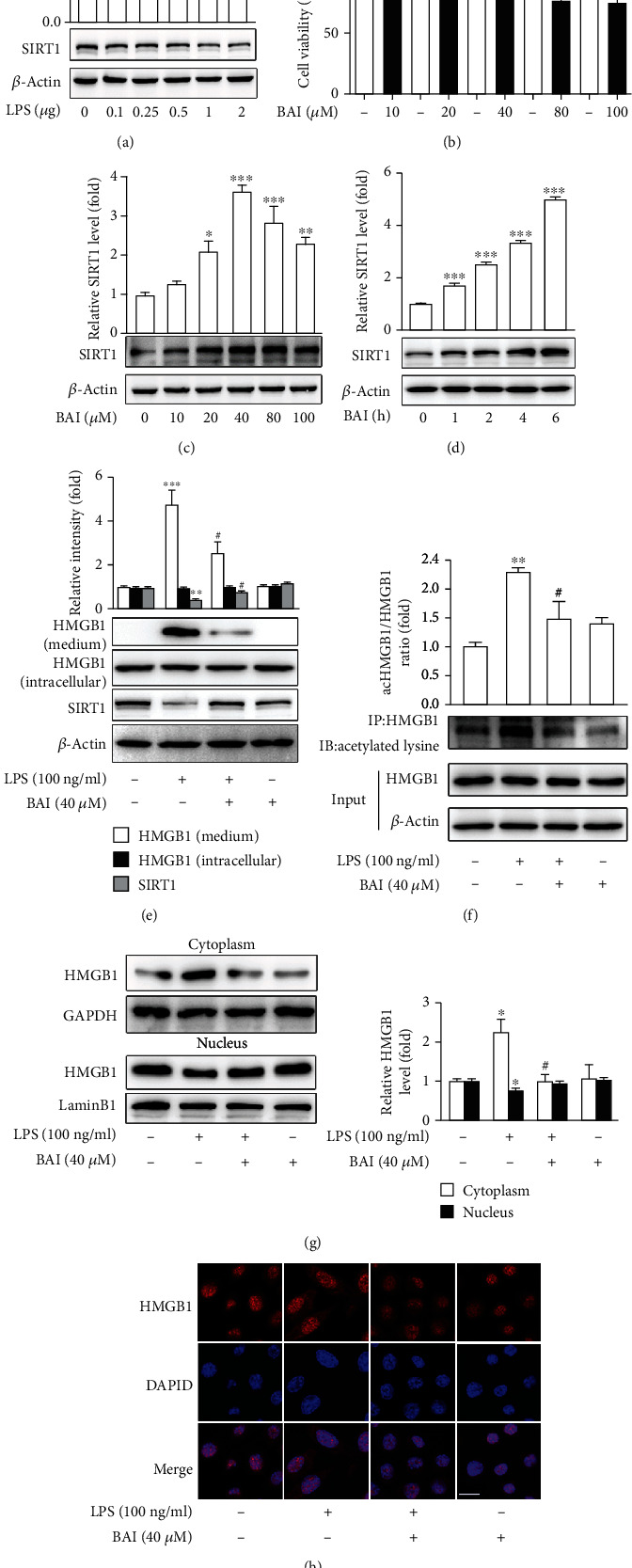
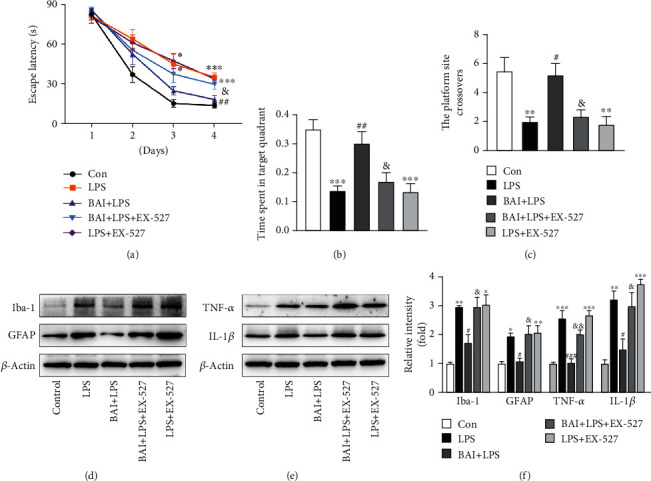
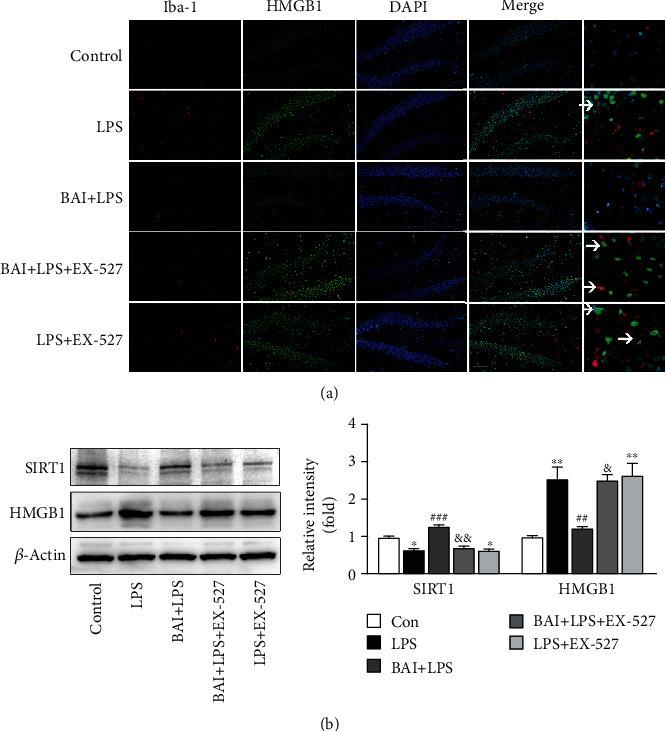
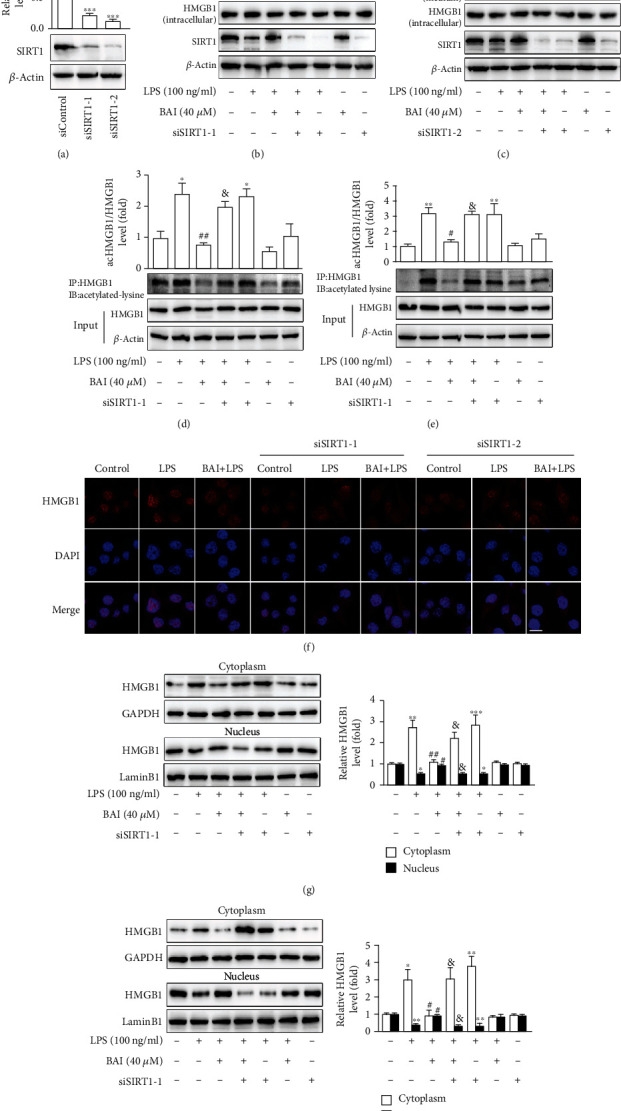
Systemic inflammation often induces neuroinflammation and disrupts neural functions, ultimately causing cognitive impairment. Furthermore, neuronal inflammation is the key cause of many neurological conditions. It is particularly important to develop effective neuroprotectants to prevent and control inflammatory brain diseases. Baicalin (BAI) has a wide variety of potent neuroprotective and cognitive enhancement properties in various models of neuronal injury through antioxidation, anti-inflammation, anti-apoptosis, and stimulating neurogenesis. Nevertheless, it remains unclear whether BAI can resolve neuroinflammation and cognitive decline triggered by systemic or distant inflammatory processes. In the present study, intraperitoneal lipopolysaccharide (LPS) administration was used to establish neuroinflammation to evaluate the potential neuroprotective and anti-inflammatory effects of BAI. Here, we report that BAI activated silent information regulator 1 (SIRT1) to deacetylate high-mobility group box 1 (HMGB1) protein in response to acute LPS-induced neuroinflammation and cognitive deficits. Furthermore, we demonstrated the anti-inflammatory and cognitive enhancement effects and the underlying molecular mechanisms of BAI in modulating microglial activation and systemic cytokine production, including tumor necrosis factor- (TNF-) and interleukin- (IL-) 1, after LPS exposure in mice and in the microglial cell line, BV2. In the hippocampus, BAI not only reduced reactive microglia and inflammatory cytokine production but also modulated SIRT1/HMGB1 signaling in microglia. Interestingly, pretreatment with SIRT1 inhibitor EX-527 abolished the beneficial effects of BAI against LPS exposure. Specifically, BAI treatment inhibited HMGB1 release via the SIRT1/HMGB1 pathway and reduced the nuclear translocation of HMGB1 in LPS-induced BV2 cells. These effects were reversed in BV2 cells by silencing endogenous . Taken together, these findings indicated that BAI reduced microglia-associated neuroinflammation and improved acute neurocognitive deficits in LPS-induced mice via SIRT1-dependent downregulation of HMGB1, suggesting a possible novel protection against acute neurobehavioral deficits, such as delayed neurocognitive recovery after anesthesia and surgery challenges.
系统性炎症通常会引发神经炎症,破坏神经功能,最终导致认知障碍。此外,神经元炎症是许多神经疾病的关键原因。开发有效的神经保护剂来预防和控制炎症性脑部疾病尤为重要。黄芩素(BAI)在各种神经元损伤模型中具有广泛的强效神经保护和认知增强特性,其作用机制包括抗氧化、抗炎、抗细胞凋亡和刺激神经发生。然而,目前尚不清楚 BAI 是否可以解决系统性或远处炎症过程引发的神经炎症和认知下降。在本研究中,腹腔内注射脂多糖(LPS)建立神经炎症模型,以评估 BAI 的潜在神经保护和抗炎作用。在这里,我们报告 BAI 激活沉默信息调节因子 1(SIRT1),以响应急性 LPS 诱导的神经炎症和认知功能障碍,使高迁移率族蛋白 1(HMGB1)蛋白去乙酰化。此外,我们证明了 BAI 在调节小胶质细胞激活和全身细胞因子产生方面的抗炎和认知增强作用及其潜在的分子机制,包括肿瘤坏死因子-(TNF-)和白细胞介素-(IL-)1,在 LPS 暴露后,无论是在小鼠还是在小胶质细胞系 BV2 中,BAI 都能减少活性小胶质细胞和炎症细胞因子的产生,并调节 SIRT1/HMGB1 信号通路。有趣的是,SIRT1 抑制剂 EX-527 的预处理消除了 BAI 对 LPS 暴露的有益作用。具体而言,BAI 通过 SIRT1/HMGB1 通路抑制 HMGB1 的释放,并减少 LPS 诱导的 BV2 细胞中 HMGB1 的核转位。在沉默内源性 SIRT1 的 BV2 细胞中,这些作用被逆转。综上所述,这些结果表明,BAI 通过 SIRT1 依赖性下调 HMGB1,减少小胶质细胞相关的神经炎症,并改善 LPS 诱导的小鼠的急性神经认知缺陷,这表明其可能是一种新的保护措施,可预防急性神经行为缺陷,如麻醉和手术挑战后神经认知恢复延迟。