Morita Akimichi, Takahashi Hidetoshi, Ozawa Kentaro, Imafuku Shinichi, Takekuni Nakama, Takahashi Kenzo, Matsuyama Takashi, Okubo Yukari, Zhao Yiwei, Kitamura Susumu, Takei Keiko, Yokoyama Masayuki, Hayashi Nobukazu, Terui Tadashi
Nagoya City University Graduate School of Medical Sciences, Nagoya, Japan.
Takagi Dermatological Clinic, Hokkaido, Japan.
J Dermatol. 2021 Jan;48(1):3-13. doi: 10.1111/1346-8138.15605. Epub 2020 Oct 7.
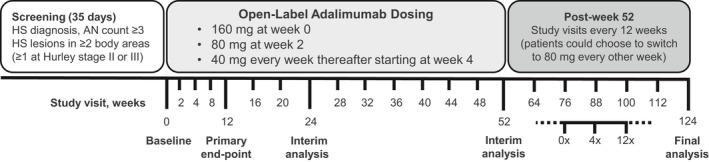
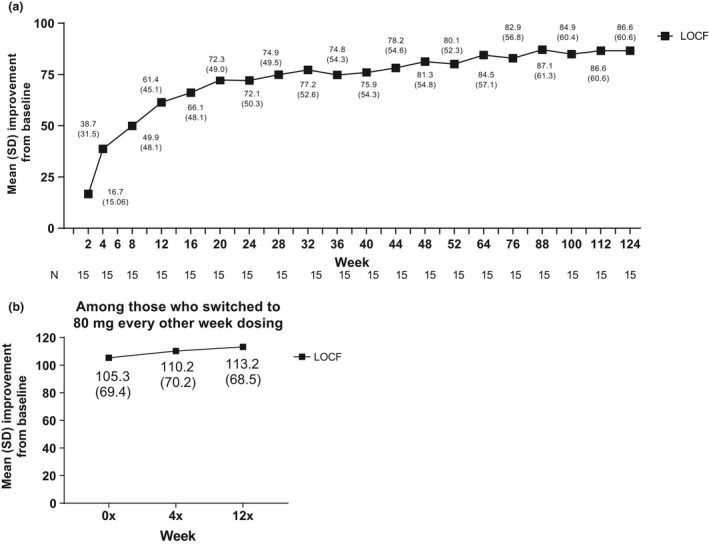
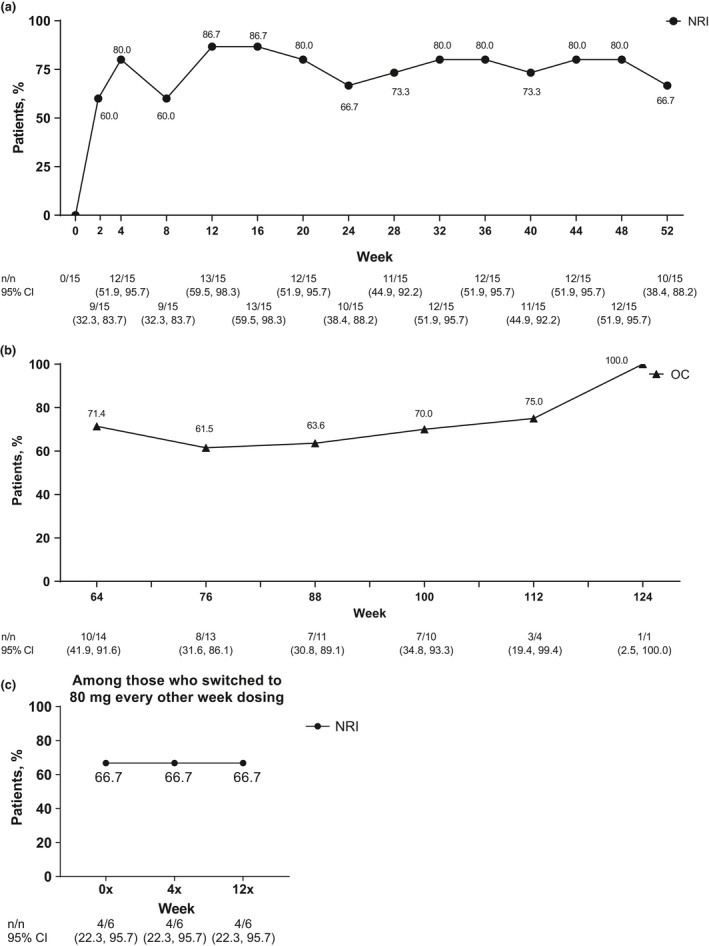
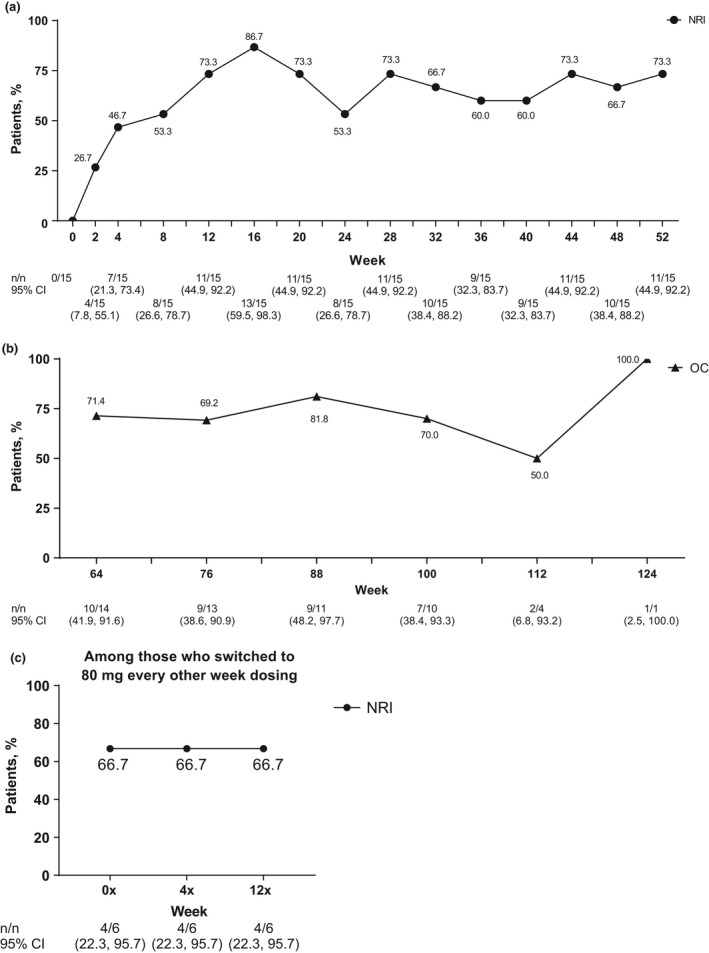
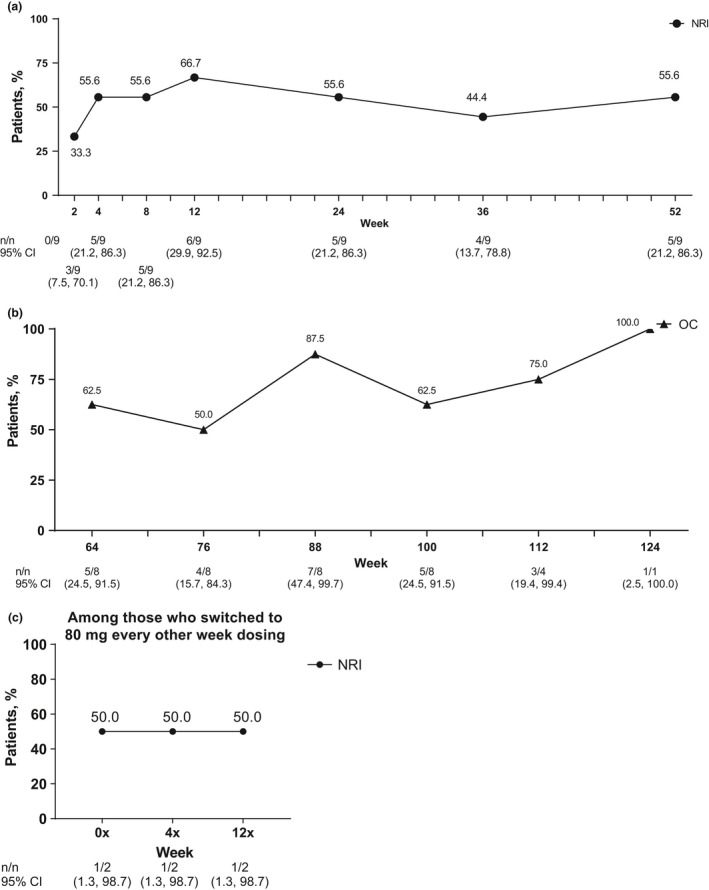
This phase 3, multicenter, open-label single-arm study evaluated adalimumab (ADA) in Japanese patients with moderate to severe hidradenitis suppurativa (HS). Fifteen patients received ADA 160 mg s.c. at week 0, 80 mg at week 2 and 40 mg at week 4 and every week thereafter. At any time after week 52, patients were given the option to receive 80 mg ADA every other week or remain on 40 mg every week. The primary end-point (achievement of HS Clinical Response [HiSCR] at week 24) and results up to week 24 were published previously. Secondary end-points included total abscess and inflammatory nodule (AN) count, 30% or more and 1 unit or more reduction in Patient's Global Assessment of Skin Pain Numeric Rating Scale (NRS30), modified Sartorius score and quality of life (QoL). After 12 weeks of ADA treatment, the achievement rate in HiSCR was 86.7%; HiSCR achievement rate was sustained through week 52 at 66.7%. Improvements at week 12 were also seen in the proportion of patients achieving an AN count of 0-2; NRS30 response rate among the nine patients with a baseline NRS of 3 or more; mean decrease in modified Sartorius score (61.4); and QoL as assessed by Dermatology Life Quality Index and Treatment Satisfaction Questionnaire; these improvements were maintained through 52 weeks. Similar efficacy was observed when patients switched dosing from ADA 40 mg every week to ADA 80 mg every other week. There were no new safety findings with ADA 40 mg weekly dosing during the study, and no differences in safety were found between patients who switched to 80 mg ADA every other week and patients who remained on 40 mg every week. The results of this study indicate that long-term ADA treatment is effective and well tolerated in Japanese patients with moderate to severe HS.
这项3期、多中心、开放标签单臂研究评估了阿达木单抗(ADA)在日本中重度化脓性汗腺炎(HS)患者中的疗效。15名患者在第0周皮下注射ADA 160 mg,第2周注射80 mg,第4周注射40 mg,此后每周注射40 mg。在第52周后的任何时间,患者可以选择每隔一周接受80 mg ADA治疗,或者继续每周接受40 mg治疗。主要终点(第24周时达到HS临床缓解[HiSCR])以及截至第24周的结果已在之前发表。次要终点包括脓肿和炎性结节(AN)总数、患者皮肤疼痛数字评定量表(NRS30)降低30%或更多且降低1个单位或更多、改良缝匠肌评分以及生活质量(QoL)。ADA治疗12周后,HiSCR达成率为86.7%;HiSCR达成率在第52周时维持在66.7%。在第12周时,达到AN计数为0至2的患者比例、基线NRS为3或更高的9名患者中的NRS30缓解率、改良缝匠肌评分的平均降低值(61.4)以及通过皮肤病生活质量指数和治疗满意度问卷评估的QoL也有所改善;这些改善持续至52周。当患者从每周40 mg ADA给药方案转换为每隔一周80 mg ADA给药方案时,观察到了相似的疗效。在研究期间,每周40 mg ADA给药方案未发现新的安全性发现,并且在转换为每隔一周80 mg ADA的患者与继续每周40 mg给药的患者之间未发现安全性差异。这项研究的结果表明,长期ADA治疗对日本中重度HS患者有效且耐受性良好。