• 文献检索
  • 文档翻译
  • 深度研究
  • 学术资讯
  • Suppr Zotero 插件Zotero 插件
  • 邀请有礼
  • 套餐&价格
  • 历史记录
应用&插件
Suppr Zotero 插件Zotero 插件浏览器插件Mac 客户端Windows 客户端微信小程序
定价
高级版会员购买积分包购买API积分包
服务
文献检索文档翻译深度研究API 文档MCP 服务
关于我们
关于 Suppr公司介绍联系我们用户协议隐私条款
关注我们

Suppr 超能文献

核心技术专利:CN118964589B侵权必究
粤ICP备2023148730 号-1Suppr @ 2026

文献检索

告别复杂PubMed语法,用中文像聊天一样搜索,搜遍4000万医学文献。AI智能推荐,让科研检索更轻松。

立即免费搜索

文件翻译

保留排版,准确专业,支持PDF/Word/PPT等文件格式,支持 12+语言互译。

免费翻译文档

深度研究

AI帮你快速写综述,25分钟生成高质量综述,智能提取关键信息,辅助科研写作。

立即免费体验

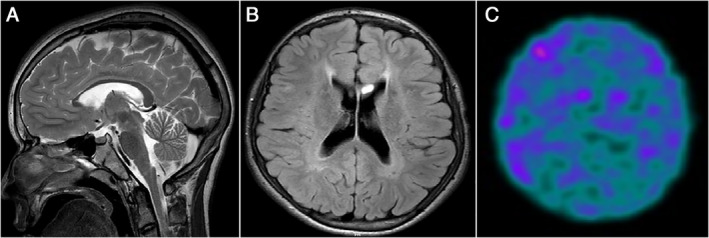
SPG15: A Rare Correlation with Atypical Juvenile Parkinsonism Responsive to Levodopa.

作者信息

Araujo Filipe Miranda Milagres, Junior Wilson Marques, Tomaselli Pedro José, Pimentel Ângela V, Macruz Brito Manuelina C, Tumas Vitor

机构信息

Movement Disorders and Behavioral Neurology Section University of São Paulo Ribeirão Preto Brazil.

Neurogenetics Section, Department of Neurosciences and Behavioral Sciences Ribeirão Preto Medical School Hospital, University of São Paulo (USP) Ribeirão Preto Brazil.

出版信息

Mov Disord Clin Pract. 2020 Aug 26;7(7):842-844. doi: 10.1002/mdc3.13027. eCollection 2020 Oct.
DOI:10.1002/mdc3.13027
PMID:33033739
原文链接:https://pmc.ncbi.nlm.nih.gov/articles/PMC7533969/
Abstract
摘要
https://cdn.ncbi.nlm.nih.gov/pmc/blobs/950f/7533969/176de3061094/MDC3-7-842-g001.jpg

相似文献

1
SPG15: A Rare Correlation with Atypical Juvenile Parkinsonism Responsive to Levodopa.SPG15:与对左旋多巴有反应的非典型青少年帕金森病的罕见关联。
Mov Disord Clin Pract. 2020 Aug 26;7(7):842-844. doi: 10.1002/mdc3.13027. eCollection 2020 Oct.
2
Levodopa-responsive parkinsonism in hereditary spastic paraplegia with thin corpus callosum.胼胝体变薄的遗传性痉挛性截瘫中的左旋多巴反应性帕金森综合征
Parkinsonism Relat Disord. 2004 Oct;10(7):425-7. doi: 10.1016/j.parkreldis.2004.05.003.
3
Lysosomal abnormalities in hereditary spastic paraplegia types SPG15 and SPG11.遗传性痉挛性截瘫SPG15型和SPG11型中的溶酶体异常。
Ann Clin Transl Neurol. 2014 Jun 1;1(6):379-389. doi: 10.1002/acn3.64.
4
[Common forms of hereditary spastic paraplegias].[遗传性痉挛性截瘫的常见类型]
Zh Nevrol Psikhiatr Im S S Korsakova. 2019;119(2):94-104. doi: 10.17116/jnevro201911902194.
5
NT5C2 novel splicing variant expands the phenotypic spectrum of Spastic Paraplegia (SPG45): case report of a new member of thin corpus callosum SPG-Subgroup.NT5C2新型剪接变体扩展了痉挛性截瘫(SPG45)的表型谱:胼胝体变薄SPG亚组新成员的病例报告
BMC Med Genet. 2017 Mar 21;18(1):33. doi: 10.1186/s12881-017-0395-6.
6
"Ears of the Lynx" MRI Sign Is Associated with SPG11 and SPG15 Hereditary Spastic Paraplegia.“山猫耳”MRI 征与 SPG11 和 SPG15 遗传性痉挛性截瘫相关。
AJNR Am J Neuroradiol. 2019 Jan;40(1):199-203. doi: 10.3174/ajnr.A5935. Epub 2019 Jan 3.
7
Spastic paraplegia 15: linkage and clinical description of three Tunisian families.痉挛性截瘫15:三个突尼斯家庭的连锁分析与临床描述
Mov Disord. 2008 Feb 15;23(3):429-33. doi: 10.1002/mds.21848.
8
Hereditary spastic paraplegia with mental impairment and thin corpus callosum in Tunisia: SPG11, SPG15, and further genetic heterogeneity.突尼斯伴有智力障碍和胼胝体变薄的遗传性痉挛性截瘫:SPG11、SPG15及进一步的基因异质性
Arch Neurol. 2008 Mar;65(3):393-402. doi: 10.1001/archneur.65.3.393.
9
Thin corpus callosum and amyotrophy in spastic paraplegia--case report and review of literature.
Clin Neurol Neurosurg. 2006 Oct;108(7):692-8. doi: 10.1016/j.clineuro.2005.06.007. Epub 2005 Aug 15.
10
SPG11 mutations cause Kjellin syndrome, a hereditary spastic paraplegia with thin corpus callosum and central retinal degeneration.SPG11基因突变导致凯林综合征,这是一种伴有胼胝体变薄和视网膜中央变性的遗传性痉挛性截瘫。
Am J Med Genet B Neuropsychiatr Genet. 2009 Oct 5;150B(7):984-92. doi: 10.1002/ajmg.b.30928.

引用本文的文献

1
Spastic Paraplegia Type 30 Associated with Levodopa-Responsive Parkinsonism.与左旋多巴反应性帕金森病相关的30型痉挛性截瘫
Mov Disord Clin Pract. 2023 Jul 7;10(8):1228-1230. doi: 10.1002/mdc3.13815. eCollection 2023 Aug.
2
The clinical and molecular spectrum of ZFYVE26-associated hereditary spastic paraplegia: SPG15.ZFYVE26 相关遗传性痉挛性截瘫的临床和分子谱:SPG15。
Brain. 2023 May 2;146(5):2003-2015. doi: 10.1093/brain/awac391.
3
A Practical Approach to Early-Onset Parkinsonism.早发性帕金森病的实用处理方法。

本文引用的文献

1
Clinical and molecular characterization of hereditary spastic paraplegias: A next-generation sequencing panel approach.遗传性痉挛性截瘫的临床和分子特征:下一代测序 panel 方法。
J Neurol Sci. 2017 Dec 15;383:18-25. doi: 10.1016/j.jns.2017.10.010. Epub 2017 Oct 10.
2
When shaking during standing points to hereditary spastic paraplegias.
Parkinsonism Relat Disord. 2018 Jan;46:92-94. doi: 10.1016/j.parkreldis.2017.10.017. Epub 2017 Oct 26.
3
Overlapping phenotypes in complex spastic paraplegias SPG11, SPG15, SPG35 and SPG48.复杂痉挛性截瘫 SPG11、SPG15、SPG35 和 SPG48 中的重叠表型。
J Parkinsons Dis. 2022;12(1):1-26. doi: 10.3233/JPD-212815.
Brain. 2014 Jul;137(Pt 7):1907-20. doi: 10.1093/brain/awu121. Epub 2014 May 15.
4
SPG15: a cause of juvenile atypical levodopa responsive parkinsonism.
J Neurol. 2014 Feb;261(2):435-7. doi: 10.1007/s00415-013-7216-4. Epub 2013 Dec 24.
5
Hereditary spastic paraplegia: clinico-pathologic features and emerging molecular mechanisms.遗传性痉挛性截瘫:临床病理特征和新兴分子机制。
Acta Neuropathol. 2013 Sep;126(3):307-28. doi: 10.1007/s00401-013-1115-8. Epub 2013 Jul 30.
6
Atypical juvenile parkinsonism in a consanguineous SPG15 family.
Mov Disord. 2011 Feb 15;26(3):564-6. doi: 10.1002/mds.23472. Epub 2011 Jan 6.
7
Novel mutations in SPG11 cause hereditary spastic paraplegia associated with early-onset levodopa-responsive Parkinsonism.SPG11 中的新突变导致早发性左旋多巴反应性帕金森病相关的遗传性痉挛性截瘫。
Mov Disord. 2011 Feb 15;26(3):553-6. doi: 10.1002/mds.23552. Epub 2011 Mar 4.
8
SPG11 spastic paraplegia. A new cause of juvenile parkinsonism.SPG11型痉挛性截瘫。青少年帕金森病的一个新病因。
J Neurol. 2009 Jan;256(1):104-8. doi: 10.1007/s00415-009-0083-3. Epub 2009 Feb 9.
9
Identification of the SPG15 gene, encoding spastizin, as a frequent cause of complicated autosomal-recessive spastic paraplegia, including Kjellin syndrome.编码痉挛素的SPG15基因被鉴定为复杂常染色体隐性遗传性痉挛性截瘫(包括凯尔林综合征)的常见病因。
Am J Hum Genet. 2008 Apr;82(4):992-1002. doi: 10.1016/j.ajhg.2008.03.004.
10
Complicated hereditary spastic paraplegia with thin corpus callosum (HSP-TCC) and childhood onset.伴有胼胝体变薄的复杂遗传性痉挛性截瘫(HSP-TCC)及儿童期起病。
Neuropediatrics. 2005 Aug;36(4):274-8. doi: 10.1055/s-2005-872809.