Coonen E, van Montfoort A, Carvalho F, Kokkali G, Moutou C, Rubio C, De Rycke M, Goossens V
Department of Clinical Genetics, GROW School for Oncology and Developmental Biology, Maastricht University Medical Centre+, Maastricht, The Netherlands.
Department of Obstetrics & Gynaecology, GROW School for Oncology and Developmental Biology, Maastricht University Medical Centre+, Maastricht, The Netherlands.
Hum Reprod Open. 2020 Oct 3;2020(4):hoaa043. doi: 10.1093/hropen/hoaa043. eCollection 2020.
What are the trends and developments in preimplantation genetic testing (PGT) in 2013-2015 as compared to previous years?
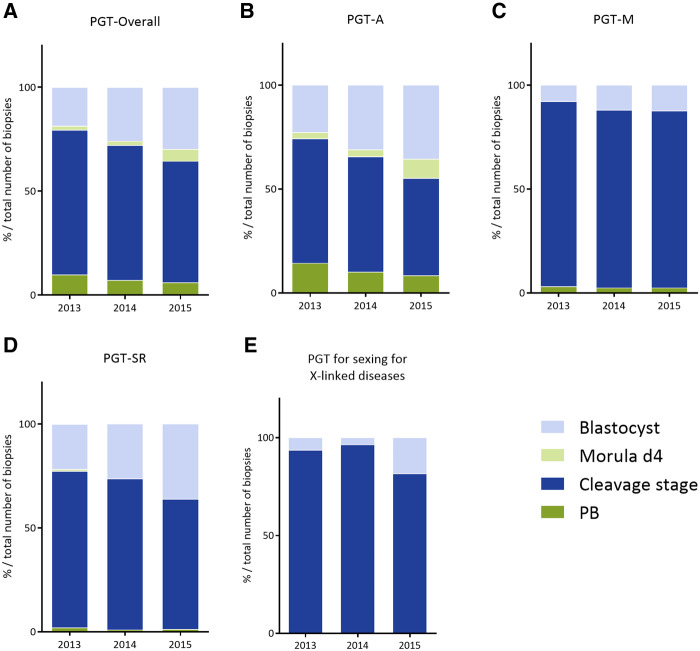
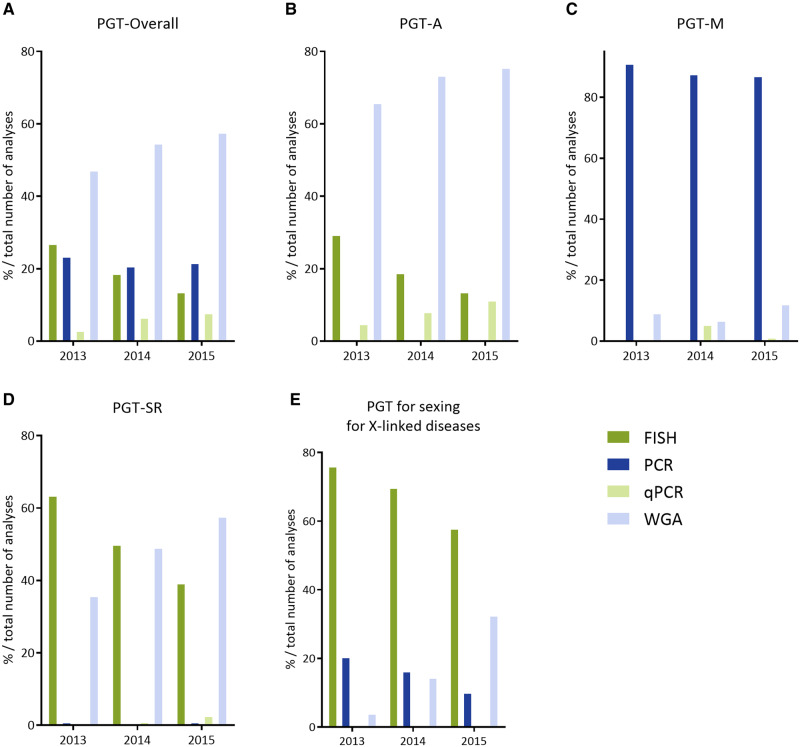
The main trends observed in the retrospective data collections 2013-2015, representing valuable data on PGT activity in (mainly) Europe, are the increased application of trophectoderm biopsy at the cost of cleavage stage biopsy and the continuing expansion of comprehensive testing technology in PGT for chromosomal structural rearrangements and for aneuploidies (PGT-SR and PGT-A).
Since it was established in 1997, the ESHRE PGT Consortium has been collecting data from international PGT centres. To date, 15 data sets and an overview of the first 10 years of data collections have been published.
Collection of (mainly) European data by the PGT Consortium for ESHRE. The data for PGT cycles performed between 1 January 2013 and 31 December 2015 were provided by participating centres on a voluntary basis. For the collection of cycle, pregnancy and baby data, separate, pre-designed MS Excel tables were used.
PARTICIPANTS/MATERIALS SETTING METHODS: Data were submitted by 59, 60 and 59 centres respectively for 2013, 2014 and 2015 (full PGT Consortium members). Records with incomplete or inconsistent data were excluded from the calculations. Corrections, calculations, figures and tables were made by expert co-authors.
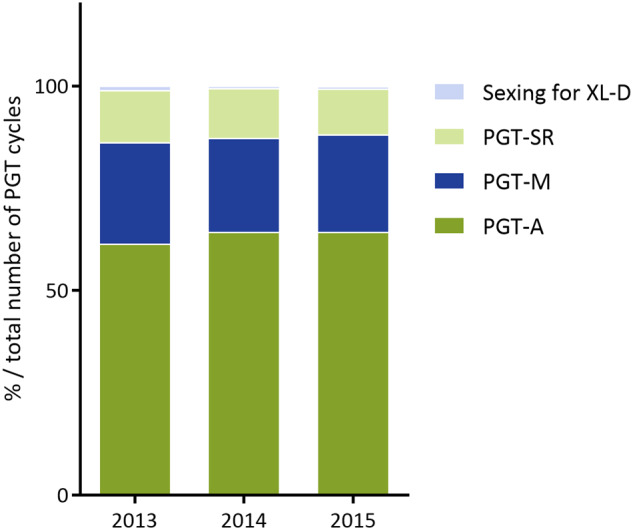
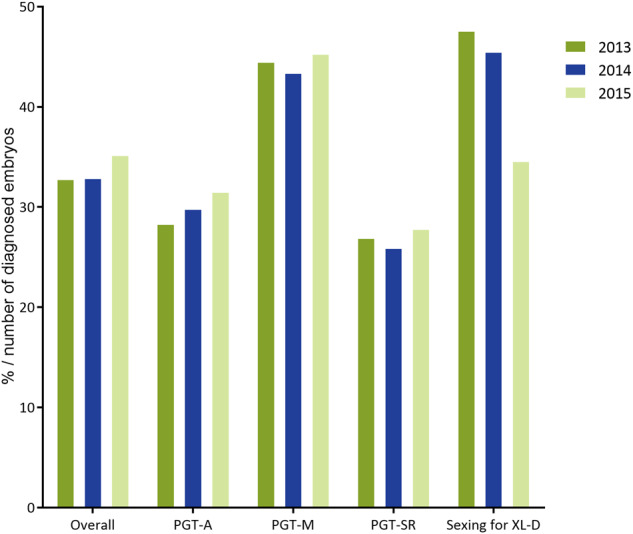
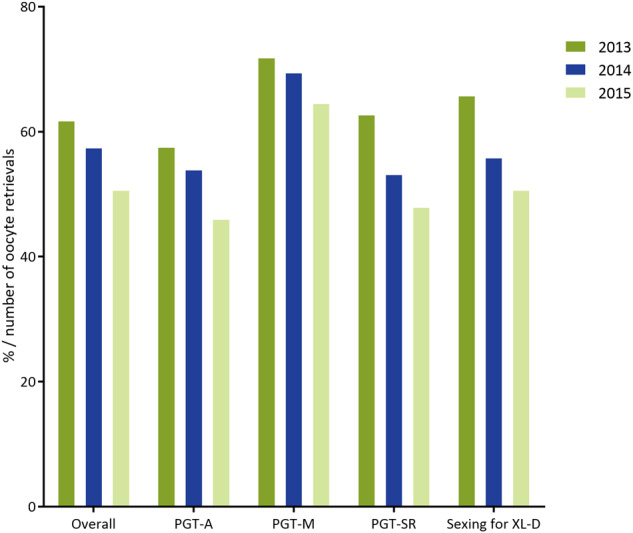
For data collection XVI/XVII/XVIII, 59/60/59 centres reported data on 8164/9769/11 120 cycles with oocyte retrieval: 5020/6278/7155 cycles for PGT-A, 2026/2243/2661 cycles for PGT for monogenic/single gene defects, 1039/1189/1231 cycles for PGT-SR and 79/59/73 cycles for sexing for X-linked diseases. From 2013 until 2015, the uptake of biopsy at the blastocyst stage was mainly observed in cycles for PGT-A (from 23% to 36%) and PGT-SR (from 22% to 36%), alongside the increased application of comprehensive testing technology (from 66% to 75% in PGT-A and from 36% to 58% in PGT-SR).
The findings apply to the 59/60/59 participating centres and may not represent worldwide trends in PGT. Data were collected retrospectively and no details of the follow-up on PGT pregnancies and babies born were provided.
Being the largest data collection on PGT worldwide, detailed information about ongoing developments in the field is provided.
STUDY FUNDING/COMPETING INTERESTS: The study has no external funding and all costs are covered by ESHRE. There are no competing interests declared.
N/A.
与前几年相比,2013 - 2015年植入前基因检测(PGT)的趋势和发展情况如何?
在2013 - 2015年回顾性数据收集中观察到的主要趋势,这些数据代表了(主要是)欧洲PGT活动的有价值数据,即滋养外胚层活检的应用增加,而卵裂期活检的应用减少,以及PGT中用于染色体结构重排和非整倍体检测(PGT-SR和PGT-A)的综合检测技术持续扩展。
自1997年成立以来,欧洲人类生殖与胚胎学会(ESHRE)PGT联盟一直在收集国际PGT中心的数据。迄今为止,已发表了15个数据集以及前10年数据收集的概述。
PGT联盟为ESHRE收集(主要是)欧洲数据。参与中心自愿提供了2013年1月1日至2015年12月31日期间进行的PGT周期数据。对于周期、妊娠和婴儿数据的收集,使用了单独的、预先设计的MS Excel表格。
参与者/材料设置方法:2013年、2014年和2015年分别有59个、60个和59个中心(ESHRE PGT联盟的正式成员)提交了数据。计算中排除了数据不完整或不一致的记录。由专家共同作者进行校正、计算、绘制图表。
在第XVI/XVII/XVIII次数据收集中,59/60/59个中心报告了8164/9769/11120次取卵周期的数据:PGT-A周期为5020/6278/7155次,单基因/单基因缺陷PGT周期为2026/2243/2661次,PGT-SR周期为1039/1189/1231次,X连锁疾病性别鉴定周期为79/59/73次。从2013年到2015年,囊胚期活检的采用主要出现在PGT-A周期(从23%增至36%)和PGT-SR周期(从22%增至36%),同时综合检测技术的应用也有所增加(PGT-A中从66%增至75%,PGT-SR中从36%增至58%)。
这些发现适用于参与的59/60/59个中心,可能不代表全球PGT的趋势。数据是回顾性收集的,未提供PGT妊娠和出生婴儿随访的详细信息。
作为全球最大规模的PGT数据收集,提供了该领域当前发展的详细信息。
研究资金/利益冲突:该研究无外部资金,所有费用由ESHRE承担。未申报利益冲突。
无。