University of Toronto, Faculty of Medicine, Department of Pharmacology & Toxicology, Toronto, ON, Canada.
University of Otago, Department of Pharmacology & Toxicology, Dunedin, New Zealand.
Neuropsychopharmacology. 2021 Jan;46(2):413-422. doi: 10.1038/s41386-020-00876-5. Epub 2020 Oct 8.
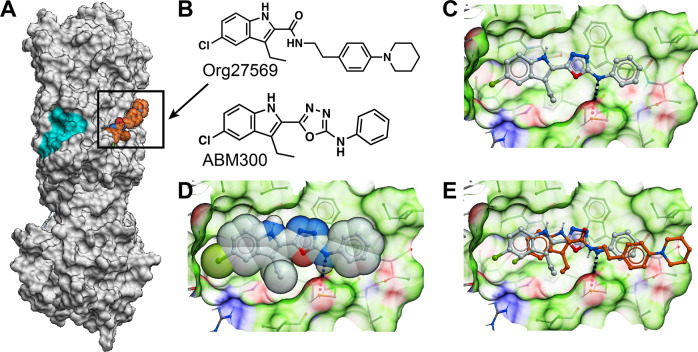
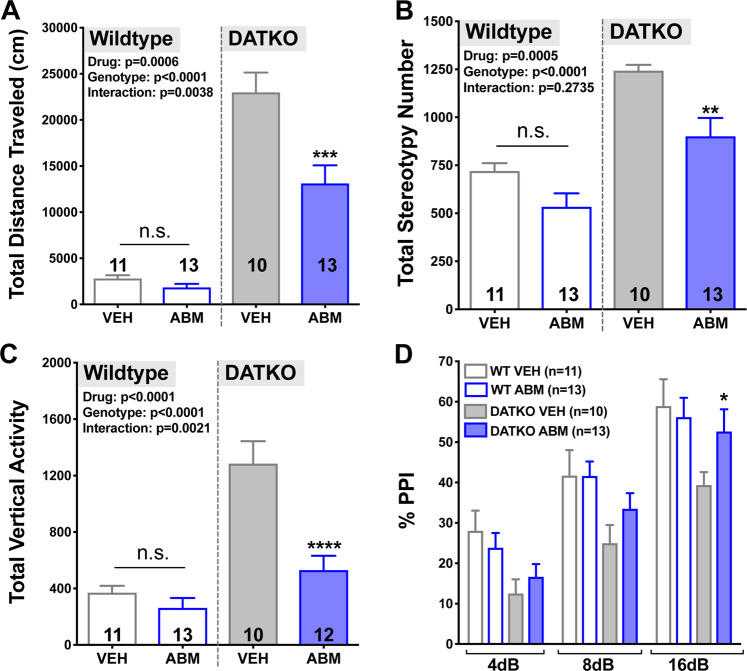
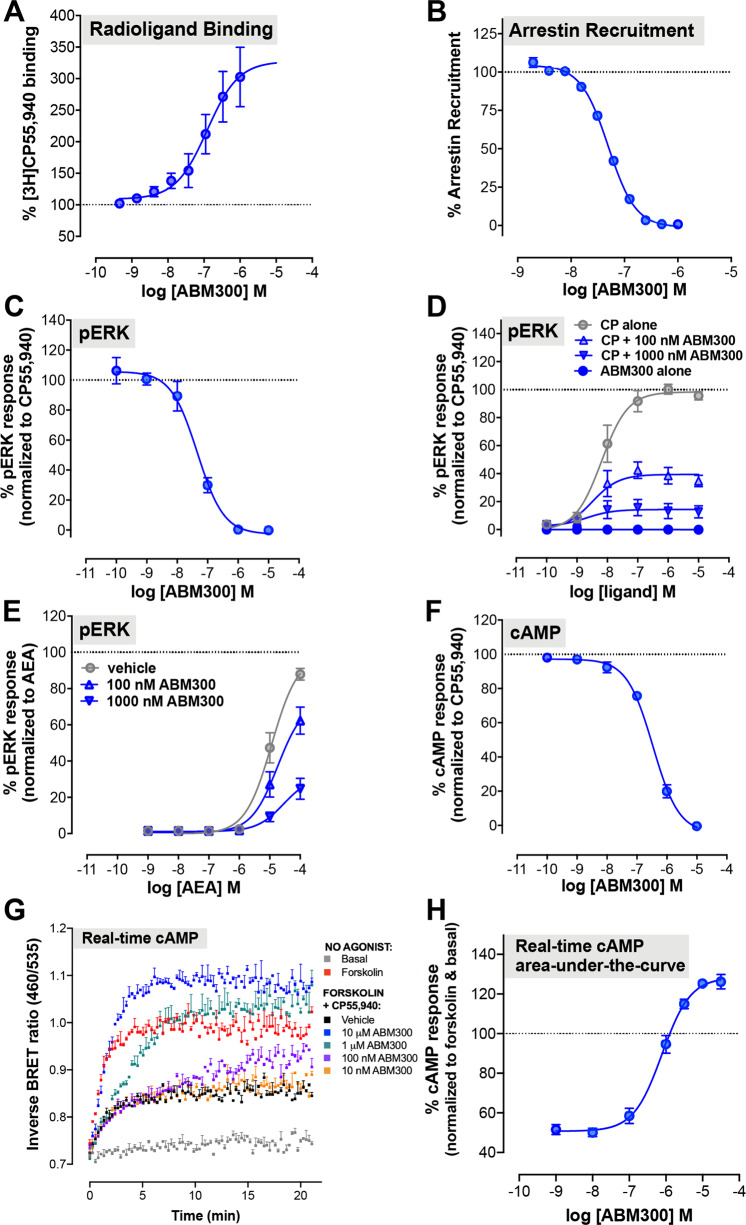
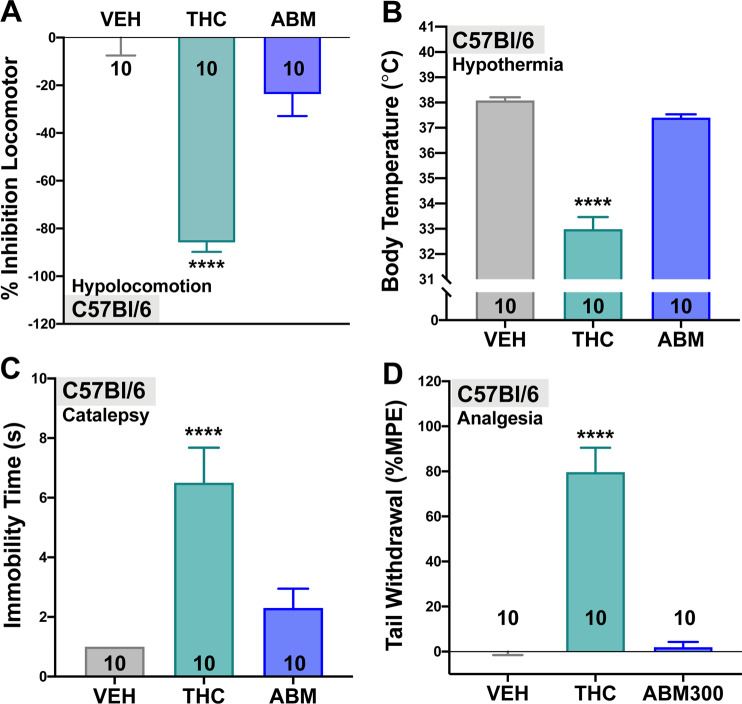
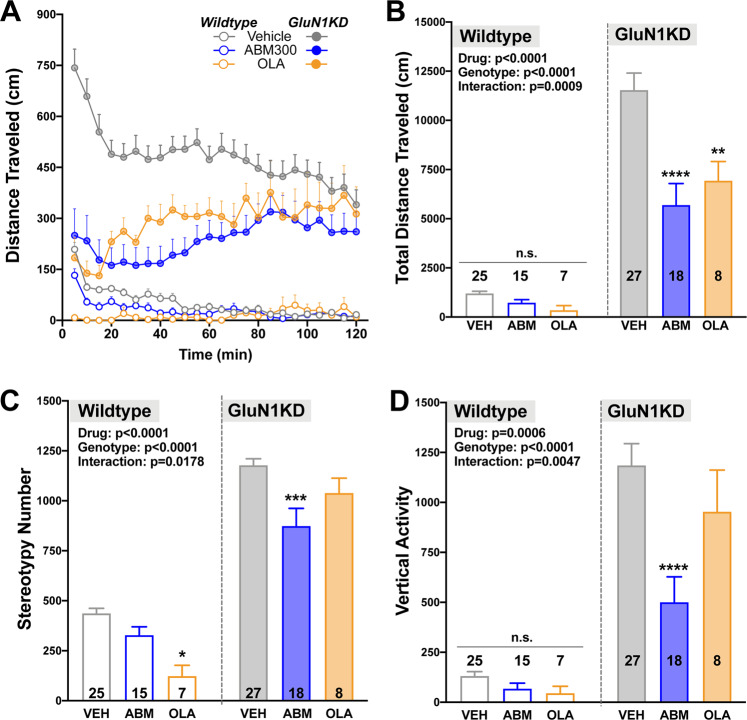
The endocannabinoid system (eCBs) encompasses the endocannabinoids, their synthetic and degradative enzymes, and cannabinoid (CB) receptors. The eCBs mediates inhibition of neurotransmitter release and acts as a major homeostatic system. Many aspects of the eCBs are altered in a number of psychiatric disorders including schizophrenia, which is characterized by dysregulation of dopaminergic signaling. The GluN1-Knockdown (GluN1KD) and Dopamine Transporter Knockout (DATKO) mice are models of hyperdopaminergia, which display abnormal psychosis-related behaviors, including hyperlocomotion and changes in pre-pulse inhibition (PPI). Here, we investigate the ability of a novel CB receptor (CBR) allosteric modulator, ABM300, to ameliorate these dysregulated behaviors. ABM300 was characterized in vitro (receptor binding, β-arrestin2 recruitment, ERK1/2 phosphorylation, cAMP inhibition) and in vivo (anxiety-like behaviors, cannabimimetic effects, novel environment exploratory behavior, pre-pulse inhibition, conditioned avoidance response) to assess the effects of the compound in dysregulated behaviors within the transgenic models. In vitro, ABM300 increased CBR agonist binding but acted as an inhibitor of CBR agonist induced signaling, including β-arrestin2 translocation, ERK phosphorylation and cAMP inhibition. In vivo, ABM300 did not elicit anxiogenic-like or cannabimimetic effects, but it decreased novelty-induced hyperactivity, exaggerated stereotypy, and vertical exploration in both transgenic models of hyperdopaminergia, as well as normalizing PPI in DATKO mice. The data demonstrate for the first time that a CBR allosteric modulator ameliorates the behavioral deficits in two models of increased dopamine, warranting further investigation as a potential therapeutic target in psychiatry.
内源性大麻素系统(eCBs)包括内源性大麻素、其合成和降解酶以及大麻素(CB)受体。eCBs 介导神经递质释放的抑制作用,并作为主要的动态平衡系统。许多精神病学疾病(包括精神分裂症)中都存在 eCBs 的改变,精神分裂症的特点是多巴胺能信号的失调。GluN1-Knockdown(GluN1KD)和多巴胺转运蛋白敲除(DATKO)小鼠是高多巴胺能的模型,表现出异常的与精神病相关的行为,包括过度运动和前脉冲抑制(PPI)的变化。在这里,我们研究了一种新型 CB 受体(CBR)变构调节剂 ABM300 改善这些失调行为的能力。ABM300 在体外(受体结合、β-arrestin2 募集、ERK1/2 磷酸化、cAMP 抑制)和体内(焦虑样行为、大麻素样作用、新环境探索行为、前脉冲抑制、条件回避反应)进行了表征,以评估该化合物在转基因模型中失调行为的影响。在体外,ABM300 增加了 CBR 激动剂结合,但作为 CBR 激动剂诱导信号的抑制剂起作用,包括β-arrestin2 易位、ERK 磷酸化和 cAMP 抑制。在体内,ABM300 没有引起焦虑样或大麻素样作用,但它减少了两种高多巴胺能转基因模型中新奇诱导的过度活跃、刻板行为和垂直探索,并且使 DATKO 小鼠的 PPI 正常化。数据首次表明,CBR 变构调节剂可改善两种增加多巴胺的模型中的行为缺陷,这为其作为精神病学潜在治疗靶点进一步研究提供了依据。