Islam Rehnuma, Trépanier Marc-Olivier, Milenkovic Marija, Horsfall Wendy, Salahpour Ali, Bazinet Richard P, Ramsey Amy J
Department of Physiology, University of Toronto, Toronto, Canada.
Department of Nutritional Sciences, University of Toronto, Toronto, Canada.
NPJ Schizophr. 2017 Mar 22;3:12. doi: 10.1038/s41537-017-0014-8. eCollection 2017.
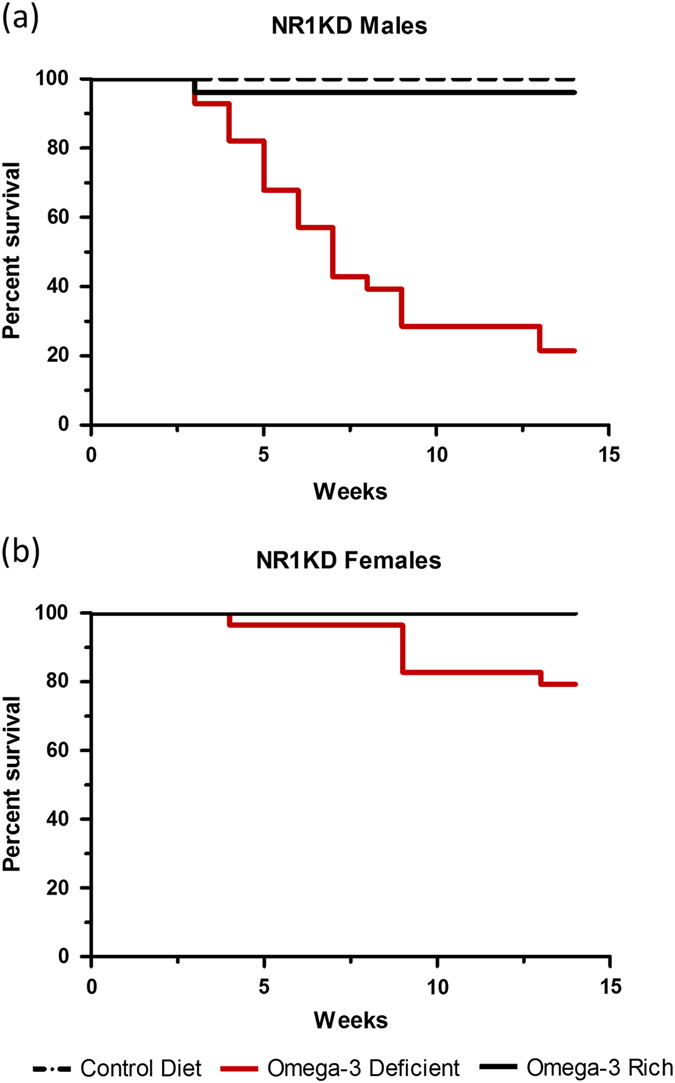
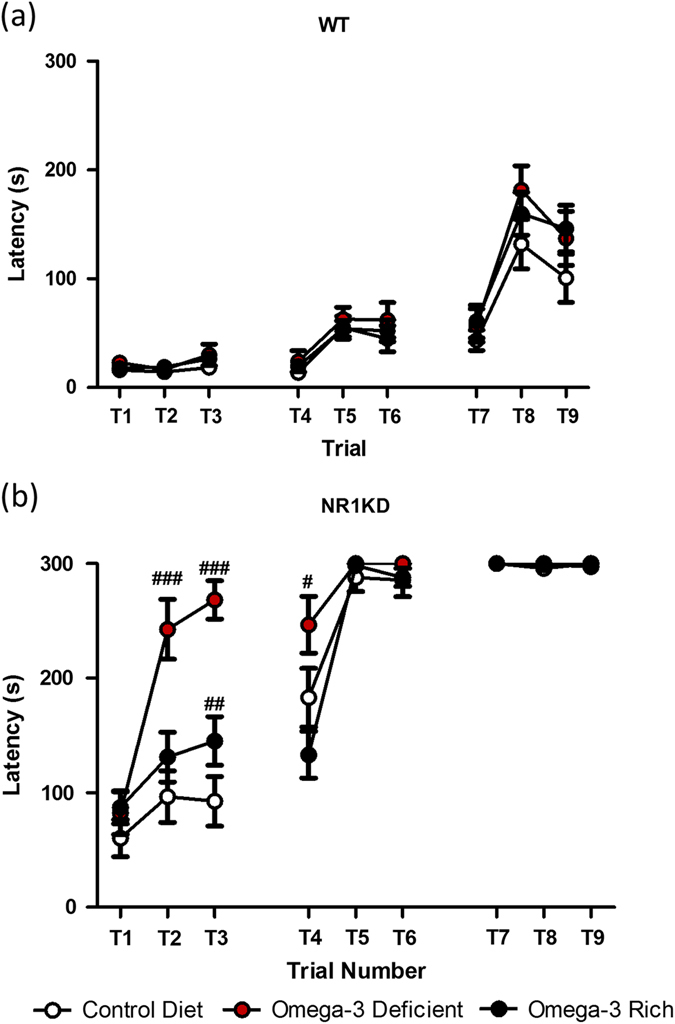
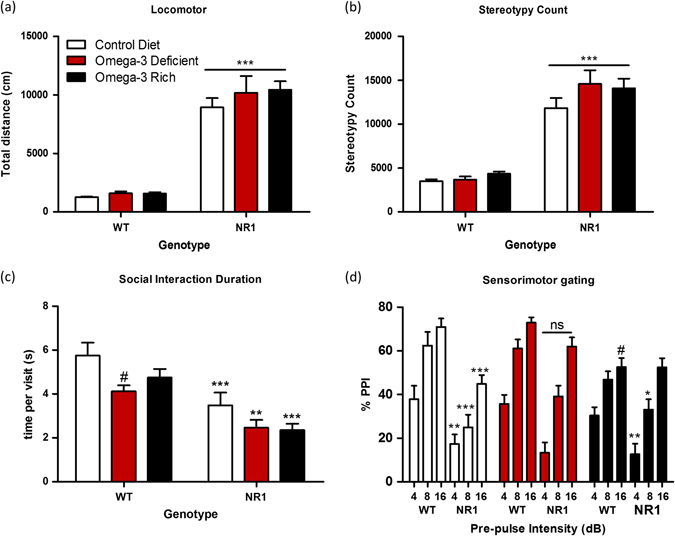
Several studies have found decreased levels of ω-3 polyunsaturated fatty acids in the brain and blood of schizophrenia patients. Furthermore, dietary ω-3 supplements may improve schizophrenia symptoms and delay the onset of first-episode psychosis. We used an animal model of NMDA receptor hypofunction, NR1KD mice, to understand whether changes in glutamate neurotransmission could lead to changes in brain and serum fatty acids. We further asked whether dietary manipulations of ω-3, either depletion or supplementation, would affect schizophrenia-relevant behaviors of NR1KD mice. We discovered that NR1KD mice have elevated brain levels of ω-6 fatty acids regardless of their diet. While ω-3 supplementation did not improve any of the NR1KD behavioral abnormalities, ω-3 depletion exacerbated their deficits in executive function. Omega-3 depletion also caused extreme mortality among male mutant mice, with 75% mortality rate by 12 weeks of age. Our studies show that alterations in NMDAR function alter serum and brain lipid composition and make the brain more vulnerable to dietary ω-3 deprivation.
多项研究发现,精神分裂症患者大脑和血液中的ω-3多不饱和脂肪酸水平降低。此外,膳食补充ω-3可能改善精神分裂症症状,并延迟首次发作精神病的发病。我们使用了一种NMDA受体功能减退的动物模型,即NR1KD小鼠,来了解谷氨酸神经传递的变化是否会导致大脑和血清脂肪酸的变化。我们进一步询问,对ω-3进行膳食干预,无论是消耗还是补充,是否会影响NR1KD小鼠与精神分裂症相关的行为。我们发现,无论饮食如何,NR1KD小鼠大脑中的ω-6脂肪酸水平都会升高。虽然补充ω-3并没有改善NR1KD小鼠的任何行为异常,但消耗ω-3会加剧它们在执行功能方面的缺陷。ω-3的消耗还导致雄性突变小鼠的极高死亡率,到12周龄时死亡率达75%。我们的研究表明,NMDAR功能的改变会改变血清和大脑脂质组成,并使大脑更容易受到膳食ω-3缺乏的影响。