Nuclear Science Research Institute, Pusan National University, Busan 46241, Korea.
Department of Integrated Biological Science, Pusan National University, Busan 46241, Korea.
Nutrients. 2020 Oct 6;12(10):3058. doi: 10.3390/nu12103058.
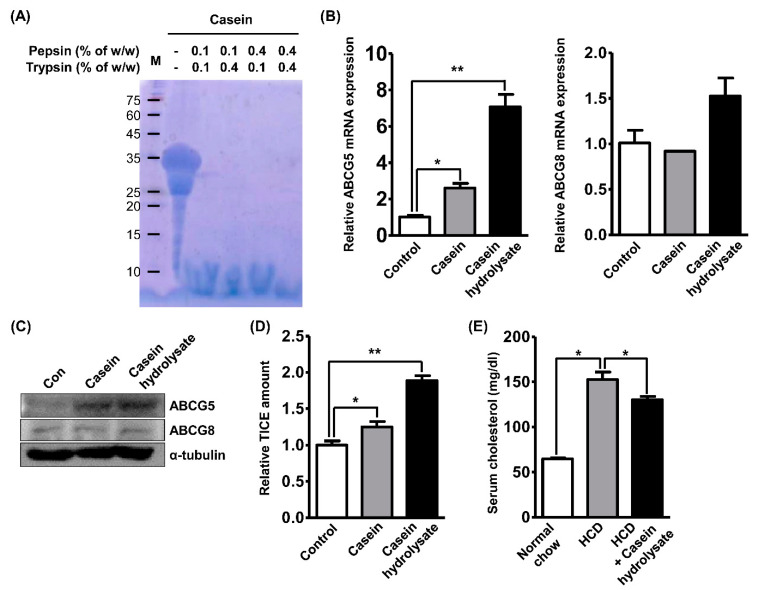
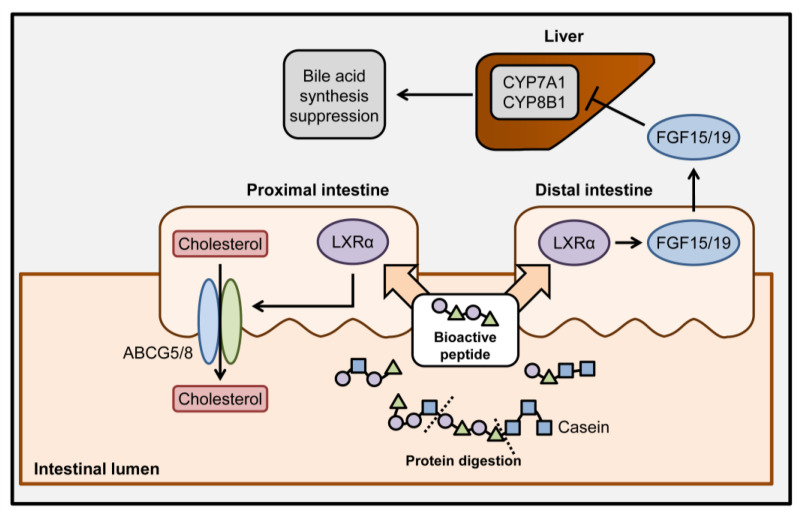
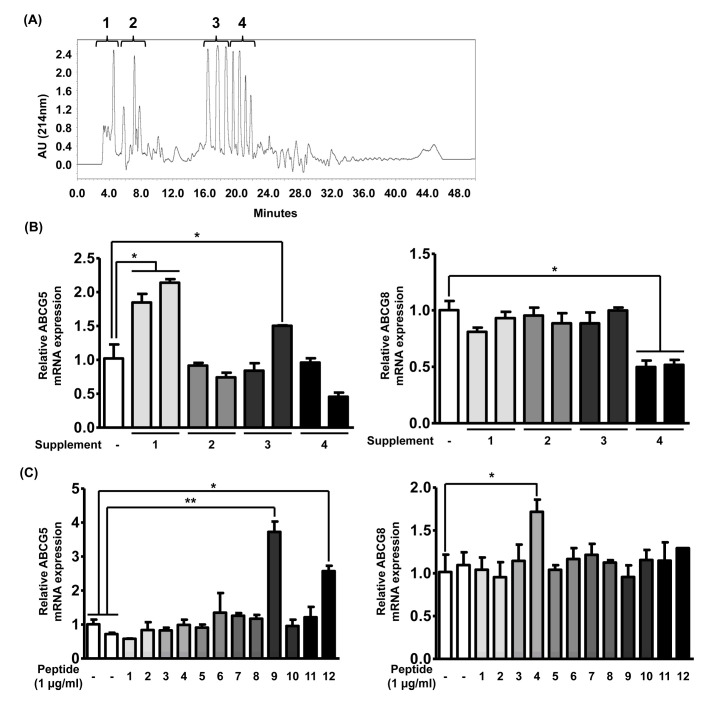
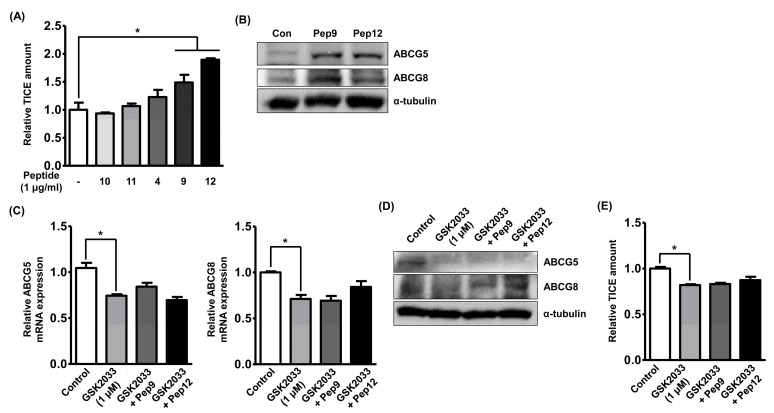
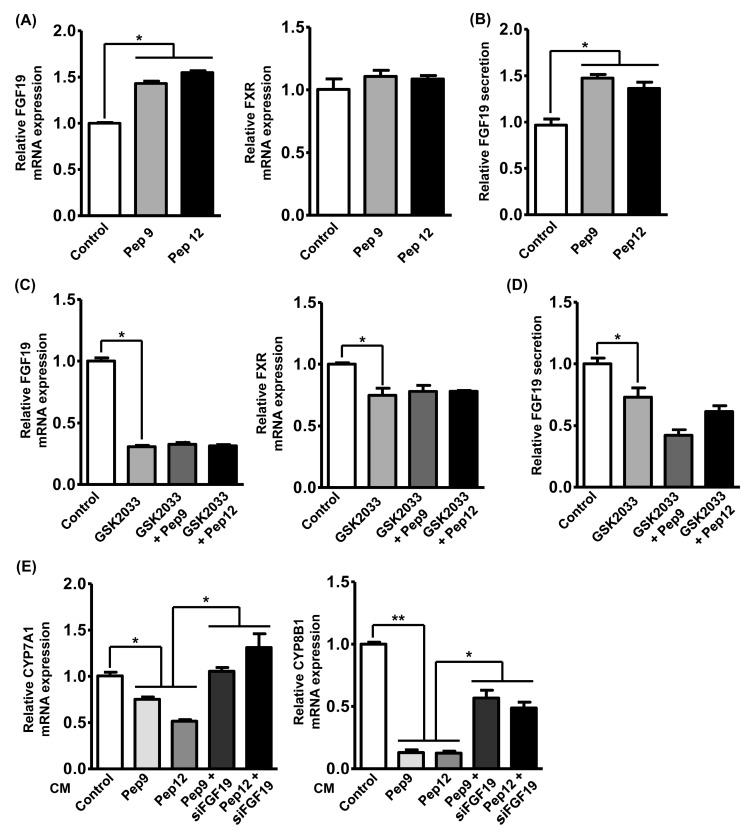
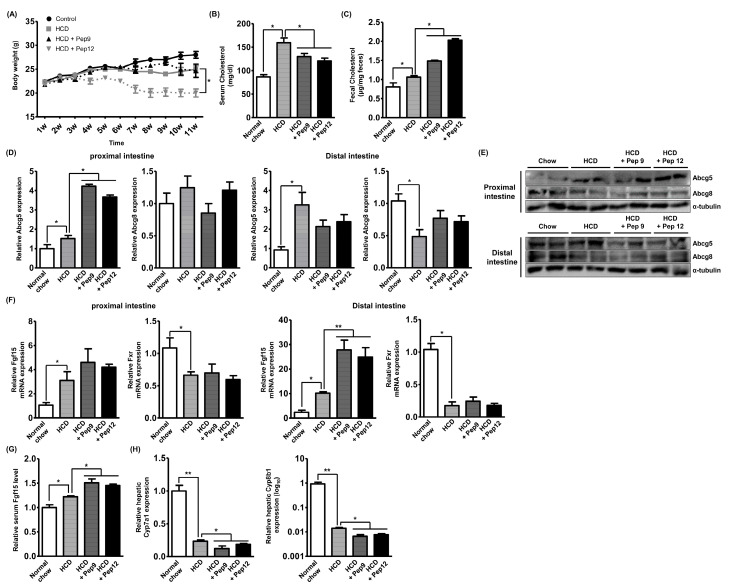
Hyperlipidemia, a syndrome characterized by an abnormal elevation of blood lipids, causes chronic lethal metabolic disorders. Although statins are regularly prescribed to patients, an alternative to treat the burden of excessive lipids is required for cholesterol control. In this study, it was found that the treatment of casein hydrolyzed by pepsin and trypsin induced trans-intestinal cholesterol excretion (TICE) through ATP-binding cassette subfamily G members 5 (ABCG5) expression. Next, we analyzed sequences of the peptides responsible for TICE induction, synthesized artificial peptides based on the sequences, and the hypolipidemic effects of the peptide treatments were assessed in both and models. We determined that two bioactive peptides contained in casein hydrolysates (SQSKVLPVPQK and HPHPHLSF) induced TICE through the expression of ABCG5 in enterocytes and suppressed hepatic mRNA expression of cytochrome P450 family 7 subfamily A member 1 (CYP7A1) and CYP8B1by ileal FGF19 expression both in an liver X receptor α (LXRα)-mediated manner. In the hyperlipidemic mouse models, the oral administration of peptides reduced serum cholesterol levels through elevation of the ABCG5 expression in proximal intestine and fecal cholesterol secretion. Besides this, peptides induced ileal expression of fibroblast growth factor 15/19 (FGF15/19) and inhibited hepatic bile acid synthesis. We found that the oral treatment of casein-derived bioactive peptides could improve hyperlipidemia by regulating intestinal excretion and hepatic synthesis of cholesterols.
高脂血症是一种以血液脂质异常升高为特征的综合征,可导致慢性致命的代谢紊乱。尽管他汀类药物经常被开给患者,但需要寻找替代方法来控制胆固醇,以治疗过多脂质的负担。在这项研究中,发现胃蛋白酶和胰蛋白酶水解的酪蛋白通过三磷酸腺苷结合盒亚家族 G 成员 5(ABCG5)表达诱导跨肠胆固醇排泄(TICE)。接下来,我们分析了负责诱导 TICE 的肽序列,根据这些序列合成了人工肽,并在 和 模型中评估了肽处理的降血脂作用。我们确定了酪蛋白水解物中含有的两种生物活性肽(SQSKVLPVPQK 和 HPHPHLSF)通过肠细胞中 ABCG5 的表达诱导 TICE,并通过回肠 FGF19 的表达抑制肝 mRNA 表达细胞色素 P450 家族 7 亚家族 A 成员 1(CYP7A1)和 CYP8B1,这两种方式均为肝 X 受体 α(LXRα)介导。在高脂血症小鼠模型中,肽的口服给药通过增加近端肠 ABCG5 的表达和粪便胆固醇分泌来降低血清胆固醇水平。此外,肽诱导回肠表达成纤维细胞生长因子 15/19(FGF15/19)并抑制肝胆汁酸合成。我们发现,口服酪蛋白衍生的生物活性肽可以通过调节肠道排泄和肝脏胆固醇合成来改善高脂血症。