Department of Women's Anesthesia, KK Women's and Children's Hospital, 100 Bukit Timah Road Singapore, Singapore City, 229899, Singapore.
Duke-NUS Medical School, 8 College Road Singapore, Singapore City, 169857, Singapore.
BMC Anesthesiol. 2020 Oct 9;20(1):261. doi: 10.1186/s12871-020-01177-6.
Pre-operative anxiety is common and is associated with negative surgical outcomes. Virtual reality (VR) is a promising new technology that offers opportunities to modulate patient experience and cognition and has been shown to be associated with lower levels of anxiety. In this study, we investigated changes in pre-operative anxiety levels before and after using VR in patients undergoing minor gynecological surgery.
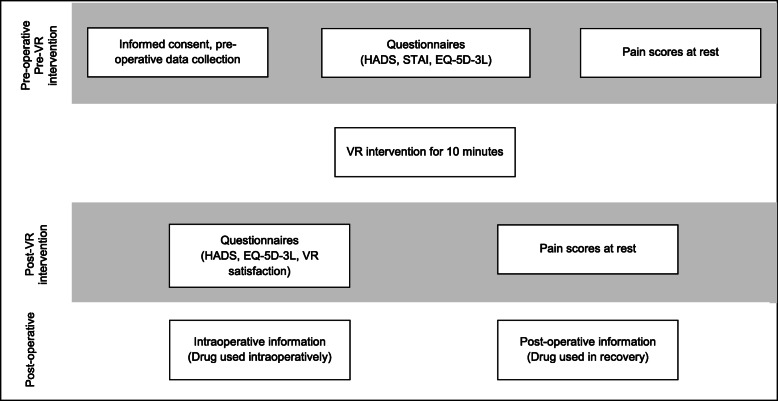
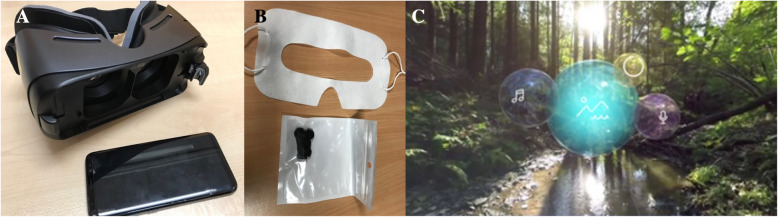
Patients who underwent elective minor gynecological surgeries in KK Women's and Children's hospital, Singapore were recruited. The VR intervention consisted of 10-min exposure via a headset loaded with sceneries, background meditation music and breathing exercises. For the primary outcome of pre-operative anxiety, patients were assessed at pre- and post-intervention using the Hospital Anxiety and Depression Scale (HADS). Secondary outcomes of self-reported satisfaction scores and EuroQol 5-dimension 3-level (EQ-5D-3L) were also collected.
Data analysis from 108 patients revealed that HADS anxiety scores were significantly reduced from 7.2 ± 3.3 pre-intervention to 4.6 ± 3.0 post-intervention (p < 0.0001). Furthermore, HADS depression scores were significantly reduced from 4.7 ± 3.3 pre-intervention to 2.9 ± 2.5 post-intervention (p < 0.0001). Eighty-two percent of the patients self-reported VR intervention as 'Good' or 'Excellent'. EQ-5D-3L showed significant changes in dimensions of 'usual activities' (p = 0.025), 'pain/discomfort' (p = 0.008) and 'anxiety/ depression' (p < 0.0001).
For patients undergoing minor gynecological procedures, the VR intervention brought about a significant reduction in pre-operative anxiety. This finding may be clinically important to benefit patients with high pre-operative anxiety without the use of anxiolytics.
This study was registered on clinicaltrials.gov registry ( NCT03685422 ) on 26 Sep 2018.
术前焦虑是常见的,并且与负面的手术结果有关。虚拟现实(VR)是一种有前途的新技术,它提供了调节患者体验和认知的机会,并且已被证明与较低的焦虑水平有关。在这项研究中,我们调查了在接受小型妇科手术的患者中使用 VR 前后术前焦虑水平的变化。
在新加坡 KK 妇女儿童医院接受选择性小型妇科手术的患者被招募。VR 干预包括通过耳机暴露 10 分钟,耳机中加载有风景、背景冥想音乐和呼吸练习。对于术前焦虑的主要结果,患者在干预前后使用医院焦虑和抑郁量表(HADS)进行评估。还收集了自我报告的满意度评分和欧洲五维健康量表 3 级(EQ-5D-3L)的次要结果。
对 108 例患者的数据进行分析表明,HADS 焦虑评分从干预前的 7.2±3.3 显著降低到干预后的 4.6±3.0(p<0.0001)。此外,HADS 抑郁评分从干预前的 4.7±3.3 显著降低到干预后的 2.9±2.5(p<0.0001)。82%的患者自我报告 VR 干预为“好”或“优秀”。EQ-5D-3L 在“日常活动”(p=0.025)、“疼痛/不适”(p=0.008)和“焦虑/抑郁”(p<0.0001)维度上均有显著变化。
对于接受小型妇科手术的患者,VR 干预显著降低了术前焦虑。这一发现可能对患有高术前焦虑症的患者具有重要的临床意义,而无需使用抗焦虑药物。
本研究于 2018 年 9 月 26 日在 clinicaltrials.gov 注册(NCT03685422)。