Department of Pancreatobiliary Surgery, State Key Laboratory of Oncology in South China, Collaborative Innovation Center for Cancer Medicine, Sun Yat-sen University Cancer Center, 651 dongfengdong Road, Guangzhou, 510060, China.
BMC Cancer. 2020 Oct 10;20(1):981. doi: 10.1186/s12885-020-07482-0.
Growing evidence indicates that the systemic inflammatory response plays an important role in cancer development and progression. Several inflammatory markers have been reported to be associated with clinical outcomes in patients with various types of cancer. This study was designed to evaluate the prognostic value of inflammatory indexes in patients with ampullary cancer (AC) who underwent pancreaticoduodenectomy (PD).
We retrospectively reviewed the data of 358 patients with AC who underwent PD between 2009 and 2018. R software was used to compare the area under the time-dependent receiver operating characteristic (ROC) curves (AUROCs) of the inflammation-based indexes, including the neutrophil-to-lymphocyte ratio (NLR), platelet-to-lymphocyte ratio (PLR), modified Glasgow Prognostic Score (mGPS), prognostic nutritional index (PNI) and prognostic index (PI), in terms of their predictive value for survival. The survival differences of these indexes were compared by the Kaplan-Meier method and univariate and multivariate analyses were performed to determine the prognostic factors of disease-free survival (DFS) and overall survival (OS).
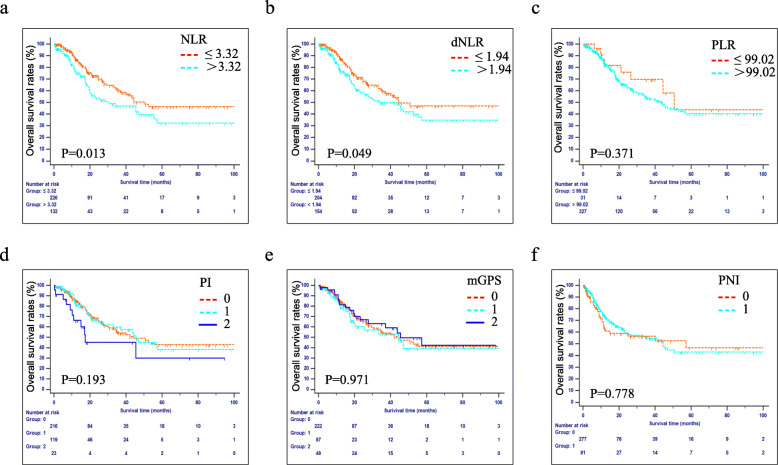
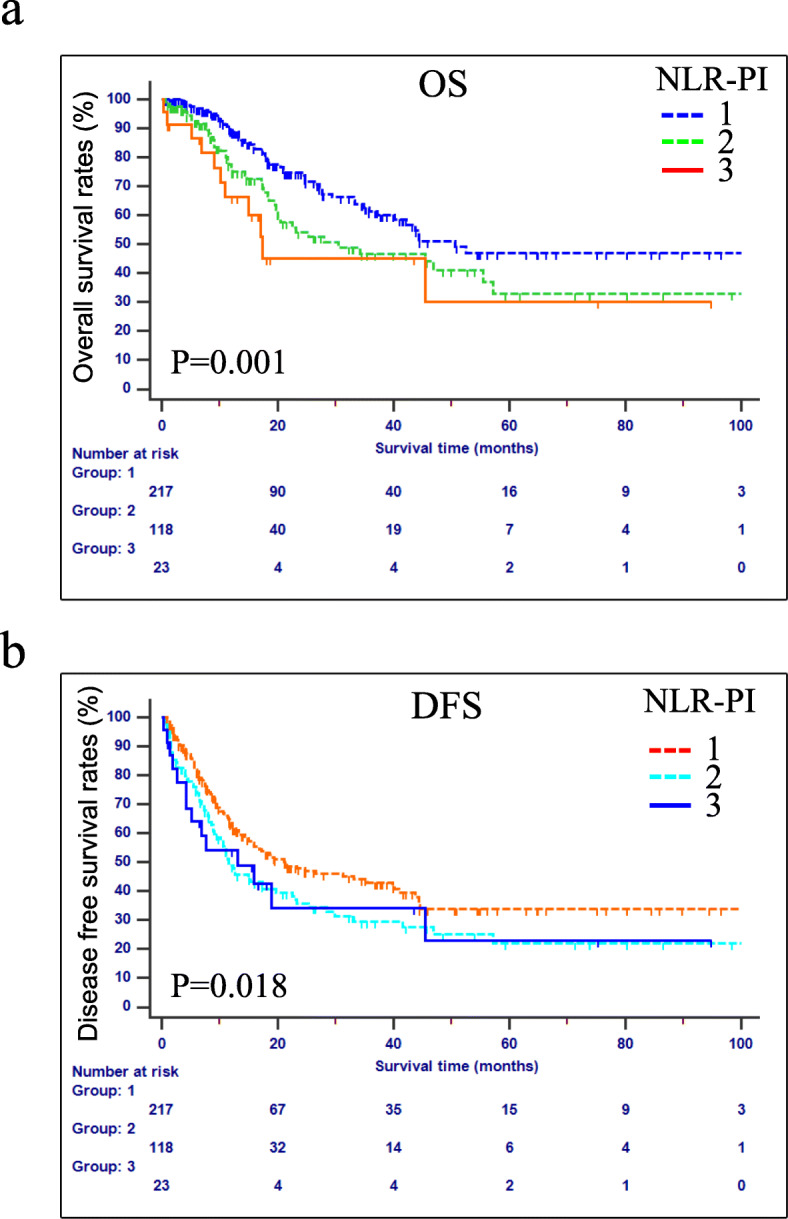
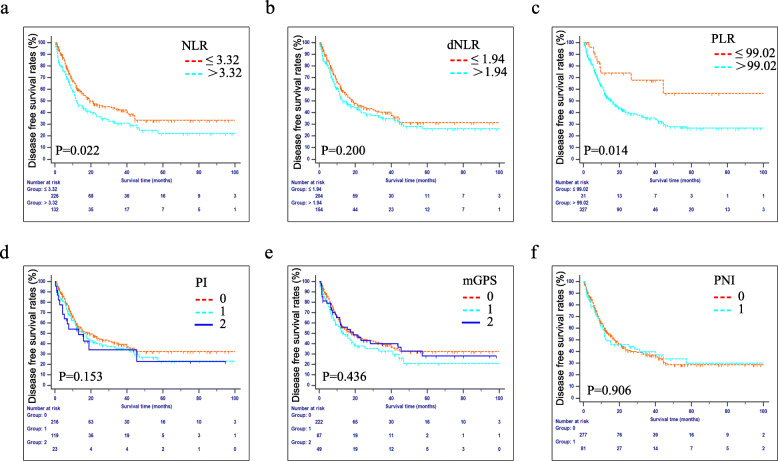
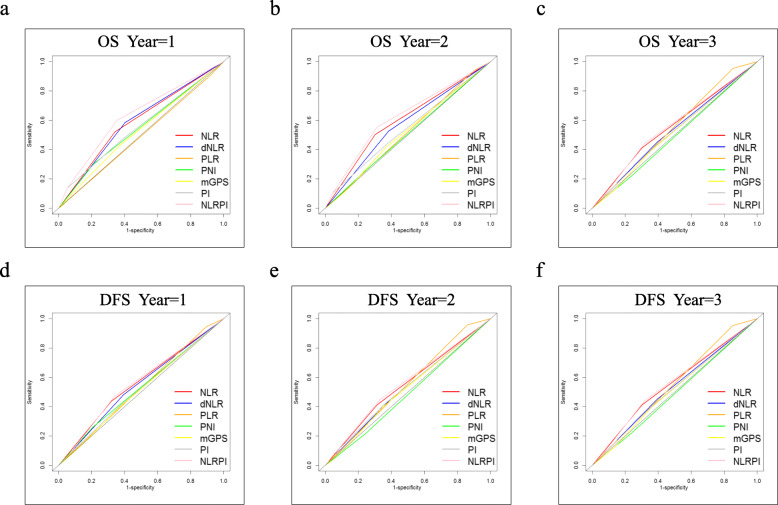
The estimated 1-, 2-, and 3-year OS and DFS rates were 83.9, 65.8, and 55.2% and 58.0, 42.8, and 37.8%, respectively, for the entire cohort. The survival differences were significant in terms of OS and DFS when patients were stratified by these inflammation-based indexes. The comparisons of the AUROCs of these inflammation-based indexes illustrated that NLR and PI displayed the highest prognostic value, compared to the other indexes. When NLR and PI were combined, NLR-PI showed even higher AUROC values and was identified as a significant prognostic factor for OS and DFS.
Specific inflammatory indexes, such as NLR, PLR and dNLR, were found to be able to predict the OS or DFS of patients. As a novel inflammatory index, the level of NLR-PI, which can be regarded as a more useful prognostic index, exhibited strong predictive power for predicting the prognosis of patients with AC after the PD procedure.
越来越多的证据表明,全身炎症反应在癌症的发生和发展中起着重要作用。已有报道称,几种炎症标志物与各种类型癌症患者的临床结局相关。本研究旨在评估接受胰十二指肠切除术(PD)的壶腹癌(AC)患者炎症指标的预后价值。
我们回顾性分析了 2009 年至 2018 年间接受 PD 的 358 例 AC 患者的数据。使用 R 软件比较了包括中性粒细胞与淋巴细胞比值(NLR)、血小板与淋巴细胞比值(PLR)、改良格拉斯哥预后评分(mGPS)、预后营养指数(PNI)和预后指数(PI)在内的炎症指标的时间依赖性接受者操作特征曲线(ROC)下面积(AUROC),以评估其对生存的预测价值。通过 Kaplan-Meier 方法比较这些指标的生存差异,并进行单因素和多因素分析,以确定无病生存(DFS)和总生存(OS)的预后因素。
全队列的估计 1、2 和 3 年 OS 和 DFS 率分别为 83.9%、65.8%和 55.2%和 58.0%、42.8%和 37.8%。根据这些基于炎症的指标对患者进行分层时,OS 和 DFS 的生存差异具有统计学意义。这些基于炎症的指标的 AUROC 比较表明,NLR 和 PI 显示出最高的预后价值,优于其他指标。当 NLR 和 PI 结合时,NLR-PI 显示出更高的 AUROC 值,并且被确定为 OS 和 DFS 的显著预后因素。
特定的炎症指标,如 NLR、PLR 和 dNLR,被发现能够预测患者的 OS 或 DFS。作为一种新的炎症指标,NLR-PI 水平可以作为一种更有用的预后指标,对 PD 术后 AC 患者的预后具有较强的预测能力。