Division of Gastroenterology, Hepatology & Nutrition, Developmental Biology and Center for Stem Cell and Organoid Medicine (CuSTOM), Cincinnati Children's Hospital Medical Center, Cincinnati, Ohio.
Institute of Research, Tokyo Medical and Dental University (TMDU), Tokyo, Japan.
Gastroenterology. 2021 Feb;160(3):831-846.e10. doi: 10.1053/j.gastro.2020.10.002. Epub 2020 Oct 8.
BACKGROUND & AIMS: Preclinical identification of compounds at risk of causing drug induced liver injury (DILI) remains a significant challenge in drug development, highlighting a need for a predictive human system to study complicated DILI mechanism and susceptibility to individual drug. Here, we established a human liver organoid (HLO)-based screening model for analyzing DILI pathology at organoid resolution.
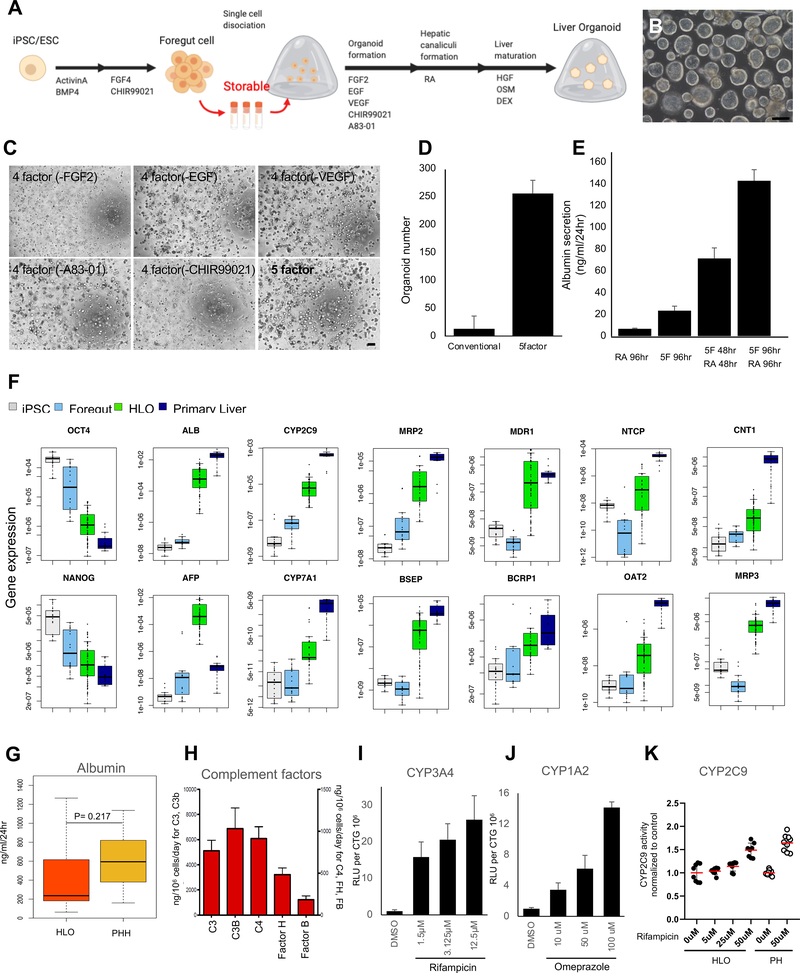
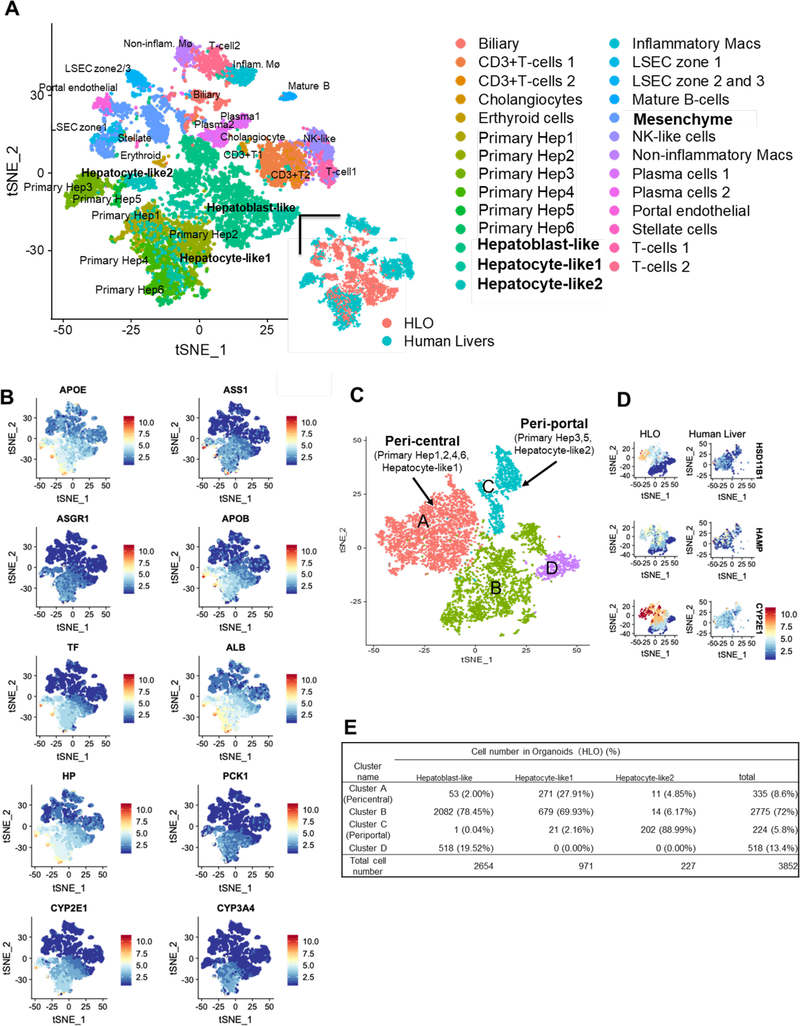
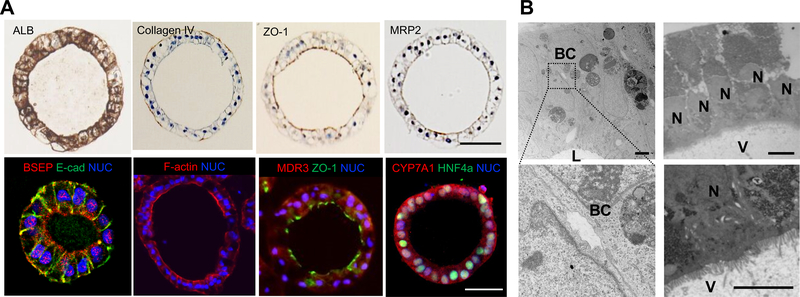
We first developed a reproducible method to generate HLO from storable foregut progenitors from pluripotent stem cell (PSC) lines with reproducible bile transport function. The qRT-PCR and single cell RNA-seq determined hepatocyte transcriptomic state in cells of HLO relative to primary hepatocytes. Histological and ultrastructural analyses were performed to evaluate micro-anatomical architecture. HLO based drug-induced liver injury assays were transformed into a 384 well based high-speed live imaging platform.
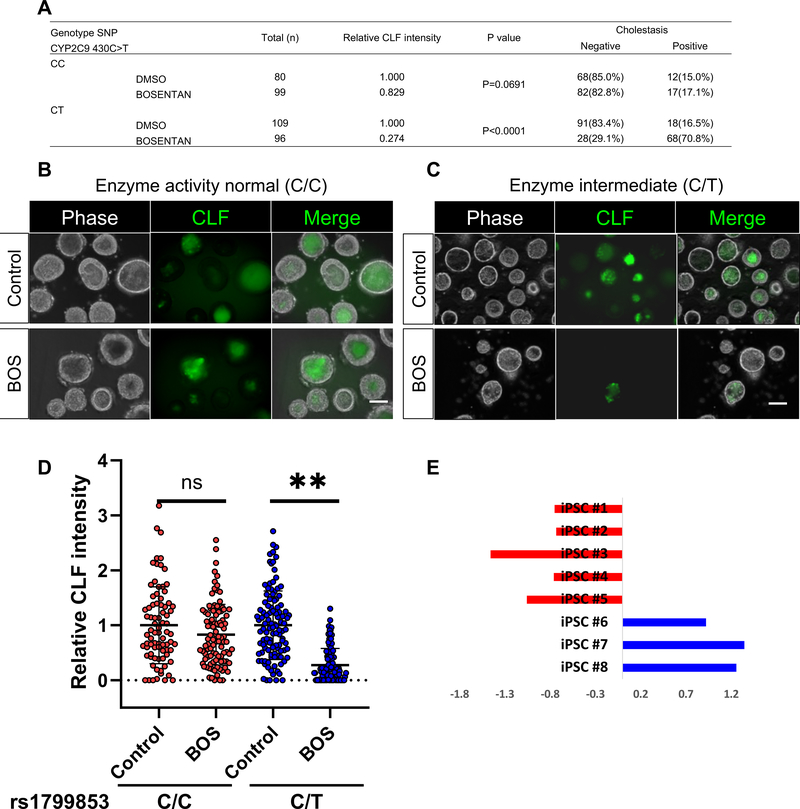
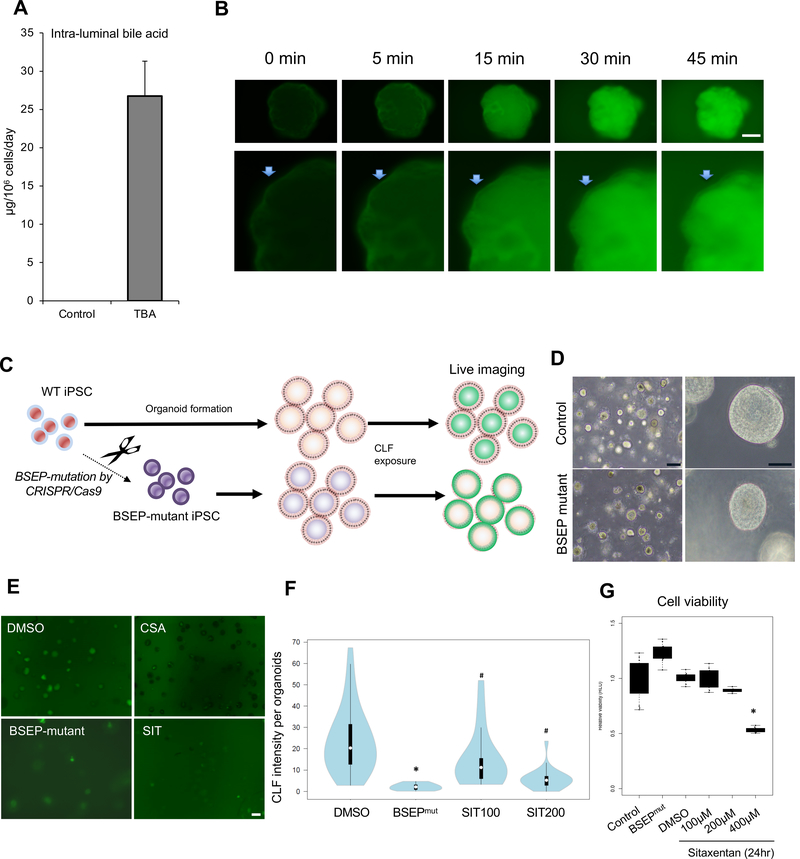
HLO, generated from 10 different pluripotent stem cell lines, contain polarized immature hepatocytes with bile canaliculi-like architecture, establishing the unidirectional bile acid transport pathway. Single cell RNA-seq profiling identified diverse and zonal hepatocytic populations that in part emulate primary adult hepatocytes. The accumulation of fluorescent bile acid into organoid was impaired by CRISPR-Cas9-based gene editing and transporter inhibitor treatment with BSEP. Furthermore, we successfully developed an organoid based assay with multiplexed readouts measuring viability, cholestatic and/or mitochondrial toxicity with high predictive values for 238 marketed drugs at 4 different concentrations (Sensitivity: 88.7%, Specificity: 88.9%). LoT positively predicts genomic predisposition (CYP2C9∗2) for Bosentan-induced cholestasis.
Liver organoid-based Toxicity screen (LoT) is a potential assay system for liver toxicology studies, facilitating compound optimization, mechanistic study, and precision medicine as well as drug screening applications.
在药物开发中,临床前识别有导致药物性肝损伤(DILI)风险的化合物仍然是一个重大挑战,这凸显了需要建立一个预测性的人类系统来研究复杂的 DILI 机制和个体药物易感性。在这里,我们建立了一种基于人肝类器官(HLO)的筛选模型,以在类器官分辨率下分析 DILI 病理学。
我们首先开发了一种可重复的方法,从多能干细胞(PSC)系中储存的前肠祖细胞生成 HLO,具有可重复的胆汁转运功能。qRT-PCR 和单细胞 RNA-seq 确定了 HLO 中相对于原代肝细胞的肝细胞转录组状态。进行组织学和超微结构分析以评估微观解剖结构。将基于 HLO 的药物性肝损伤测定转化为基于 384 孔的高速实时成像平台。
从 10 种不同的多能干细胞系生成的 HLO 包含具有胆管样结构的极化未成熟肝细胞,建立了单向胆汁酸转运途径。单细胞 RNA-seq 分析鉴定了不同的和区域化的肝细胞群体,部分模拟了原代成年肝细胞。CRISPR-Cas9 基因编辑和转运体抑制剂处理会破坏荧光胆汁酸在类器官中的积累,用 BSEP 处理。此外,我们成功开发了一种基于类器官的测定方法,具有多重读出功能,可测量在 4 种不同浓度下 238 种市售药物的活力、胆汁淤积和/或线粒体毒性,具有高预测值(灵敏度:88.7%,特异性:88.9%)。LoT 阳性预测博舒替尼诱导胆汁淤积的基因组易感性(CYP2C9∗2)。
基于肝类器官的毒性筛选(LoT)是一种用于肝毒理学研究的潜在测定系统,可促进化合物优化、机制研究、精准医学以及药物筛选应用。