Department of Clinical Pharmacy and Pharmacology, University Medical Center Groningen, University of Groningen, , P.O. Box 30.001, EB70, 9700 RB, Groningen, The Netherlands.
Centre for Microbial Diseases and Immunity Research, University of British Columbia, Vancouver, BC, Canada.
EBioMedicine. 2020 Nov;61:103044. doi: 10.1016/j.ebiom.2020.103044. Epub 2020 Oct 8.
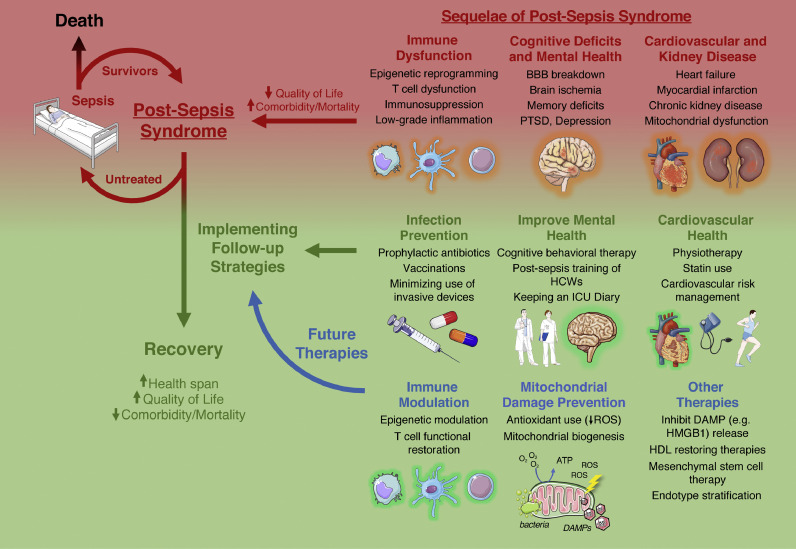
Sepsis is a major health problem worldwide. As the number of sepsis cases increases, so does the number of sepsis survivors who suffer from "post-sepsis syndrome" after hospital discharge. This syndrome involves deficits in multiple systems, including the immune, cognitive, psychiatric, cardiovascular, and renal systems. Combined, these detrimental consequences lead to rehospitalizations, poorer quality of life, and increased mortality. Understanding the pathophysiology of these issues is crucial to develop new therapeutic opportunities to improve survival rate and quality of life of sepsis survivors. Such novel strategies include modulating the immune system and addressing mitochondrial dysfunction. A sepsis follow-up clinic may be useful to identify long-term health issues associated with post-sepsis syndrome and evaluate existing and novel strategies to improve the lives of sepsis survivors.
脓毒症是全球范围内的一个主要健康问题。随着脓毒症病例的增加,出院后患有“脓毒症后综合征”的脓毒症幸存者的数量也在增加。这种综合征涉及多个系统的缺陷,包括免疫系统、认知、精神、心血管和肾脏系统。这些有害的后果共同导致再住院、生活质量下降和死亡率增加。了解这些问题的病理生理学对于开发新的治疗机会以提高脓毒症幸存者的生存率和生活质量至关重要。这些新策略包括调节免疫系统和解决线粒体功能障碍。脓毒症随访诊所可能有助于确定与脓毒症后综合征相关的长期健康问题,并评估现有的和新的策略,以改善脓毒症幸存者的生活。