Valdebenito Sara, Murray Aja, Hughes Claire, Băban Adriana, Fernando Asvini D, Madrid Bernadette J, Ward Catherine, Osafo Joseph, Dunne Michael, Sikander Siham, Walker Susan P, Thang Vo Van, Tomlinson Mark, Fearon Pasco, Shenderovich Yulia, Marlow Marguerite, Chathurika Deshanie, Taut Diana, Eisner Manuel
Institute of Criminology, University of Cambridge, Cambridge, UK
Department of Psychology, The University of Edinburgh, Edinburgh, UK.
BMJ Open. 2020 Oct 10;10(10):e034986. doi: 10.1136/bmjopen-2019-034986.
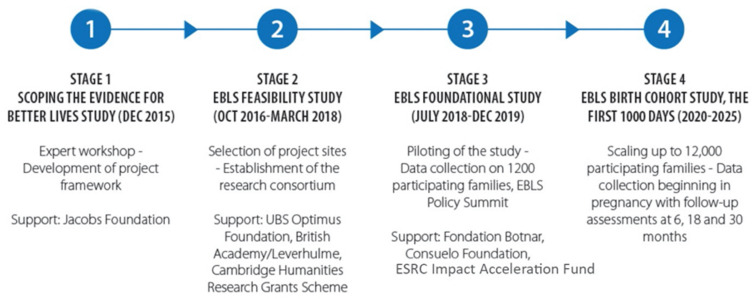
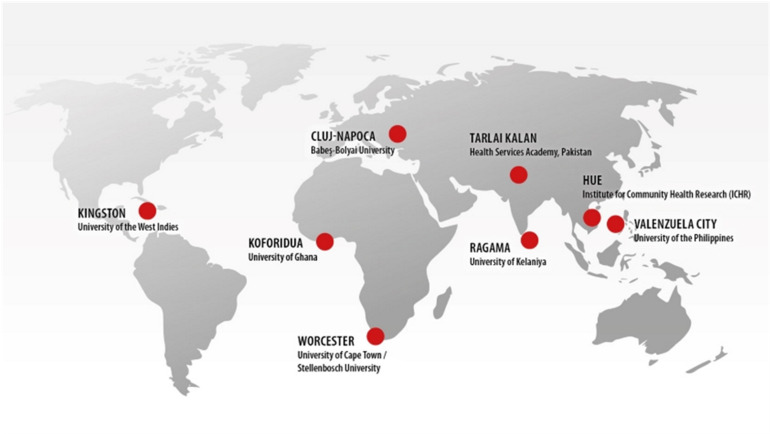
Violence against children is a health, human rights and social problem affecting approximately half of the world's children. Its effects begin at prenatal stages with long-lasting impacts on later health and well-being. The (EBLS) aims to produce high-quality longitudinal data from cities in eight low- and middle-income countries-Ghana, Jamaica, Pakistan, the Philippines, Romania, South Africa, Sri Lanka and Vietnam-to support effective intervention to reduce violence against children. EBLS-Foundational Research (EBLS-FR) tests critical aspects of the planned EBLS, including participant recruitment and retention, data collection and analysis. Alongside epidemiological estimates of levels and predictors of exposure to violence and adversity during pregnancy, we plan to explore mechanisms that may link exposure to violence to mothers' biological stress markers and subjective well-being.
EBLS-FR is a short longitudinal study with a sample of 1200 pregnant women. Data are collected during the last trimester of pregnancy and 2 to 6 months after birth. The questionnaire for participating women has been translated into nine languages. Measures obtained from mothers will include, among others, mental and physical health, attitudes to corporal punishment, adverse childhood experiences, prenatal intimate partner violence, substance use and social/community support. Hair and dry blood spot samples are collected from the pregnant women to measure stress markers. To explore research participation among fathers, EBLS-FR is recruiting 300 fathers in the Philippines and Sri Lanka.
The study received ethical approvals at all recruiting sites and universities in the project. Results will be disseminated through journal publications, conferences and seminar presentations involving local communities, health services and other stakeholders. Findings from this work will help to adjust the subsequent stages of the EBLS project.
暴力侵害儿童行为是一个健康、人权和社会问题,影响着全球约半数儿童。其影响始于产前阶段,对儿童日后的健康和幸福产生持久影响。“暴力侵害儿童行为纵向研究”(EBLS)旨在从八个低收入和中等收入国家(加纳、牙买加、巴基斯坦、菲律宾、罗马尼亚、南非、斯里兰卡和越南)的城市收集高质量的纵向数据,以支持采取有效干预措施减少暴力侵害儿童行为。EBLS基础研究(EBLS-FR)对计划开展的EBLS的关键方面进行测试,包括参与者的招募与留存、数据收集与分析。除了对孕期暴力和逆境暴露水平及预测因素进行流行病学评估外,我们还计划探究可能将暴力暴露与母亲的生物应激标志物及主观幸福感联系起来的机制。
EBLS-FR是一项短期纵向研究,样本为1200名孕妇。在妊娠晚期及产后2至6个月收集数据。参与研究的女性问卷已被翻译成九种语言。从母亲那里获取的测量指标将包括心理健康和身体健康、对体罚的态度、童年不良经历、产前亲密伴侣暴力、物质使用情况以及社会/社区支持等。从孕妇身上采集头发和干血斑样本以测量应激标志物。为了探究父亲参与研究的情况,EBLS-FR正在菲律宾和斯里兰卡招募300名父亲。
该研究在项目的所有招募地点和大学均获得了伦理批准。研究结果将通过期刊发表、会议以及面向当地社区、卫生服务机构和其他利益相关者的研讨会报告进行传播。这项工作的研究结果将有助于调整EBLS项目的后续阶段。