Asakura Koko, Evans Scott R, Hamasaki Toshimitsu
Department of Data Science, National Cerebral and Cardiovascular Center, Osaka, Japan.
Department of Innovative Clinical Trials and Data Science, Osaka University Graduate School of Medicine, Osaka, Japan.
Stat Biopharm Res. 2020;12(2):164-175. doi: 10.1080/19466315.2019.1677494. Epub 2019 Nov 4.
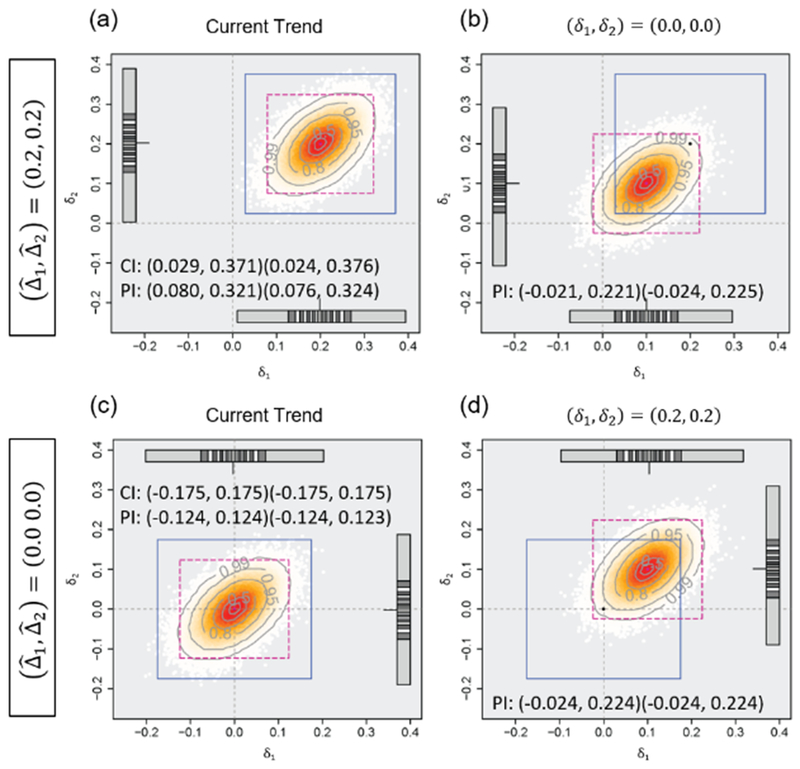
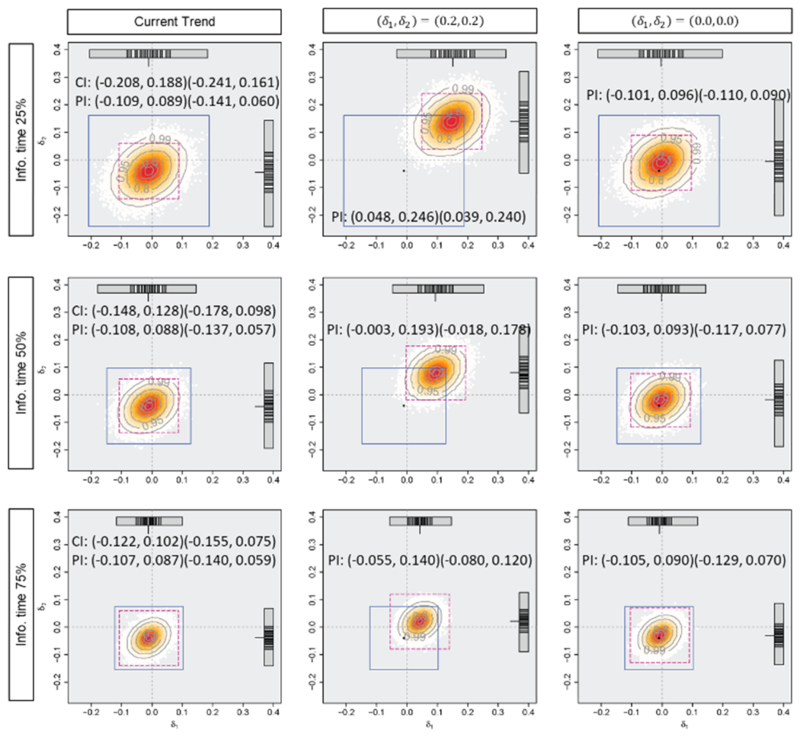
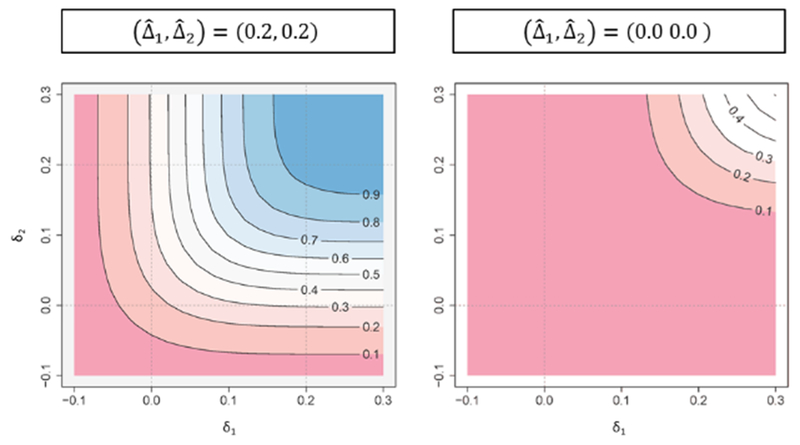
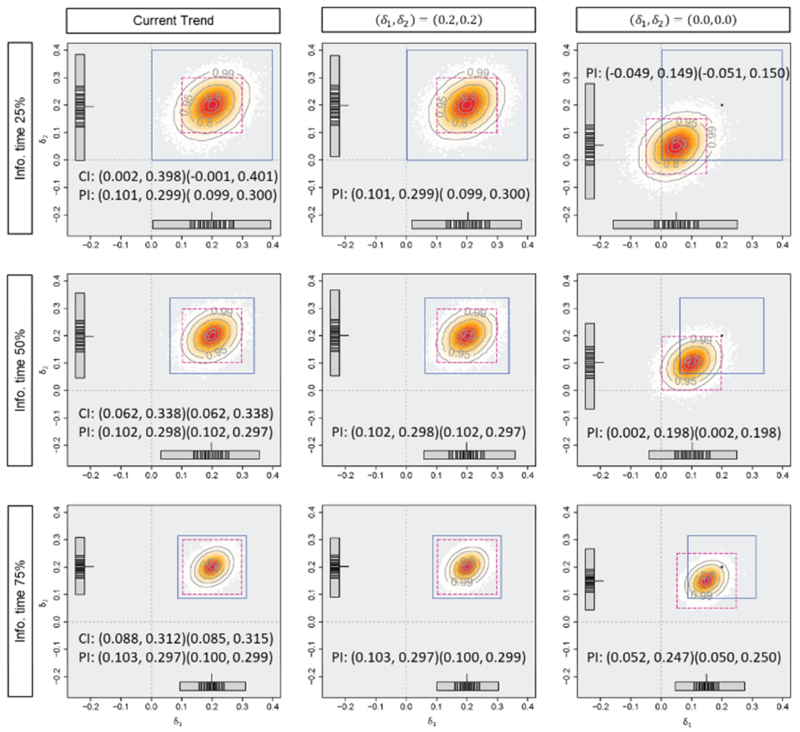
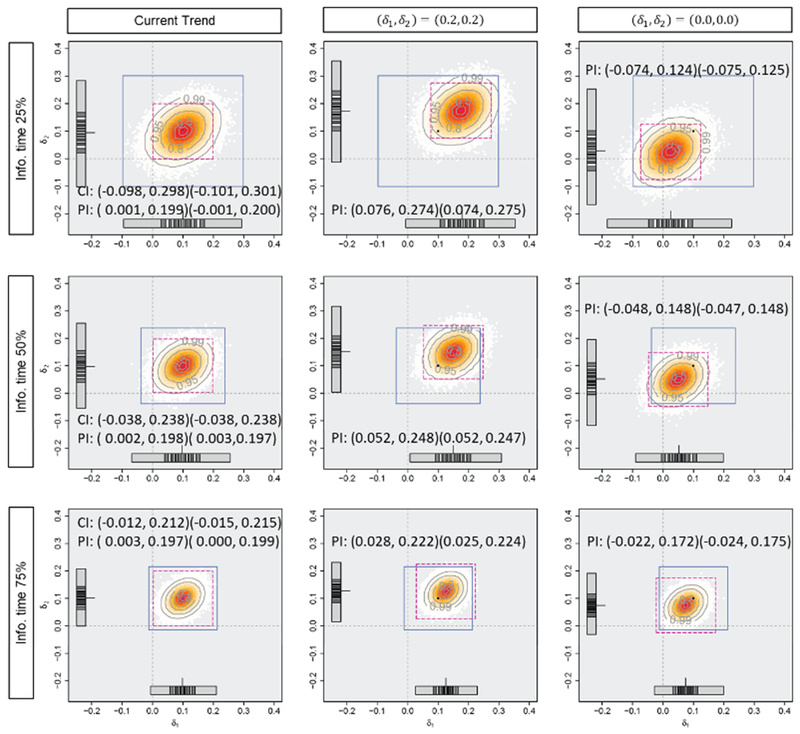
We discuss using prediction as a flexible and practical approach for monitoring futility in clinical trials with two co-primary endpoints. This approach is appealing in that it provides quantitative evaluation of potential effect sizes and associated precision, and can be combined with flexible error-spending strategies. We extend prediction of effect size estimates and the construction of predicted intervals to the two co-primary endpoints case, and illustrate interim futility monitoring of treatment effects using prediction with an example. We also discuss alternative approaches based on the conditional and predictive powers, compare these methods and provide some guidance on the use of prediction for better decision in clinical trials with co-primary endpoints.
我们讨论将预测作为一种灵活且实用的方法,用于监测具有两个共同主要终点的临床试验中的无效性。这种方法具有吸引力,因为它能对潜在效应大小和相关精度进行定量评估,并且可以与灵活的误差消耗策略相结合。我们将效应大小估计的预测和预测区间的构建扩展到两个共同主要终点的情况,并通过一个例子说明使用预测进行治疗效果的期中无效性监测。我们还讨论了基于条件检验效能和预测检验效能的替代方法,比较了这些方法,并为在具有共同主要终点的临床试验中使用预测以做出更好决策提供了一些指导。