Department of Virology, Postgraduate Institute of Medical Education and Research, Chandigarh, India.
Department of Virology, Postgraduate Institute of Medical Education and Research, Chandigarh, India.
Diagn Microbiol Infect Dis. 2021 Jan;99(1):115206. doi: 10.1016/j.diagmicrobio.2020.115206. Epub 2020 Sep 12.
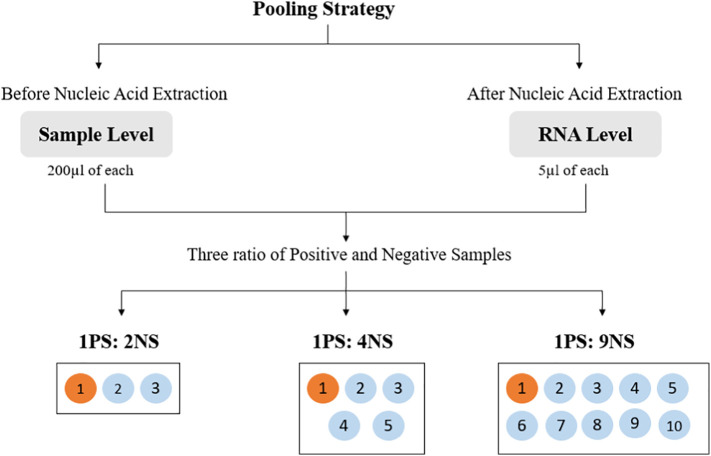
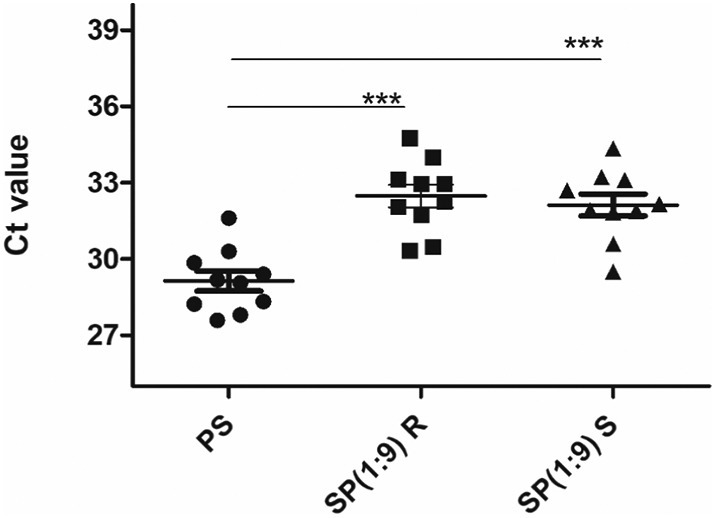
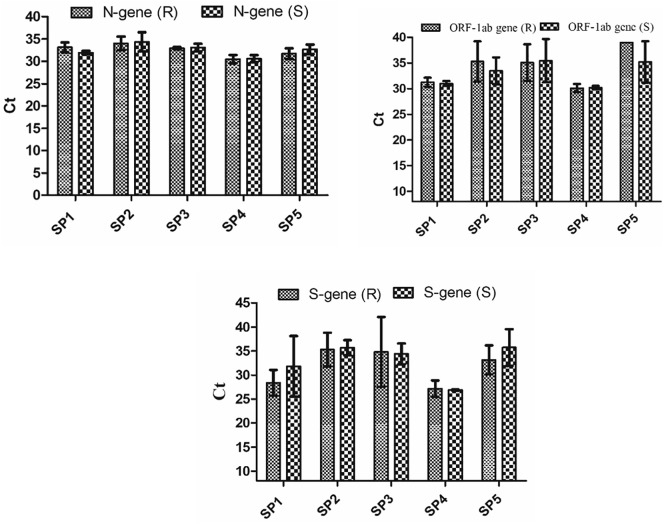
The diagnosis of coronavirus disease-19 (COVID-19) relies on the detection of severe acute respiratory syndrome coronavirus 2 (SARS CoV-2) RNA by real-time reverse-transcription polymerase chain reaction in respiratory samples. Rapid increase in the COVID-19 cases across the world requires fast and efficient testing as testing capacity is a bottleneck in diagnosis. In this context, pooling strategy can be opted for rapid testing in a cost-effective manner. In this study, the authors have optimized and compared the effect of pooling (5 and 10 samples) before and after nucleic acid extraction. It was concluded that there was no significant difference in the SARS CoV-2 RNA detection in the pools prepared at sample or RNA level. Even after pooling, 10-fold dilution was detectable with 3-cycle threshold value change in both type of pools when compared with individual samples. Hence, sample pool size of 10 can be used in low-prevalent areas, and testing capacity can be substantially increased.
新型冠状病毒病(COVID-19)的诊断依赖于实时逆转录聚合酶链反应(real-time RT-PCR)在呼吸道样本中检测严重急性呼吸综合征冠状病毒 2(SARS-CoV-2)RNA。全球 COVID-19 病例的快速增加需要快速有效的检测,因为检测能力是诊断的瓶颈。在这种情况下,可以选择汇集策略以经济有效的方式进行快速检测。在这项研究中,作者优化并比较了核酸提取前后(5 份和 10 份样本)的汇集效果。结果表明,在样本或 RNA 水平制备的汇集物中,SARS-CoV-2 RNA 的检测没有显著差异。即使在汇集后,与单个样本相比,在两种类型的汇集物中,即使进行 10 倍稀释,也可以检测到 3 个循环的阈值变化。因此,可以在低流行地区使用 10 份样本的样本池大小,并且可以大大增加检测能力。