Katoch Archana, Jamwal Vijay Lakshmi, Faheem Mir Mohd, Kumar Sriram, Senapati Shantibhusan, Yadav Govind, Gandhi Sumit G, Goswami Anindya
Academy of Scientific & Innovative Research (AcSIR), New Delhi, India; Cancer Pharmacology Division, Indian Institute of Integrative Medicine (CSIR), Canal Road, Jammu, Jammu and Kashmir 180001, India.
Academy of Scientific & Innovative Research (AcSIR), New Delhi, India; Plant Biotechnology and System Biology Division, CSIR-Indian Institute of Integrative Medicine, Jammu 180001, India.
Transl Oncol. 2021 Jan;14(1):100879. doi: 10.1016/j.tranon.2020.100879. Epub 2020 Oct 10.
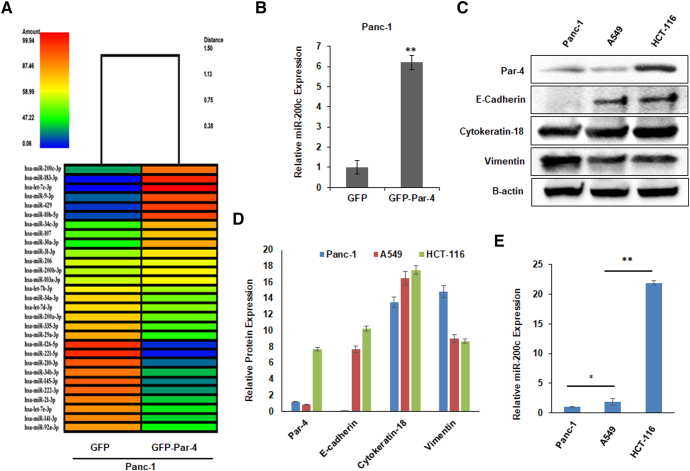
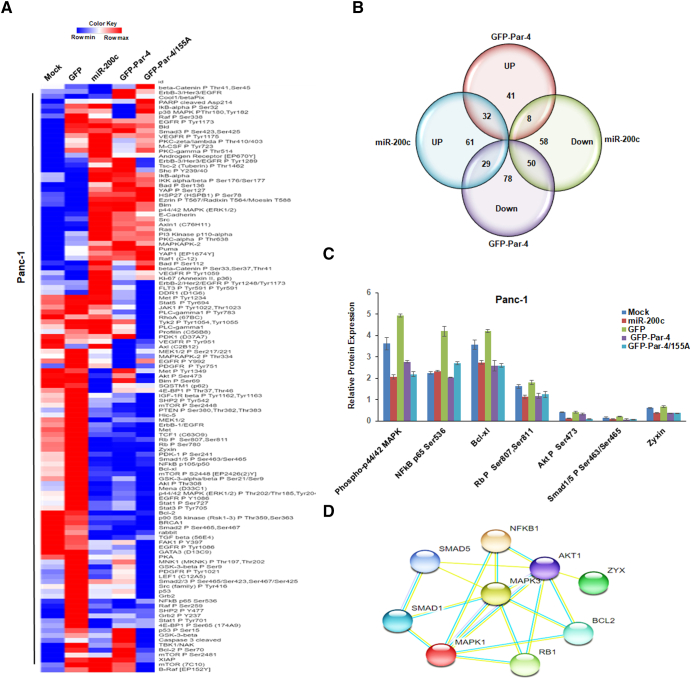
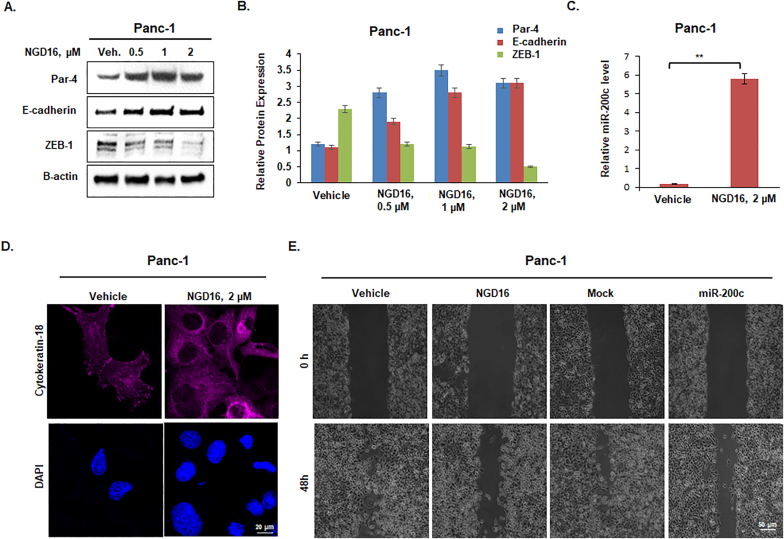
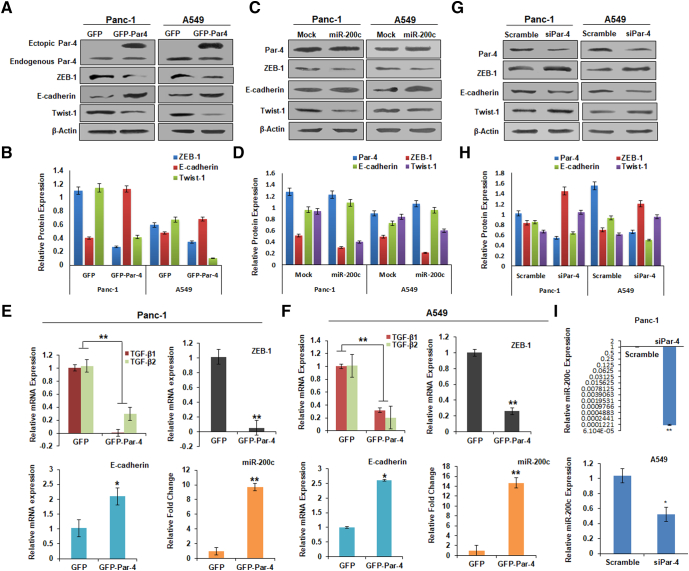
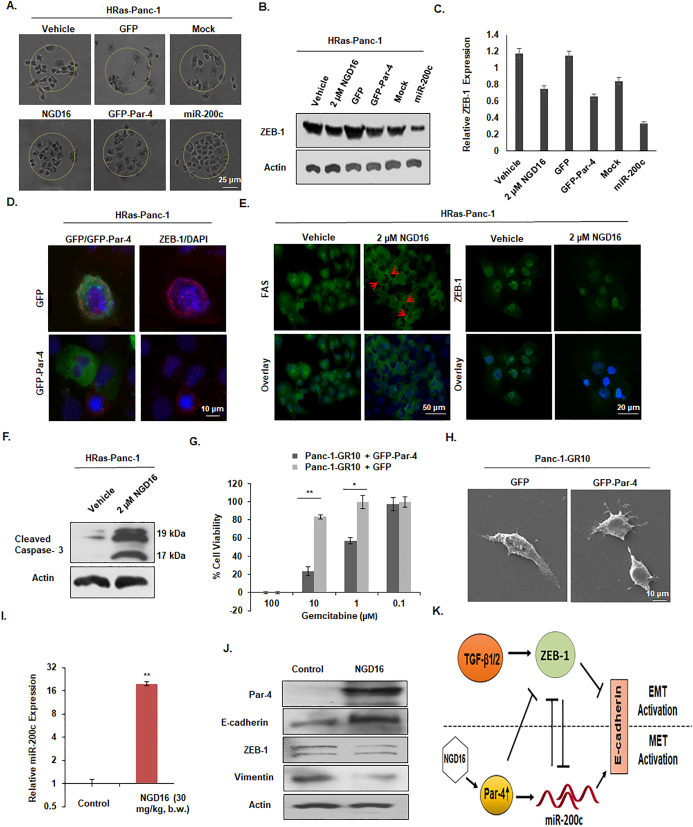
The last decade has witnessed a substantial expansion in the field of microRNA (miRNA) biology, providing crucial insights into the role of miRNAs in disease pathology, predominantly in cancer progression and its metastatic spread. The discovery of tumor-suppressing miRNAs represents a potential approach for developing novel therapeutics. In this context, through miRNA microarray analysis, we examined the consequences of Prostate apoptosis response-4 (Par-4), a well-established tumor-suppressor, stimulation on expression of different miRNAs in Panc-1 cells. The results strikingly indicated elevated miR-200c levels in these cells upon Par-4 overexpression. Intriguingly, the Reverse Phase Protein Array (RPPA) analysis revealed differentially expressed proteins (DEPs), which overlap between miR200c- and Par-4-transfected cells, highlighting the cross-talks between these pathways. Notably, Phospho-p44/42 MAPK; Bim; Bcl-xL; Rb Phospho-Ser807, Ser811; Akt Phospho-Ser473; Smad1/5 Phospho-Ser463/Ser465 and Zyxin scored the most significant DEPs among the two data sets. Furthermore, the GFP-Par-4-transfected cells depicted an impeded expression of critical mesenchymal markers viz. TGF-β1, TGF-β2, ZEB-1, and Twist-1, concomitant with augmented miR-200c and E-cadherin levels. Strikingly, while Par-4 overexpression halted ZEB-1 at the transcriptional level; contrarily, silencing of endogenous Par-4 by siRNA robustly augmented the Epithelial-mesenchymal transition (EMT) markers, along with declining miR-200c levels. The pharmacological Par-4-inducer, NGD16, triggered Par-4 expression which corresponded with increased miR-200c resulting in the ZEB-1 downregulation. Noteworthily, tumor samples obtained from the syngenic mouse pancreatic cancer model revealed elevated miR-200c levels in the NGD16-treated mice that positively correlated with the Par-4 and E-cadherin levels in vivo; while a negative correlation was evident with ZEB-1 and Vimentin.
过去十年见证了微小RNA(miRNA)生物学领域的大幅扩展,这为深入了解miRNA在疾病病理学中的作用提供了关键见解,主要是在癌症进展及其转移扩散方面。肿瘤抑制性miRNA的发现为开发新型疗法提供了一种潜在途径。在此背景下,我们通过miRNA微阵列分析,研究了前列腺凋亡反应蛋白4(Par-4,一种公认的肿瘤抑制因子)刺激对Panc-1细胞中不同miRNA表达的影响。结果显著表明,在这些细胞中Par-4过表达后miR-200c水平升高。有趣的是,反相蛋白质阵列(RPPA)分析揭示了差异表达蛋白(DEP),这些蛋白在miR200c转染细胞和Par-4转染细胞之间存在重叠,突出了这些途径之间的相互作用。值得注意的是,磷酸化-p44/42丝裂原活化蛋白激酶;Bim;Bcl-xL;磷酸化丝氨酸807、丝氨酸811的Rb;磷酸化丝氨酸473的Akt;磷酸化丝氨酸463/丝氨酸465的Smad1/5和斑联蛋白在这两个数据集中是最显著的DEP。此外,绿色荧光蛋白(GFP)-Par-4转染细胞显示关键间充质标志物的表达受到抑制,即转化生长因子-β1(TGF-β1)、转化生长因子-β2(TGF-β2)、锌指蛋白E盒结合蛋白1(ZEB-1)和 Twist 相关蛋白1(Twist-1),同时miR-200c和E-钙黏蛋白水平升高。引人注目的是,虽然Par-4过表达在转录水平上抑制ZEB-1;相反,通过小干扰RNA(siRNA)沉默内源性Par-4会强烈增强上皮-间质转化(EMT)标志物的表达,同时miR-200c水平下降。Par-4的药理学诱导剂NGD16触发Par-4表达,这与miR-200c增加以及ZEB-1下调相对应。值得注意的是,从同基因小鼠胰腺癌模型获得的肿瘤样本显示,在NGD16处理的小鼠中miR-200c水平升高,这在体内与Par-4和E-钙黏蛋白水平呈正相关;而与ZEB-1和波形蛋白呈负相关。