Department of Pediatrics and Center for Cardiovascular Diseases and Sciences, Louisiana State University Health Sciences Center-Shreveport, 1501 Kings Highway, Shreveport, LA 71130, USA.
Int J Mol Sci. 2020 Oct 10;21(20):7474. doi: 10.3390/ijms21207474.
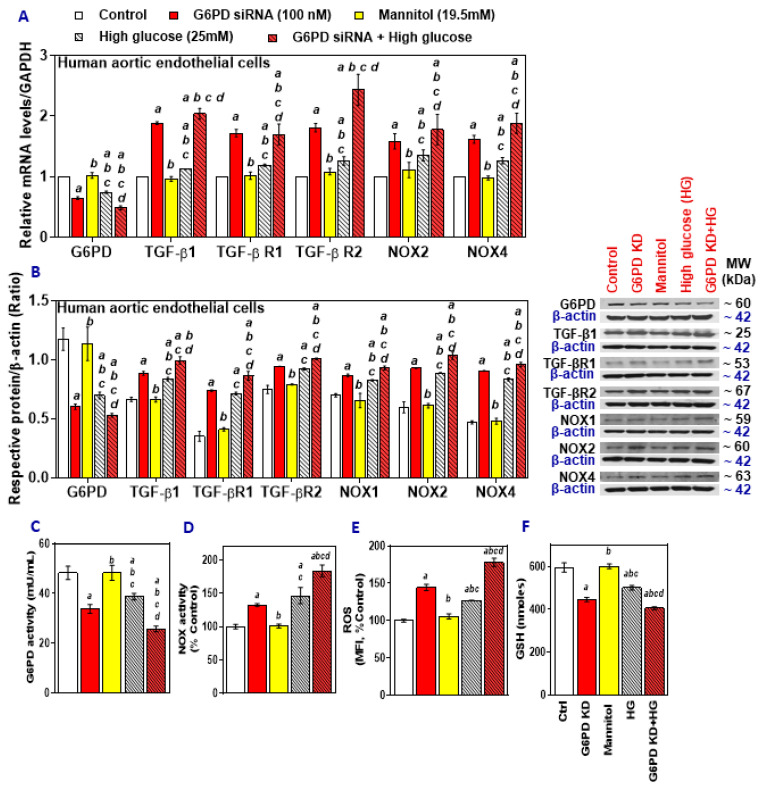
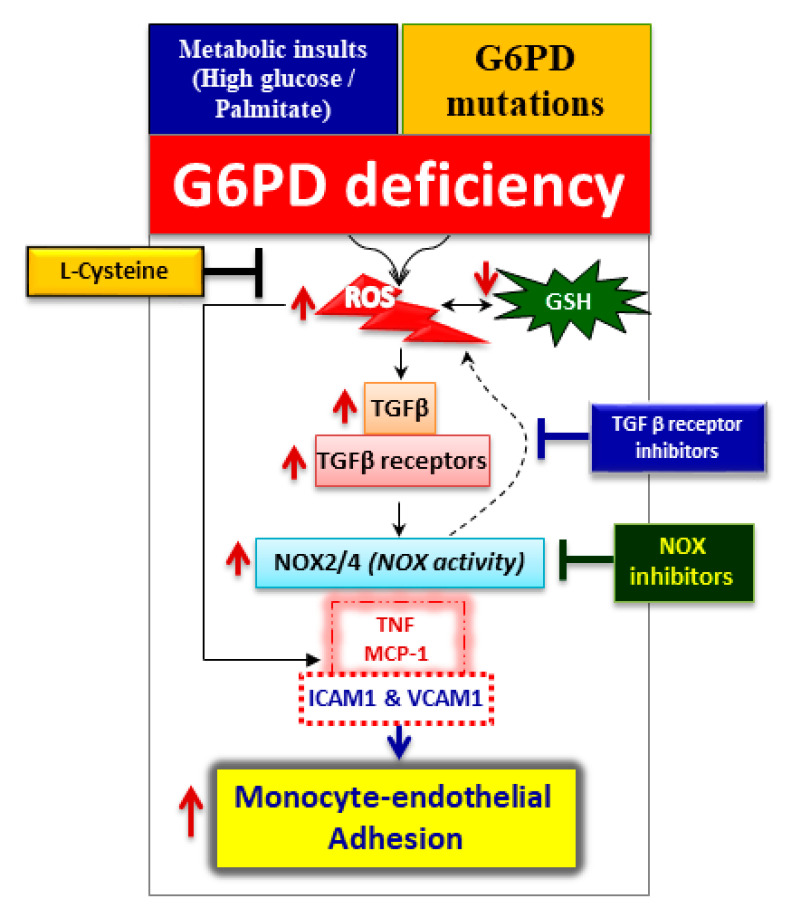
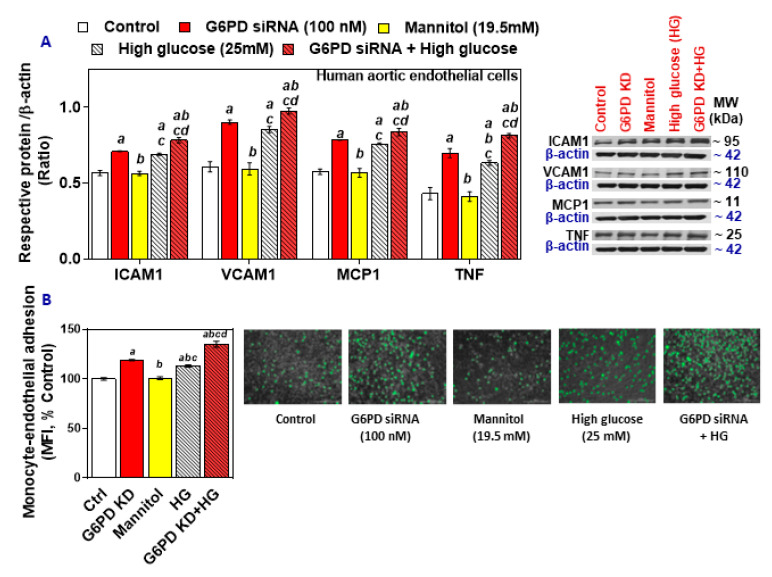
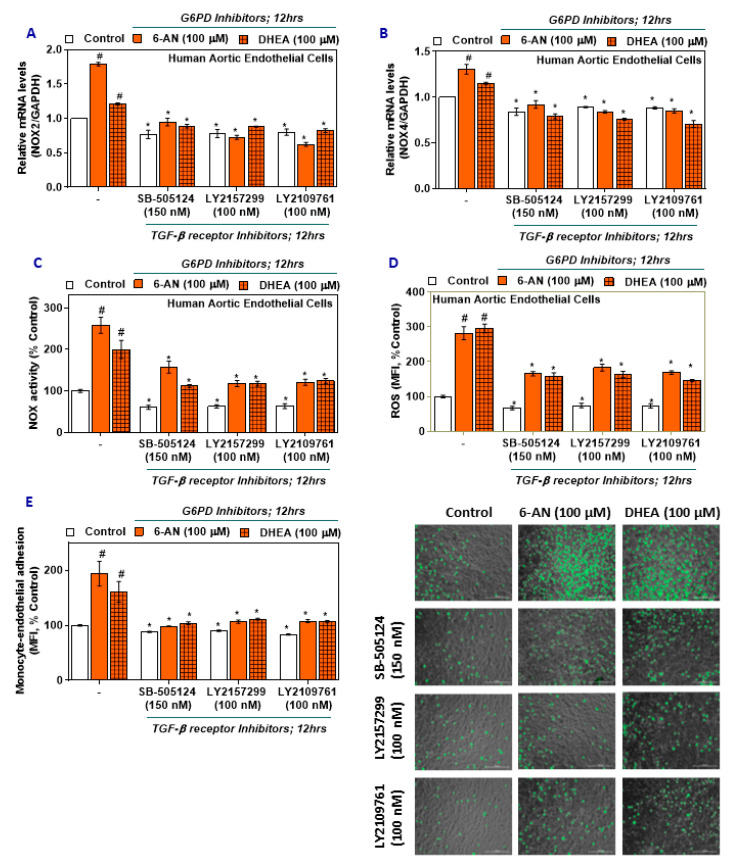
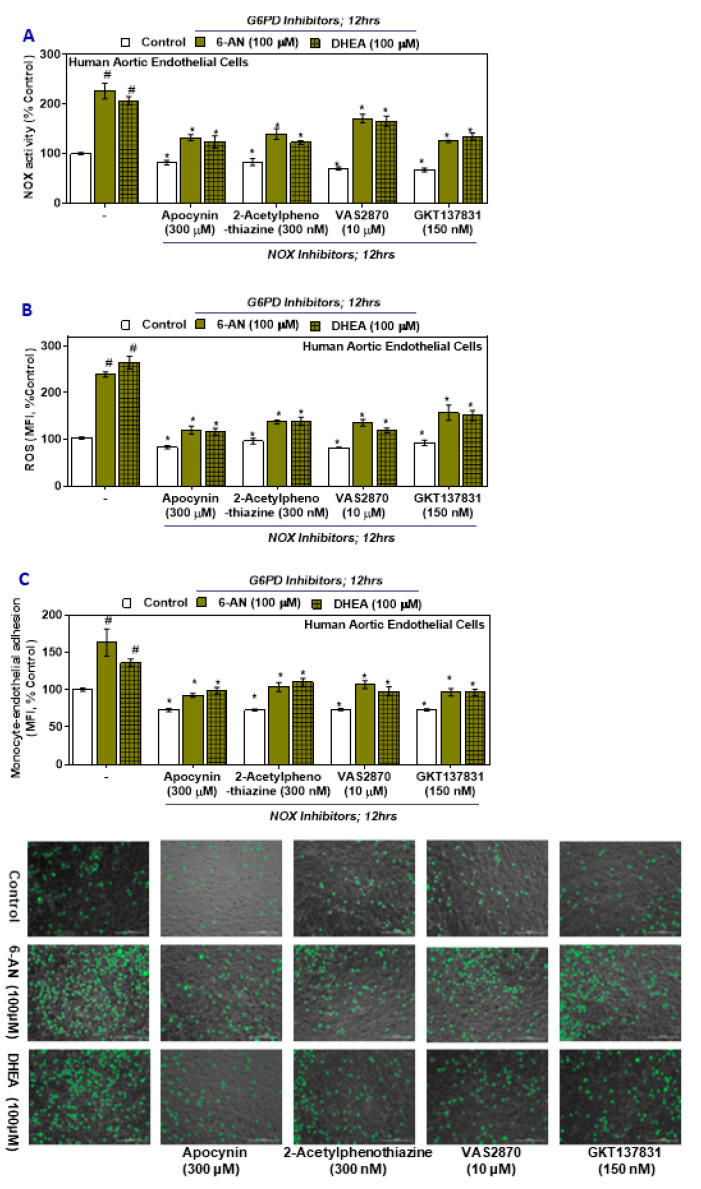
Glucose-6-phosphate dehydrogenase (G6PD) deficiency, the most common genetic inherited trait among humans, affects ~7% of the global population, and is associated with excess risk of cardiovascular disease (CVD). Transforming growth factor-β (TGF-β) regulates immune function, proliferation, epithelial-mesenchymal transition, fibrosis, cancer, and vascular dysfunction. This study examined whether G6PD deficiencies can alter TGF-β-mediated NADPH oxidases (NOX) and cell adhesion molecules (CAM) in human aortic endothelial cells (HAEC). Results show that treatment with high glucose and the saturated free fatty acid palmitate significantly downregulated G6PD; in contrast, mRNA levels of TGF-β components, NOX and its activity, and reactive oxygen species (ROS) were significantly upregulated in HAEC. The expression levels of TGF-β and its receptors, NOX and its activity, and ROS were significantly higher in HG-exposed G6PD-deficient cells (G6PD siRNA) compared to G6PD-normal cells. The protein levels of adhesion molecules (ICAM-1 and VCAM-1) and inflammatory cytokines (MCP-1 and TNF) were significantly increased in HG-exposed G6PD-deficient cells compared to G6PD-normal cells. The adherence of monocytes (SC cells) to HAEC was significantly elevated in HG-treated G6PD-deficient cells compared to control cells. Pharmacological inhibition of G6PD enhances ROS, NOX and its activity, and endothelial monocyte adhesion; these effects were impeded by NOX inhibitors. The inhibition of TGF-β prevents NOX2 and NOX4 mRNA expression and activity, ROS, and adhesion of monocytes to HAEC. L-Cysteine ethyl ester (cell-permeable) suppresses the mRNA levels of TGF-β and its receptors, along with NOX2 and NOX4, and decreases NOX activity, ROS, and adhesion of monocytes to HAEC. This suggests that G6PD deficiency promotes TGF-β/NADPH oxidases/ROS signaling, the expression of ICAM-1 and VCAM-1, and the adhesion of leukocytes to the endothelial monolayer, which can contribute to a higher risk for CVD.
葡萄糖-6-磷酸脱氢酶(G6PD)缺乏症是人类最常见的遗传性遗传特征,影响全球约 7%的人口,并与心血管疾病(CVD)的风险增加有关。转化生长因子-β(TGF-β)调节免疫功能、增殖、上皮-间充质转化、纤维化、癌症和血管功能障碍。本研究检查了 G6PD 缺乏是否可以改变人主动脉内皮细胞(HAEC)中的 TGF-β 介导的 NADPH 氧化酶(NOX)和细胞粘附分子(CAM)。结果表明,高糖和饱和游离脂肪酸棕榈酸处理显著下调 G6PD;相比之下,HAEC 中的 TGF-β 成分、NOX 及其活性和活性氧(ROS)的 mRNA 水平显著上调。与 G6PD 正常细胞相比,HG 暴露的 G6PD 缺乏细胞(G6PD siRNA)中的 TGF-β 及其受体、NOX 及其活性和 ROS 的表达水平显着升高。与 G6PD 正常细胞相比,HG 暴露的 G6PD 缺乏细胞中粘附分子(ICAM-1 和 VCAM-1)和炎症细胞因子(MCP-1 和 TNF)的蛋白水平显着增加。与对照细胞相比,HG 处理的 G6PD 缺乏细胞中单核细胞(SC 细胞)与 HAEC 的粘附显着升高。G6PD 的药理学抑制增强了 ROS、NOX 和其活性以及内皮单核细胞粘附;这些作用被 NOX 抑制剂阻止。TGF-β 的抑制可防止 NOX2 和 NOX4 mRNA 表达和活性、ROS 和单核细胞与 HAEC 的粘附。L-半胱氨酸乙酯(细胞渗透性)可抑制 TGF-β及其受体、NOX2 和 NOX4 的 mRNA 水平,并降低 NOX 活性、ROS 和单核细胞与 HAEC 的粘附。这表明 G6PD 缺乏症促进 TGF-β/NADPH 氧化酶/ROS 信号转导、ICAM-1 和 VCAM-1 的表达以及白细胞与内皮单层的粘附,这可能导致 CVD 风险增加。