Pharmacology, Toxicology & Therapeutics, Centre for Cardiovascular Science, University of Edinburgh, Edinburgh, United Kingdom.
Translational and Clinical Research Institute, Newcastle University, Royal (Dick) School of Veterinary Medicine, University of Edinburgh, Edinburgh, United Kingdom.
PLoS One. 2020 Oct 14;15(10):e0240563. doi: 10.1371/journal.pone.0240563. eCollection 2020.
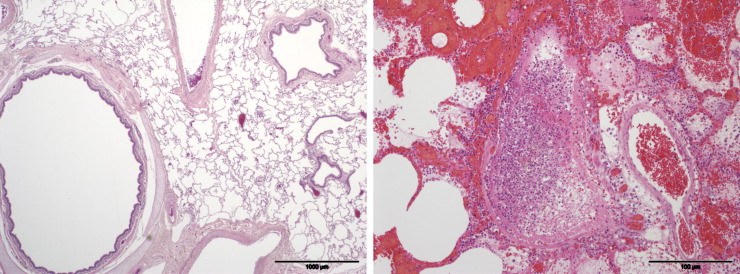
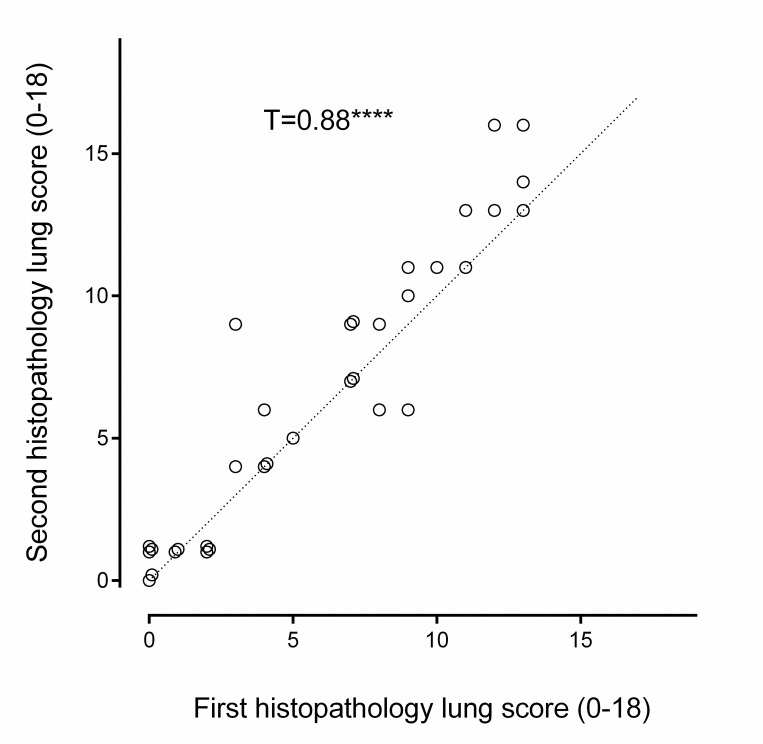
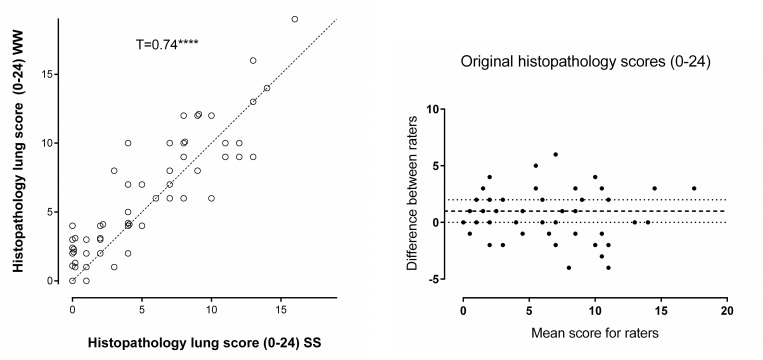
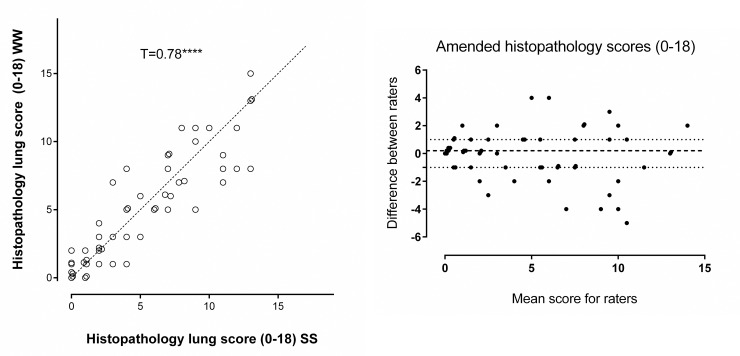
Organophosphorus (OP) insecticide self-poisoning causes over 100,000 global deaths annually. Around a third of patients are intubated and up to half of these can die. Post-mortem analysis of OP poisoned patients' lungs reveals consolidation, edema and hemorrhage, suggesting that direct or indirect lung damage may contribute to mortality. The lung injury caused by these formulated agricultural preparations is poorly characterised in humans, and a valid histopathology scoring system is needed in a relevant animal model to further investigate the disease and potential treatments. We conducted two pilot studies in anesthetized minipigs, which are commonly used for toxicological studies. In the first, pigs were given 2.5 mL/kg of either OP (n = 4) or saline (n = 2) by gavage and compared with positive controls (iv oleic acid n = 2). The second study simulated ingestion followed by gastric content aspiration: mixtures of OP (n = 3) or saline (n = 2) (0.63-0.71mL/kg) were placed in the stomach, and then small volumes of the gastric content were placed in the lung. At post-mortem examination, lungs were removed and inflation-fixed with 10% neutral buffered formalin. Samples (n = 62) were taken from cranial and caudal regions of both lungs. Two experienced lung histopathologists separately scored these samples using 8 proposed features of damage and their scores related (Kendall rank order). Two elements had small and inconsistent scores. When these were removed, the correlation increased from 0.74 to 0.78. Eight months later, a subset of samples (n = 35) was re-scored using the modified system by one of the previous histopathologists, with a correlation of 0.88. We have developed a reproducible pulmonary histopathology scoring system for OP poisoning in pigs which will assist future toxicological research and improve understanding and treatment of human OP poisoning.
有机磷(OP)杀虫剂自杀每年导致全球超过 10 万人死亡。大约三分之一的患者需要插管,其中多达一半的患者可能死亡。对 OP 中毒患者肺部的死后分析显示,肺部有实变、水肿和出血,这表明直接或间接的肺部损伤可能导致死亡。这些配方农业制剂对人体肺部造成的损伤特征描述不足,需要在相关动物模型中建立有效的组织病理学评分系统,以进一步研究该疾病和潜在的治疗方法。我们在麻醉的小型猪中进行了两项初步研究,小型猪常用于毒理学研究。在第一项研究中,通过灌胃给 4 只猪每公斤 2.5 毫升 OP(n = 4)或生理盐水(n = 2),并与阳性对照(iv 油酸 n = 2)进行比较。第二项研究模拟了摄入后胃内容物抽吸:将 OP(n = 3)或生理盐水(n = 2)(0.63-0.71 毫升/公斤)混合物放入胃中,然后将少量胃内容物放入肺中。在死后检查时,取出肺并用 10%中性缓冲福尔马林充气固定。从两只肺的颅侧和尾侧区域采集样本(n = 62)。两名经验丰富的肺组织病理学家分别使用 8 种损伤特征对这些样本进行评分,并对他们的评分进行相关(肯德尔等级顺序)。有两个元素的评分较小且不一致。当去除这两个元素时,相关性从 0.74 增加到 0.78。八个月后,一名之前的组织病理学家使用修改后的系统对其中一组样本(n = 35)进行了重新评分,相关性为 0.88。我们已经开发出一种可重复的猪 OP 中毒肺部组织病理学评分系统,该系统将有助于未来的毒理学研究,并提高对人类 OP 中毒的理解和治疗。