Baker Heart and Diabetes Institute, Melbourne; TH and AR contributed equally to this work.
Australian Centre for Blood Diseases, Monash University, Melbourne; TH and AR contributed equally to this work.
Haematologica. 2021 Nov 1;106(11):2874-2884. doi: 10.3324/haematol.2020.250761.
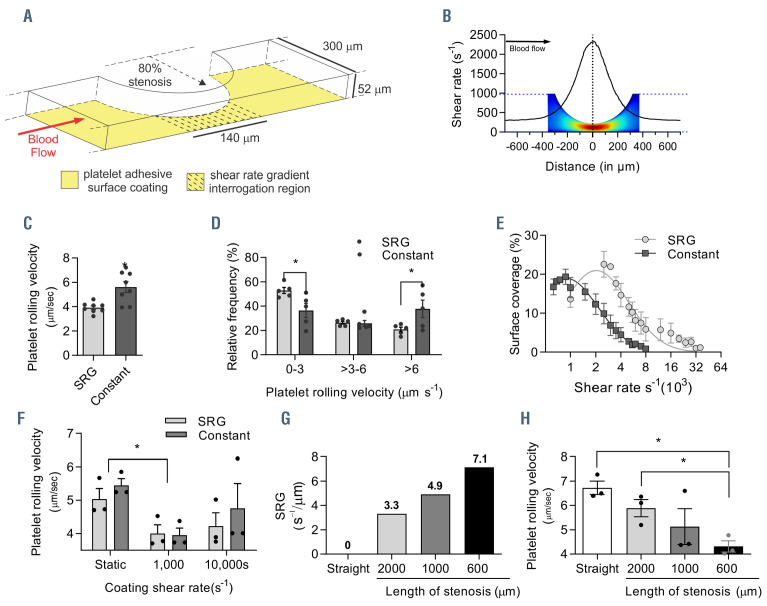
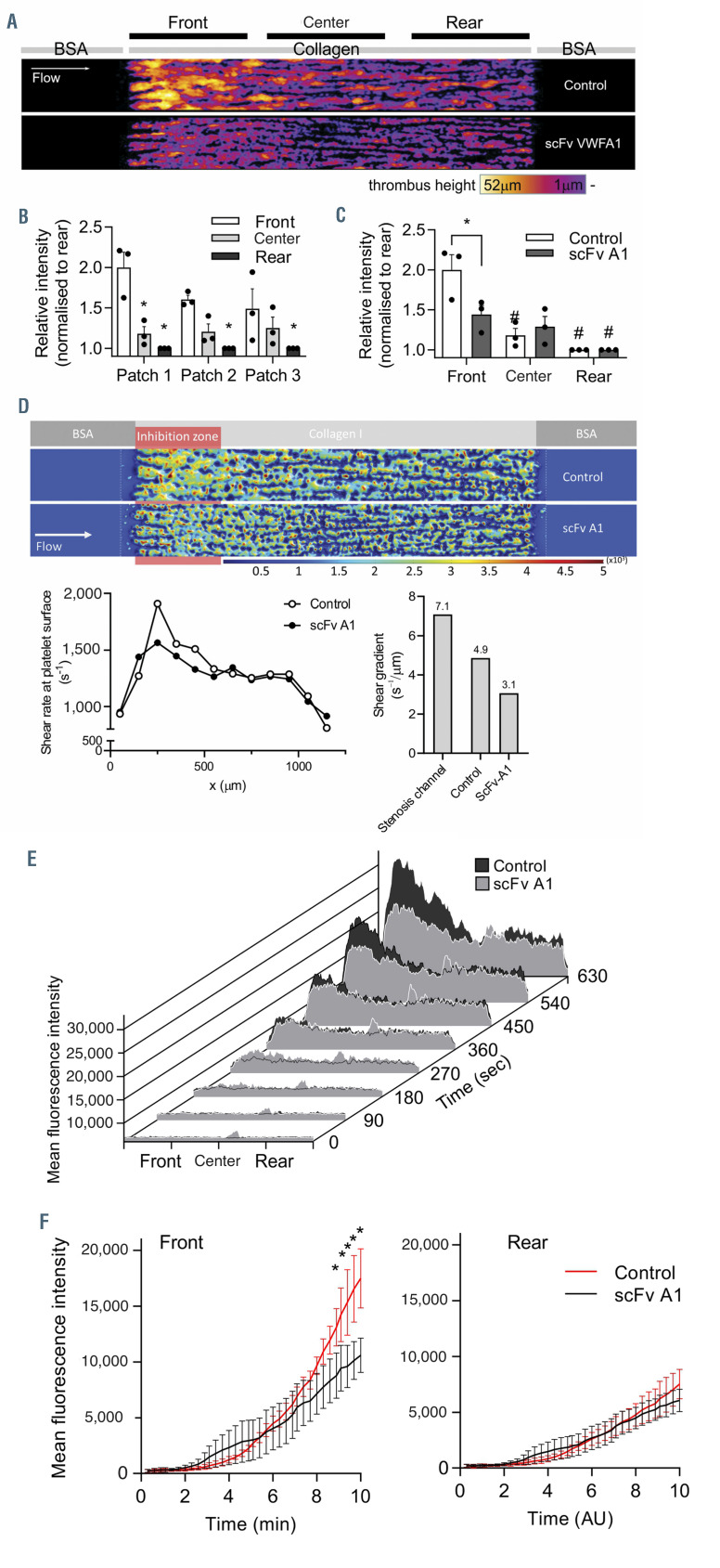
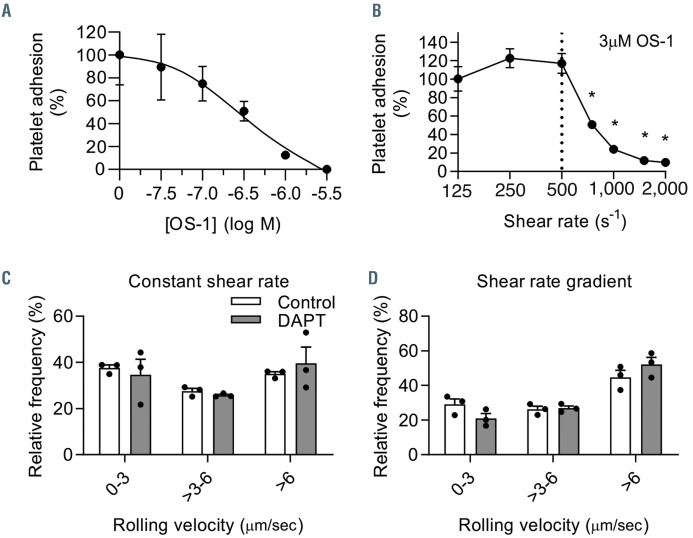
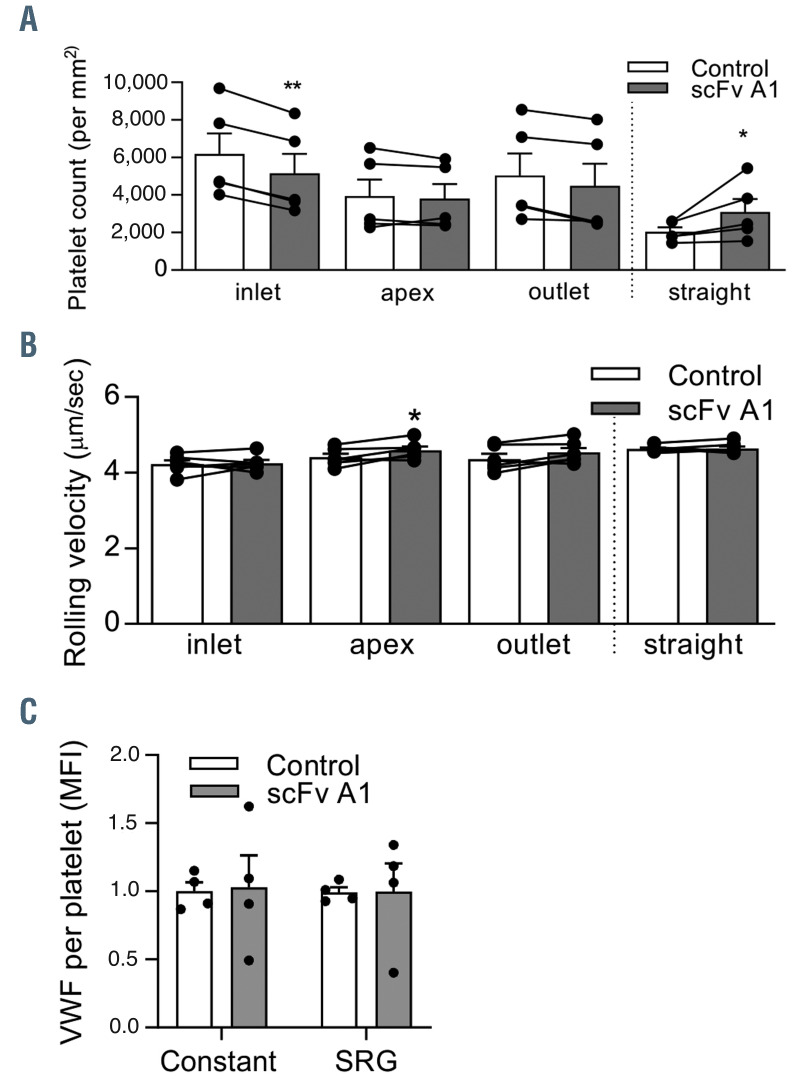
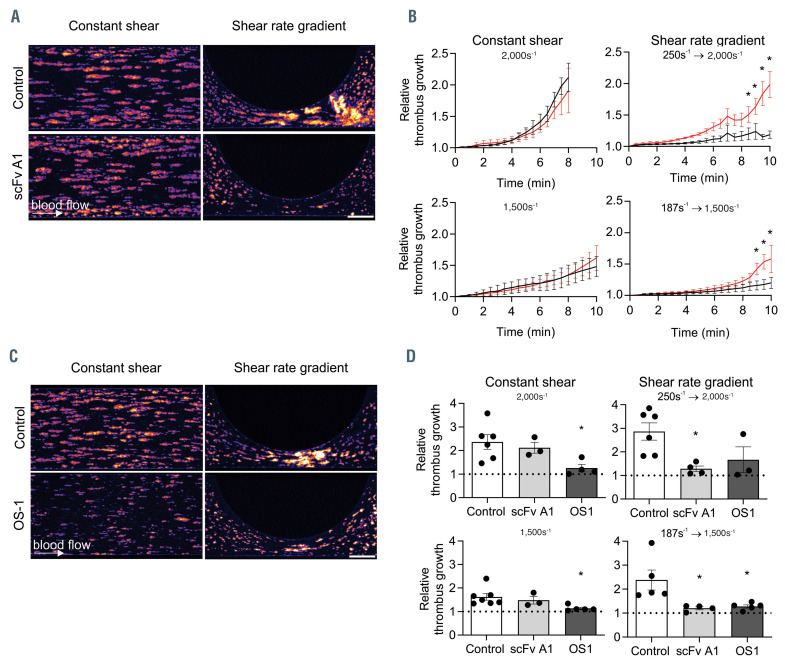
Intraluminal thrombus formation precipitates conditions such as acute myocardial infarction and disturbs local blood flow resulting in areas of rapidly changing blood flow velocities and steep gradients of blood shear rate. Shear rate gradients are known to be pro-thrombotic with an important role for the shear-sensitive plasma protein von Willebrand factor (VWF). Here, we developed a single-chain antibody (scFv) that targets a shear gradient specific conformation of VWF to specifically inhibit platelet adhesion at sites of SRGs but not in areas of constant shear. Microfluidic flow channels with stenotic segments were used to create shear rate gradients during blood perfusion. VWF-GPIbα interactions were increased at sites of shear rate gradients compared to constant shear rate of matched magnitude. The scFv-A1 specifically reduced VWF-GPIbα binding and thrombus formation at sites of SRGs but did not block platelet deposition and aggregation under constant shear rate in upstream sections of the channels. Significantly, the scFv A1 attenuated platelet aggregation only in the later stages of thrombus formation. In the absence of shear, direct binding of scFv-A1 to VWF could not be detected and scFV-A1 did not inhibit ristocetin induced platelet agglutination. We have exploited the pro-aggregatory effects of SRGs on VWF dependent platelet aggregation and developed the shear-gradient sensitive scFv-A1 antibody that inhibits platelet aggregation exclusively at sites of shear rate gradients. The lack of VWF inhibition in non-stenosed vessel segments places scFV-A1 in an entirely new class of anti-platelet therapy for selective blockade of pathological thrombus formation while maintaining normal haemostasis.
腔内血栓形成引发了急性心肌梗死等情况,并扰乱了局部血流,导致血流速度迅速变化和血液切变率梯度陡峭。已知切变率梯度具有促血栓形成作用,剪切敏感的血浆蛋白血管性血友病因子 (VWF) 起着重要作用。在这里,我们开发了一种单链抗体 (scFv),该抗体针对 VWF 的剪切梯度特异性构象,专门抑制血小板在 SRG 部位的黏附,但不在恒定剪切部位黏附。使用带有狭窄段的微流控通道在血液灌注期间产生切变率梯度。与匹配幅度的恒定切变率相比,VWF-GPIbα 相互作用在切变率梯度部位增加。scFv-A1 特异性减少了 SRG 部位的 VWF-GPIbα 结合和血栓形成,但在通道上游部分的恒定切变率下不阻止血小板沉积和聚集。重要的是,scFv A1 仅在血栓形成的后期阶段才会抑制血小板聚集。在没有切变的情况下,无法检测到 scFv-A1 与 VWF 的直接结合,并且 scFV-A1 不能抑制瑞斯托菌素诱导的血小板聚集。我们利用 SRG 对 VWF 依赖性血小板聚集的促聚集作用,开发了剪切梯度敏感的 scFv-A1 抗体,该抗体仅在切变率梯度部位抑制血小板聚集。在非狭窄血管段缺乏 VWF 抑制作用,使得 scFV-A1 成为一种全新类别的抗血小板治疗方法,可选择性阻断病理性血栓形成,同时维持正常止血。