Department of Internal Medicine, Division of Hematology, The Ohio State University, Columbus, OH.
Center for Biostatistics, Department of Biomedical Informatics, The Ohio State University, Columbus, OH.
Haematologica. 2021 Nov 1;106(11):2927-2939. doi: 10.3324/haematol.2020.268235.
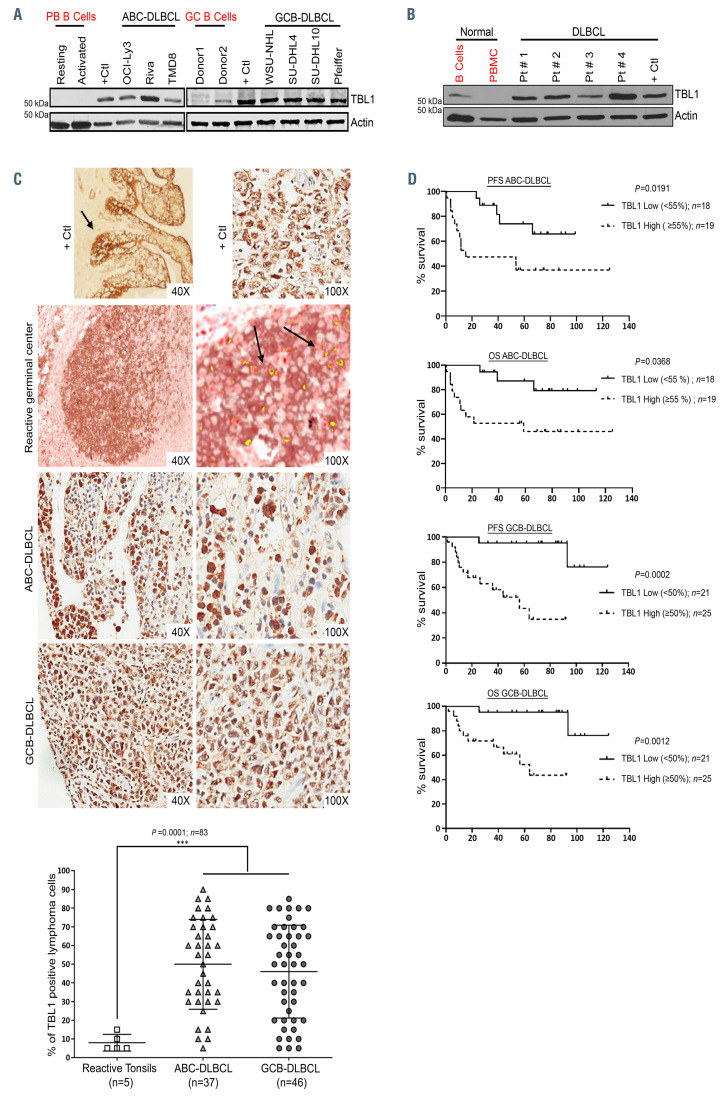
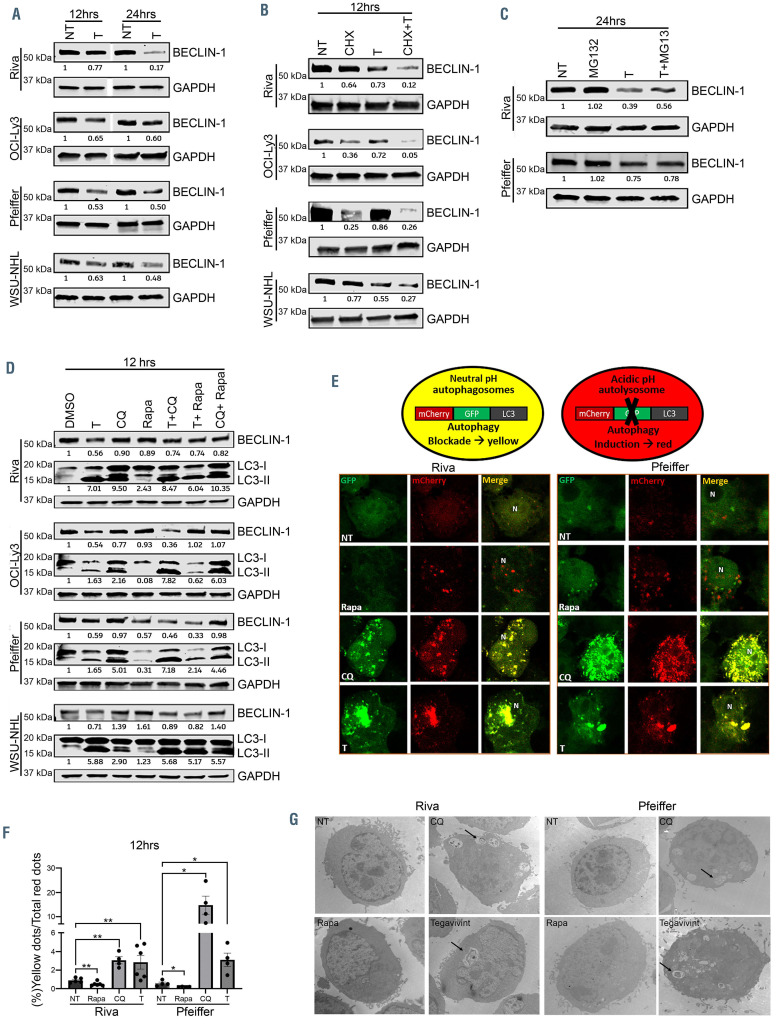
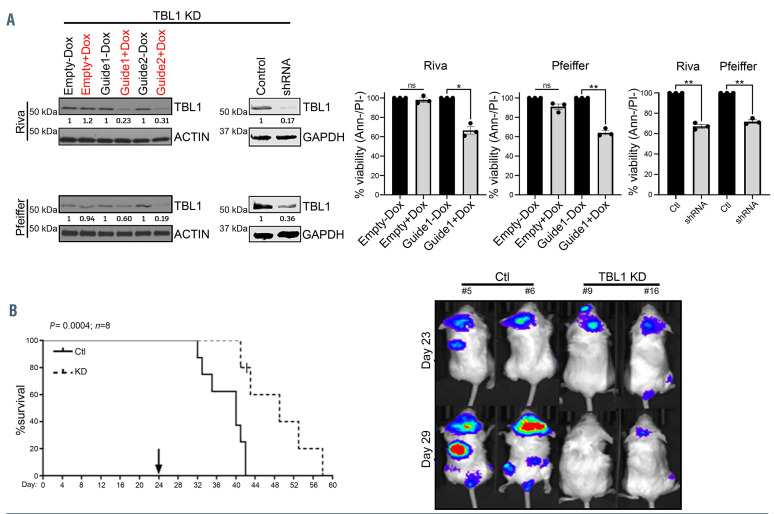
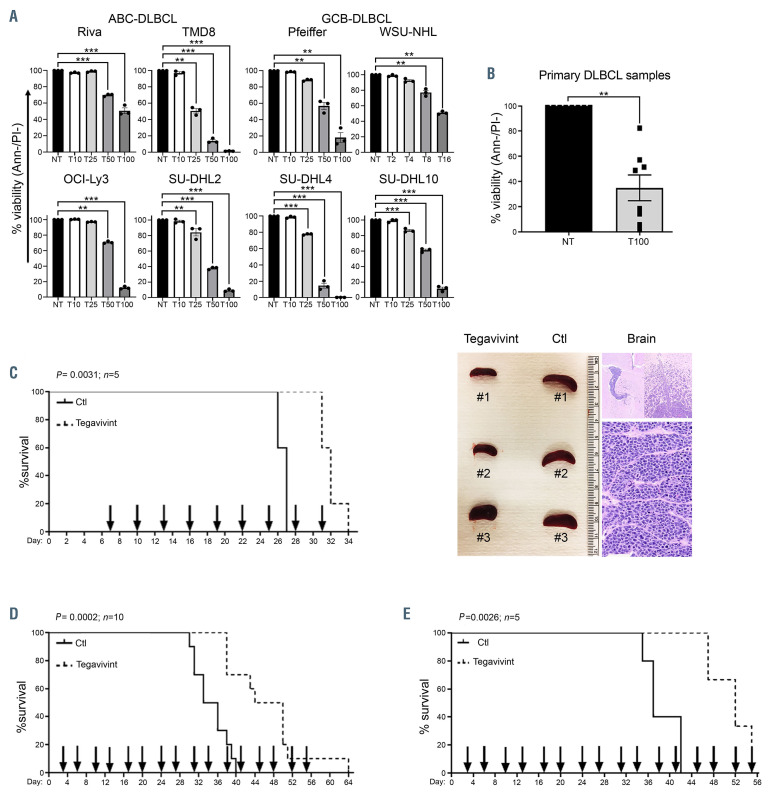
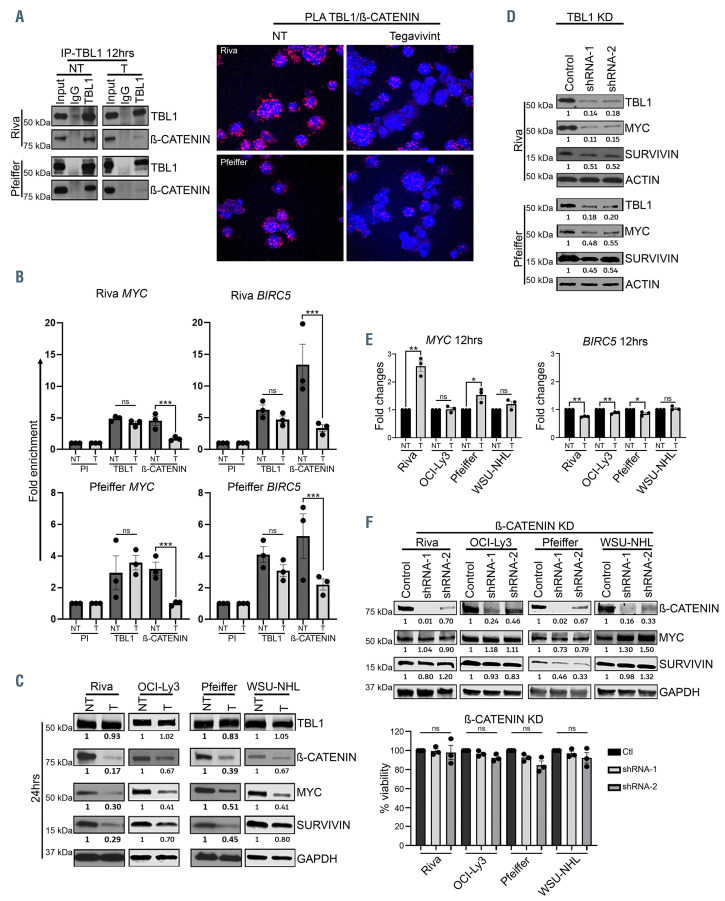
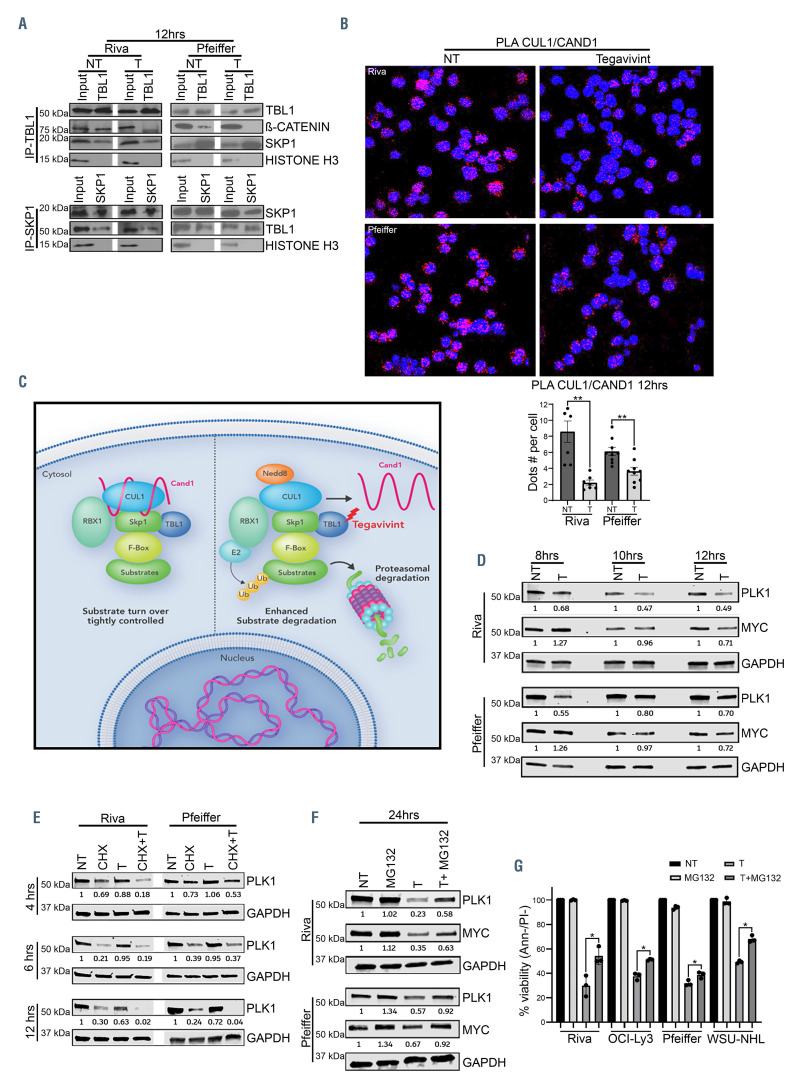
Diffuse large B-cell lymphoma (DLBCL) is the most common Non-Hodgkin's lymphoma and is characterized by a remarkable heterogeneity with diverse variants that can be identified histologically and molecularly. Large-scale gene expression profiling studies have identified the germinal center B-cell (GCB-) and activated B-cell (ABC-) subtypes. Standard chemo-immunotherapy remains standard front line therapy, curing approximately two thirds of patients. Patients with refractory disease or those who relapse after salvage treatment have an overall poor prognosis highlighting the need for novel therapeutic strategies. Transducin β-like protein 1 (TBL1) is an exchange adaptor protein encoded by the TBL1X gene and known to function as a master regulator of the Wnt signalling pathway by binding to β-CATENIN and promoting its downstream transcriptional program. Here, we show that, unlike normal B-cells, DLBCL cells express abundant levels of TBL1 and its overexpression correlates with poor clinical outcome regardless of DLBCL molecular subtype. Genetic deletion of TBL1 and pharmacological approach using tegavivint, a first-in-class small molecule targeting TBL1 (Iterion Therapeutics), promotes DLBCL cell death in vitro and in vivo. Through an integrated genomic, biochemical, and pharmacologic analyses, we characterized a novel, β-CATENIN independent, post-transcriptional oncogenic function of TBL1 in DLBCL where TBL1 modulates the stability of key oncogenic proteins such as PLK1, MYC, and the autophagy regulatory protein BECLIN-1 through its interaction with a SKP1-CUL1-F-box (SCF) protein supercomplex. Collectively, our data provide the rationale for targeting TBL1 as a novel therapeutic strategy in DLBCL.
弥漫性大 B 细胞淋巴瘤 (DLBCL) 是最常见的非霍奇金淋巴瘤,其特点是具有显著的异质性,可通过组织学和分子学方法进行识别。大规模基因表达谱研究已经确定了生发中心 B 细胞 (GCB-) 和激活 B 细胞 (ABC-) 亚型。标准的化疗免疫治疗仍然是标准的一线治疗方法,大约能治愈三分之二的患者。对于耐药性疾病或经挽救治疗后复发的患者,整体预后较差,这突显了需要新的治疗策略。转导素β样蛋白 1 (TBL1) 是 TBL1X 基因编码的一种交换衔接蛋白,已知通过与 β-CATENIN 结合并促进其下游转录程序,作为 Wnt 信号通路的主调控因子发挥作用。在这里,我们表明,与正常 B 细胞不同,DLBCL 细胞表达大量的 TBL1,其过表达与不良的临床结局相关,而与 DLBCL 分子亚型无关。TBL1 的基因缺失和使用靶向 TBL1 的首创小分子药物 tegavivint(Iterion Therapeutics)的药理学方法,在体外和体内均能促进 DLBCL 细胞死亡。通过综合基因组、生化和药理学分析,我们在 DLBCL 中描述了 TBL1 的一种新型、β-CATENIN 非依赖性、转录后致癌功能,其中 TBL1 通过与 SKP1-CUL1-F-box (SCF) 蛋白超级复合物相互作用,调节关键致癌蛋白(如 PLK1、MYC 和自噬调节蛋白 BECLIN-1)的稳定性。总的来说,我们的数据为靶向 TBL1 作为 DLBCL 新的治疗策略提供了依据。