Department of Medical Microbiology and Immunology, Genome Center, and MIND Institute, University of California, Davis, CA, USA.
Department of Epidemiology, School of Public Health, University of Michigan, Ann Arbor, MI, USA.
Genome Med. 2020 Oct 14;12(1):88. doi: 10.1186/s13073-020-00785-8.
Autism spectrum disorder (ASD) is a neurodevelopmental disorder with complex heritability and higher prevalence in males. The neonatal epigenome has the potential to reflect past interactions between genetic and environmental factors during early development and influence future health outcomes.
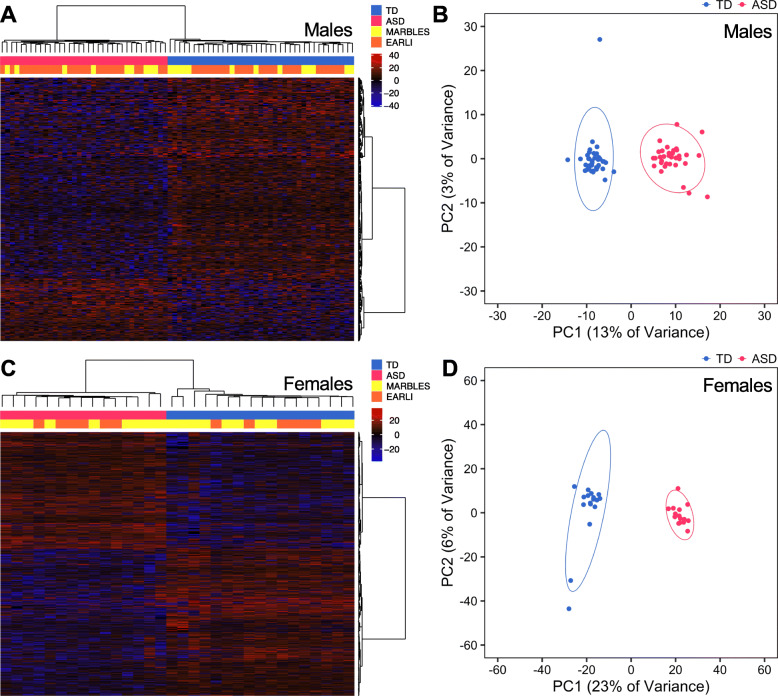
We performed whole-genome bisulfite sequencing of 152 umbilical cord blood samples from the MARBLES and EARLI high-familial risk prospective cohorts to identify an epigenomic signature of ASD at birth. Samples were split into discovery and replication sets and stratified by sex, and their DNA methylation profiles were tested for differentially methylated regions (DMRs) between ASD and typically developing control cord blood samples. DMRs were mapped to genes and assessed for enrichment in gene function, tissue expression, chromosome location, and overlap with prior ASD studies. DMR coordinates were tested for enrichment in chromatin states and transcription factor binding motifs. Results were compared between discovery and replication sets and between males and females.
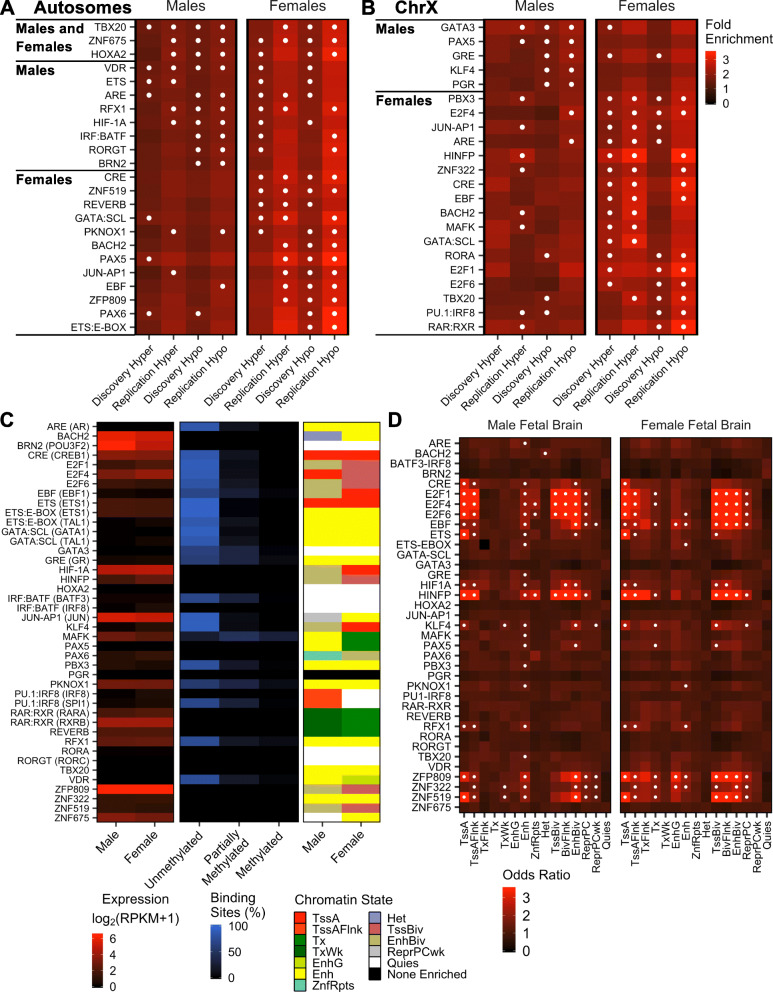
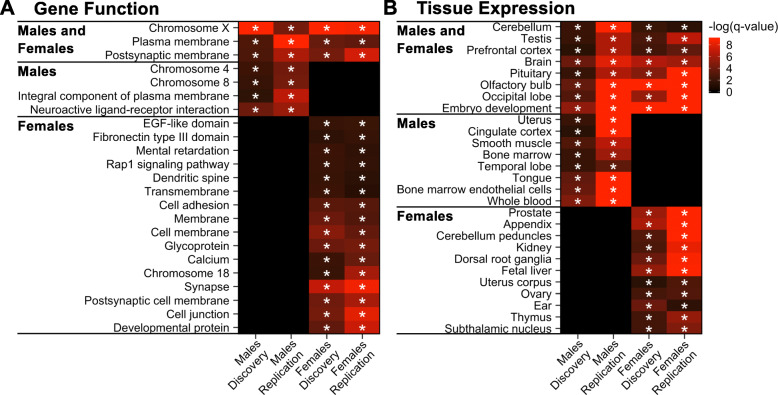
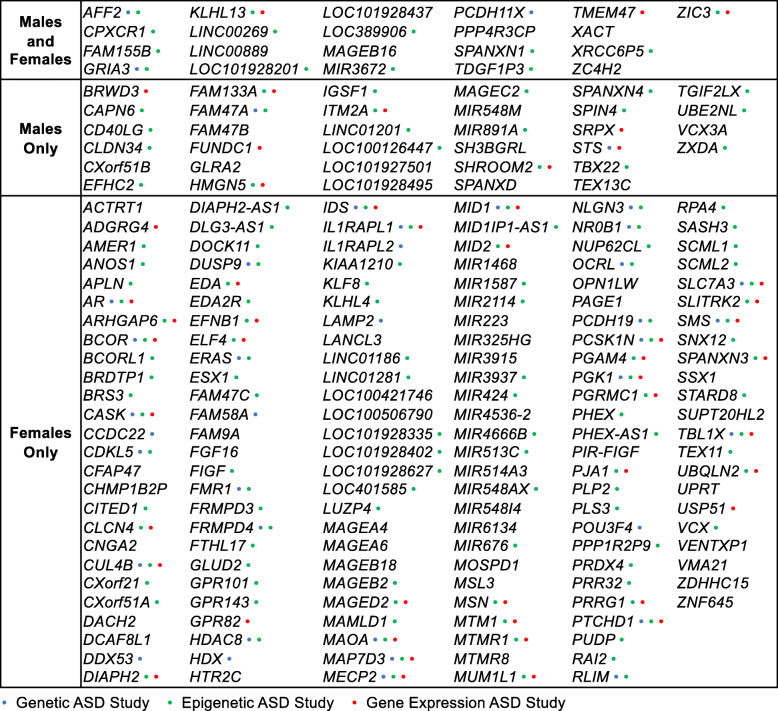
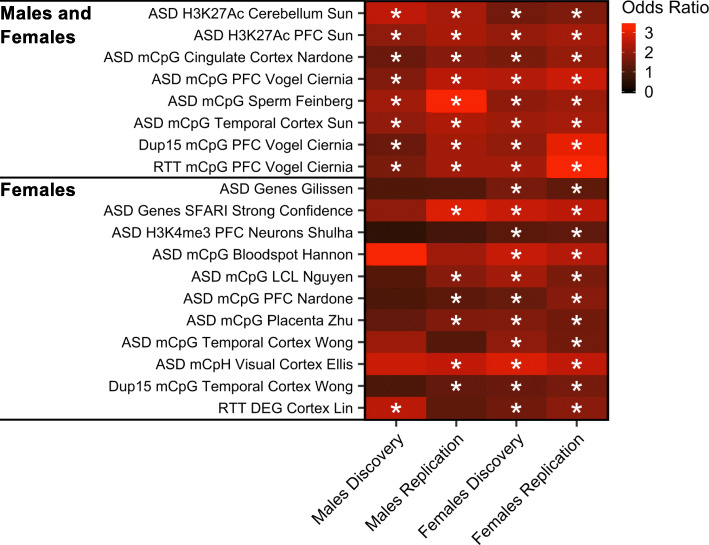
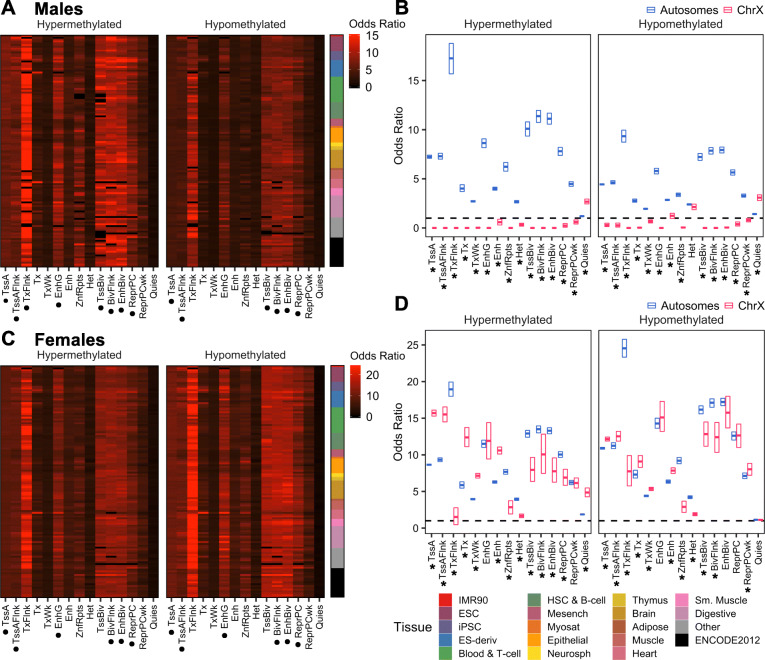
We identified DMRs stratified by sex that discriminated ASD from control cord blood samples in discovery and replication sets. At a region level, 7 DMRs in males and 31 DMRs in females replicated across two independent groups of subjects, while 537 DMR genes in males and 1762 DMR genes in females replicated by gene association. These DMR genes were significantly enriched for brain and embryonic expression, X chromosome location, and identification in prior epigenetic studies of ASD in post-mortem brain. In males and females, autosomal ASD DMRs were significantly enriched for promoter and bivalent chromatin states across most cell types, while sex differences were observed for X-linked ASD DMRs. Lastly, these DMRs identified in cord blood were significantly enriched for binding sites of methyl-sensitive transcription factors relevant to fetal brain development.
At birth, prior to the diagnosis of ASD, a distinct DNA methylation signature was detected in cord blood over regulatory regions and genes relevant to early fetal neurodevelopment. Differential cord methylation in ASD supports the developmental and sex-biased etiology of ASD and provides novel insights for early diagnosis and therapy.
自闭症谱系障碍(ASD)是一种神经发育障碍,具有复杂的遗传性,在男性中更为常见。新生儿表观基因组有可能反映遗传和环境因素在早期发育过程中的相互作用,并影响未来的健康结果。
我们对来自 MARBLES 和 EARLI 高家族风险前瞻性队列的 152 个脐带血样本进行了全基因组亚硫酸氢盐测序,以鉴定出生时 ASD 的表观基因组特征。样本分为发现和复制集,并按性别分层,测试 ASD 和典型发育对照脐带血样本之间的 DNA 甲基化差异区域(DMR)。DMR 被映射到基因上,并评估其在基因功能、组织表达、染色体位置和与先前 ASD 研究的重叠方面的富集情况。DMR 坐标在染色质状态和转录因子结合基序中进行了富集测试。在发现和复制集以及男性和女性之间比较了结果。
我们鉴定了按性别分层的 DMR,这些 DMR 可区分 ASD 和对照组脐带血样本。在区域水平上,在发现和复制集中,男性有 7 个 DMR,女性有 31 个 DMR 复制。而男性有 537 个 DMR 基因,女性有 1762 个 DMR 基因通过基因关联复制。这些 DMR 基因在大脑和胚胎表达、X 染色体位置以及在死后大脑中 ASD 的先前表观遗传研究中被鉴定为显著富集。在男性和女性中,常染色体 ASD DMR 在大多数细胞类型中显著富集于启动子和双价染色质状态,而 X 连锁 ASD DMR 则存在性别差异。最后,在脐带血中鉴定的这些 DMR 显著富集了与胎儿大脑发育相关的甲基敏感转录因子的结合位点。
在出生时,在 ASD 诊断之前,在脐带血中检测到了与早期胎儿神经发育相关的调节区域和基因的独特 DNA 甲基化特征。ASD 中脐带的差异甲基化支持 ASD 的发育和性别偏倚病因,并为早期诊断和治疗提供了新的见解。