Department of Genetics, Harvard Medical School, Boston, United States.
Smidt Heart Institute, Cedars-Sinai Medical Center, Los Angeles, United States.
Elife. 2020 Oct 15;9:e53278. doi: 10.7554/eLife.53278.
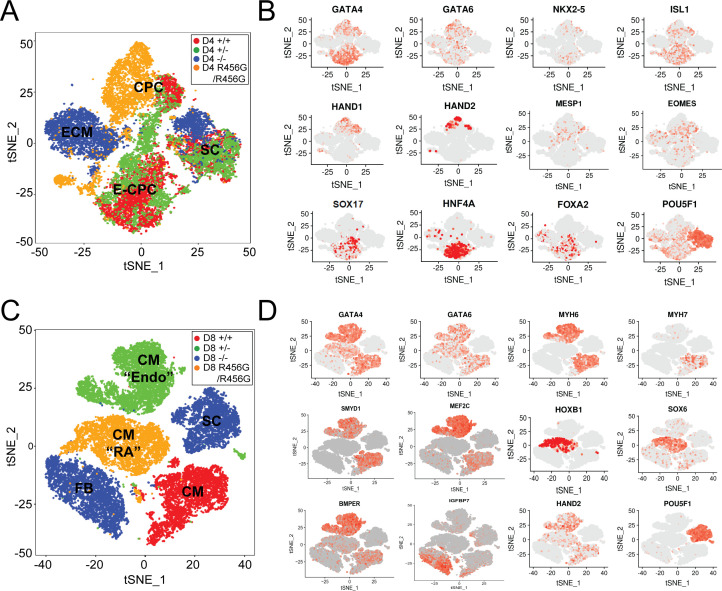
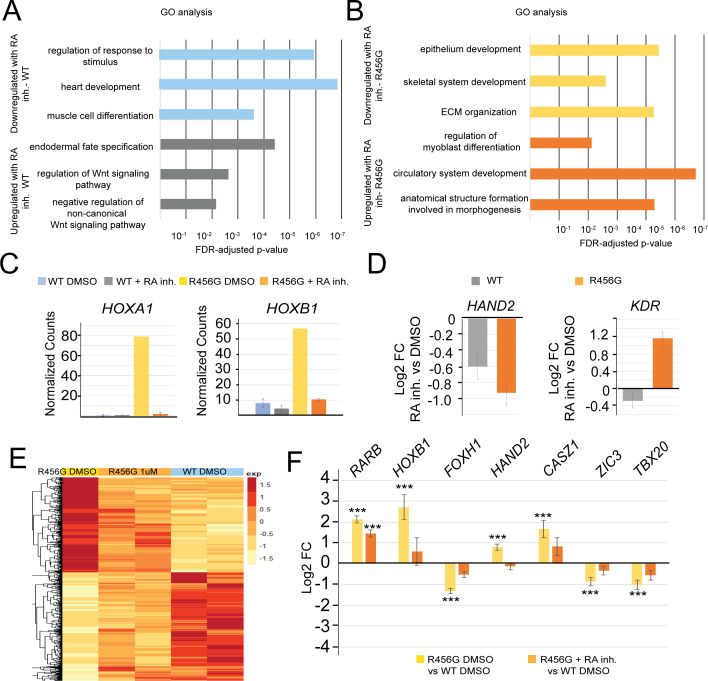
Damaging variants cause cardiac outflow tract defects, sometimes with pancreatic and diaphragmic malformations. To define molecular mechanisms for these diverse developmental defects, we studied transcriptional and epigenetic responses to loss of function (LoF) and missense variants during cardiomyocyte differentiation of isogenic human induced pluripotent stem cells. We show that GATA6 is a pioneer factor in cardiac development, regulating that activates and that with orchestrates outflow tract formation. LoF variants perturbed cardiac genes and also endoderm lineage genes that direct expression and pancreatic development. Remarkably, an exon 4 missense variant, highly associated with extra-cardiac malformations, caused ectopic pioneer activities, profoundly diminishing , and expression and increasing normal retinoic acid signaling that promotes diaphragm development. These aberrant epigenetic and transcriptional signatures illuminate the molecular mechanisms for cardiovascular malformations, pancreas and diaphragm dysgenesis that arise in patients with distinct variants.
致损变体导致心流出道缺陷,有时还伴有胰腺和横膈畸形。为了明确这些不同发育缺陷的分子机制,我们研究了功能丧失(LoF)和错义变体在同源人诱导多能干细胞的心肌细胞分化过程中的转录和表观遗传反应。我们发现 GATA6 是心脏发育中的先驱因子,调控着激活和与协调流出道形成的。LoF 变体扰乱了心脏基因,也扰乱了指导表达和胰腺发育的内胚层谱系基因。值得注意的是,一个高度与心脏外畸形相关的外显子 4 错义变体引起了异位先驱活性,极大地减少了表达,降低了和的表达,并增加了促进横膈膜发育的正常视黄酸信号。这些异常的表观遗传和转录特征阐明了在具有不同变体的患者中出现的心血管畸形、胰腺和横膈发育不良的分子机制。