Icahn School of Medicine at Mount Sinai, New York, NY; Sema4, Stamford, Conn.
Department of Molecular and Clinical Pharmacology, University of Liverpool, Liverpool, United Kingdom.
J Allergy Clin Immunol. 2021 May;147(5):1830-1837.e15. doi: 10.1016/j.jaci.2020.10.004. Epub 2020 Oct 13.
β-lactam antibiotics are associated with a variety of immune-mediated or hypersensitivity reactions, including immediate (type I) reactions mediated by antigen-specific IgE.
We sought to identify genetic predisposing factors for immediate reactions to β-lactam antibiotics.
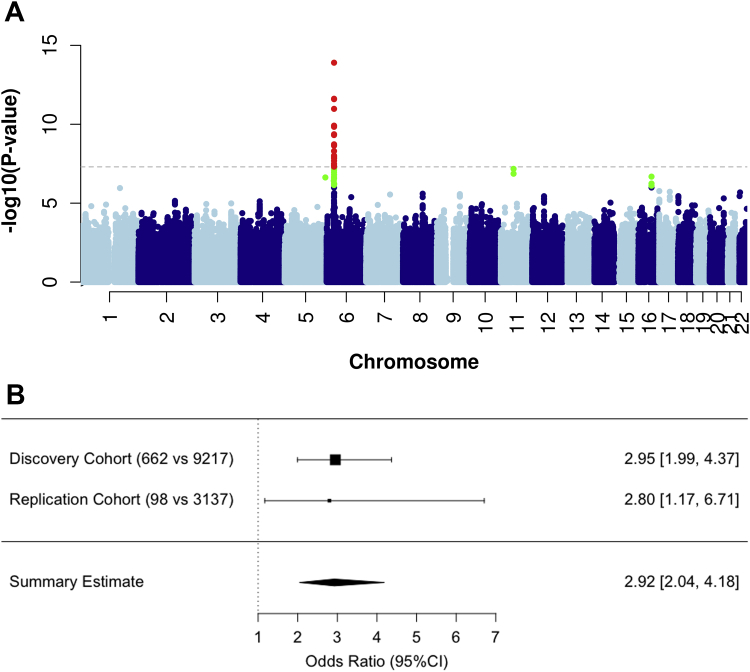
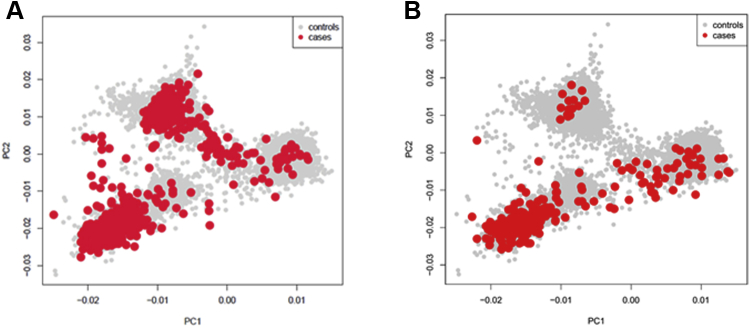
Patients with a clinical history of immediate hypersensitivity reactions to either penicillins or cephalosporins, which were immunologically confirmed, were recruited from allergy clinics. A genome-wide association study was conducted on 662 patients (the discovery cohort) with a diagnosis of immediate hypersensitivity and the main finding was replicated in a cohort of 98 Spanish cases, recruited using the same diagnostic criteria as the discovery cohort.
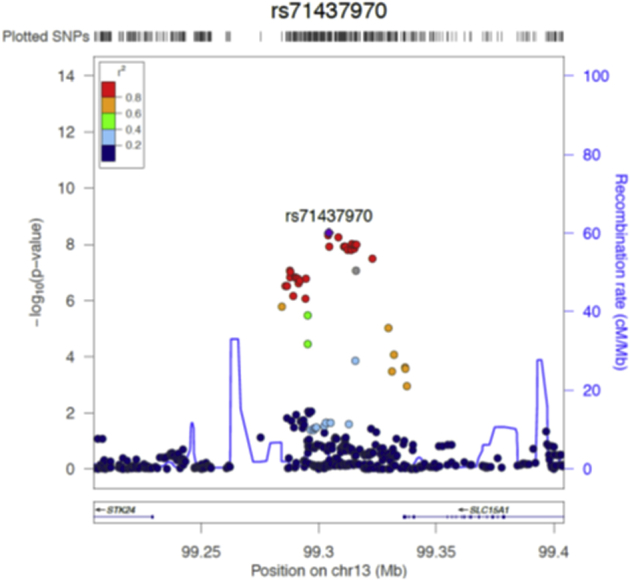
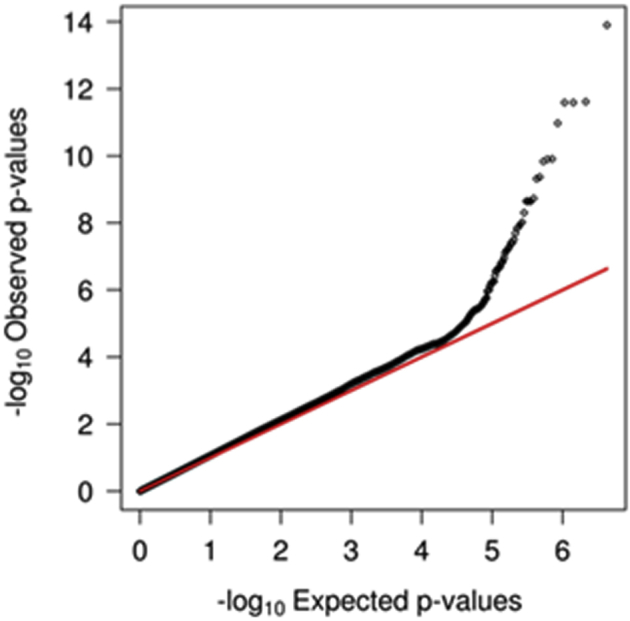
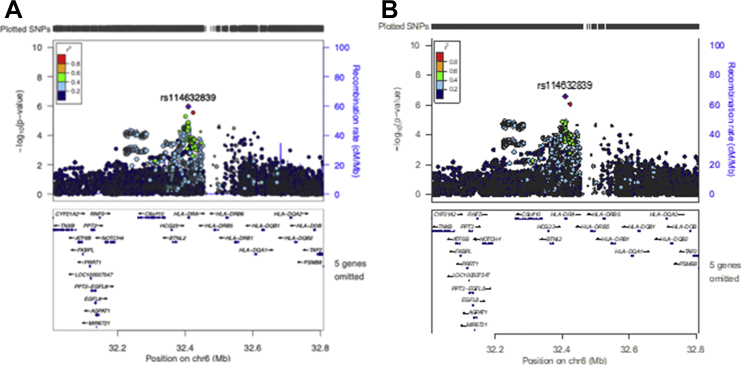
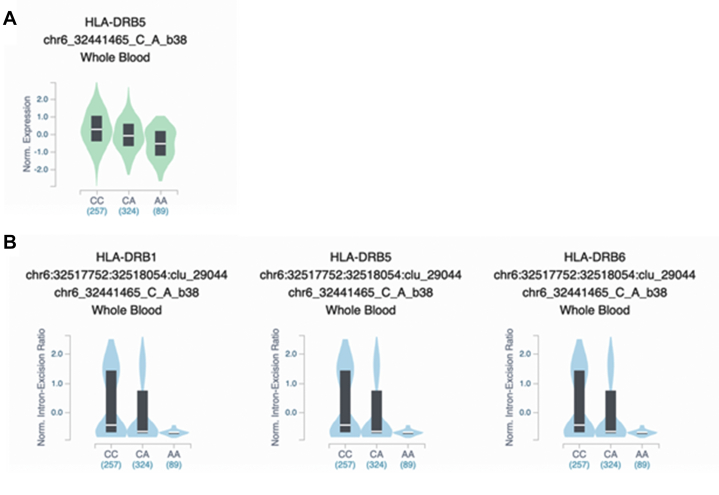
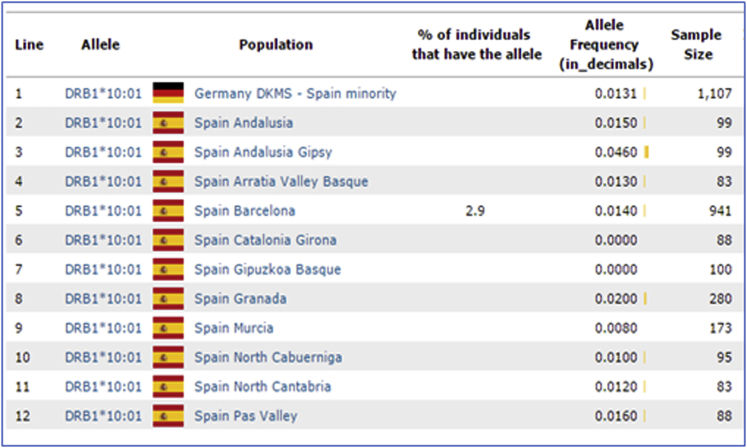
Genome-wide association study identified rs71542416 within the Class II HLA region as the top hit (P = 2 × 10); this was in linkage disequilibrium with HLA-DRB1∗10:01 (odds ratio, 2.93; P = 5.4 × 10) and HLA-DQA1∗01:05 (odds ratio, 2.93, P = 5.4 × 10). Haplotype analysis identified that HLA-DRB1∗10:01 was a risk factor even without the HLA-DQA1∗01:05 allele. The association with HLA-DRB1∗10:01 was replicated in another cohort, with the meta-analysis of the discovery and replication cohorts showing that HLA-DRB1∗10:01 increased the risk of immediate hypersensitivity at a genome-wide level (odds ratio, 2.96; P = 4.1 × 10). No association with HLA-DRB1∗10:01 was identified in 268 patients with delayed hypersensitivity reactions to β-lactams.
HLA-DRB1∗10:01 predisposed to immediate hypersensitivity reactions to penicillins. Further work to identify other predisposing HLA and non-HLA loci is required.
β-内酰胺类抗生素与多种免疫介导或过敏反应有关,包括抗原特异性 IgE 介导的即刻(I 型)反应。
我们旨在确定导致β-内酰胺类抗生素即刻反应的遗传易感因素。
从过敏诊所招募了具有青霉素或头孢菌素即刻过敏史且经免疫确认的患者。对 662 例(发现队列)即刻过敏诊断的患者进行了全基因组关联研究,主要发现结果在使用与发现队列相同的诊断标准招募的 98 例西班牙病例队列中得到了复制。
全基因组关联研究确定了 II 类 HLA 区域内的 rs71542416 为最显著的发现(P=2×10);该发现与 HLA-DRB1∗10:01(优势比,2.93;P=5.4×10)和 HLA-DQA1∗01:05(优势比,2.93,P=5.4×10)连锁不平衡。单体型分析表明,即使没有 HLA-DQA1∗01:05 等位基因,HLA-DRB1∗10:01 也是一个危险因素。在另一个队列中复制了与 HLA-DRB1∗10:01 的关联,发现和复制队列的荟萃分析表明,HLA-DRB1∗10:01 在全基因组水平上增加了即刻过敏的风险(优势比,2.96;P=4.1×10)。在 268 例青霉素迟发性过敏反应患者中未发现与 HLA-DRB1∗10:01 的关联。
HLA-DRB1∗10:01 易导致青霉素即刻过敏反应。需要进一步研究以确定其他易感 HLA 和非 HLA 基因座。