Department of Biomedical, Metabolic and Neural Science, University of Modena and Reggio Emilia, Modena, Italy.
Department of Biochemistry and Molecular Pharmacology, Istituto di Ricerche Farmacologiche Mario Negri IRCCS, Milan, Italy.
Mol Neurodegener. 2020 Oct 15;15(1):58. doi: 10.1186/s13024-020-00406-3.
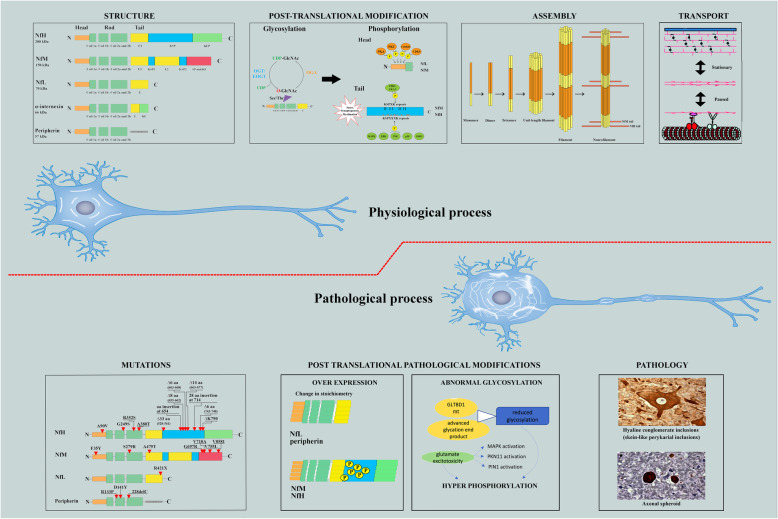
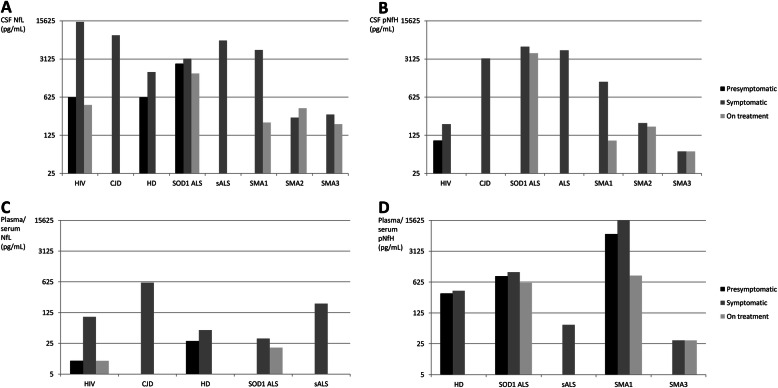
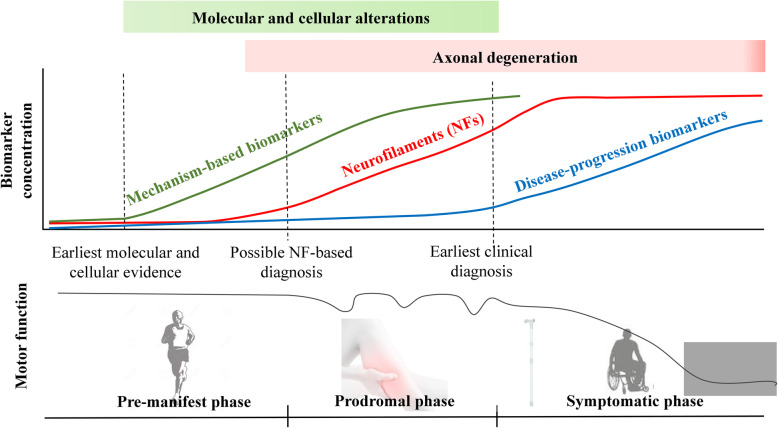
Motor neuron diseases (MNDs) are etiologically and biologically heterogeneous diseases. The pathobiology of motor neuron degeneration is still largely unknown, and no effective therapy is available. Heterogeneity and lack of specific disease biomarkers have been appointed as leading reasons for past clinical trial failure, and biomarker discovery is pivotal in today's MND research agenda.In the last decade, neurofilaments (NFs) have emerged as promising biomarkers for the clinical assessment of neurodegeneration. NFs are scaffolding proteins with predominant structural functions contributing to the axonal cytoskeleton of myelinated axons. NFs are released in CSF and peripheral blood as a consequence of axonal degeneration, irrespective of the primary causal event. Due to the current availability of highly-sensitive automated technologies capable of precisely quantify proteins in biofluids in the femtomolar range, it is now possible to reliably measure NFs not only in CSF but also in blood.In this review, we will discuss how NFs are impacting research and clinical management in ALS and other MNDs. Besides contributing to the diagnosis at early stages by differentiating between MNDs with different clinical evolution and severity, NFs may provide a useful tool for the early enrolment of patients in clinical trials. Due to their stability across the disease, NFs convey prognostic information and, on a larger scale, help to stratify patients in homogenous groups. Shortcomings of NFs assessment in biofluids will also be discussed according to the available literature in the attempt to predict the most appropriate use of the biomarker in the MND clinic.
运动神经元病(MNDs)在病因和生物学上具有异质性。运动神经元退化的病理生物学仍知之甚少,目前尚无有效的治疗方法。异质性和缺乏特定的疾病生物标志物被认为是过去临床试验失败的主要原因,而生物标志物的发现是当今 MND 研究议程的关键。在过去的十年中,神经丝(NFs)已成为神经退行性变临床评估的有前途的生物标志物。NFs 是支架蛋白,具有主要的结构功能,有助于有髓轴突的轴突细胞骨架。NFs 作为轴突退化的结果,无论是由于原发性因果事件,都会在 CSF 和外周血中释放。由于目前有高度敏感的自动化技术能够精确地在纳摩尔范围内定量生物流体中的蛋白质,因此现在不仅可以在 CSF 中,而且可以在血液中可靠地测量 NFs。
在这篇综述中,我们将讨论 NFs 如何影响 ALS 和其他 MNDs 的研究和临床管理。除了通过区分具有不同临床演变和严重程度的 MNDs 来帮助在早期进行诊断外,NFs 还可以为早期招募临床试验患者提供有用的工具。由于它们在疾病过程中的稳定性,NFs 传递预后信息,并在更大程度上帮助将患者分层到同质组中。根据现有文献,还将讨论生物流体中 NFs 评估的缺点,以尝试预测该生物标志物在 MND 临床中的最佳用途。