Gong Yan-Ju, Feng Ying, Cao Yuan-Yuan, Zhao Jia, Wu Wei, Zheng Ya-Yun, Wu Jia-Rui, Li Xin, Yang Gui-Zhi, Zhou Xue
Department of Histology, Embryology and Neurobiology, West China School of Basic Medical Sciences and Forensic Medicine, Sichuan University, Chengdu, Sichuan, China.
Institute of Biology, National Institute of Measurement and Testing Technology, Chengdu, Sichuan, China.
BMJ Open Diabetes Res Care. 2020 Oct;8(1). doi: 10.1136/bmjdrc-2020-001199.
Glucose disposal by insulin-responsive tissues maintains the body glucose homeostasis and insulin resistance leads to a risk of developing type 2 diabetes (T2DM). Insulin stimulates the translocation of glucose transporter isoform 4 (GLUT4) vesicles from intracellular compartments to the plasma membrane to facilitate glucose uptake. However, the underlying mechanisms of GLUT4 vesicle translocation are not well defined. Here we show the role of huntingtin-associated protein 1 (HAP1) in GLUT4 translocation in adipocytes and the pathogenesis of T2DM.
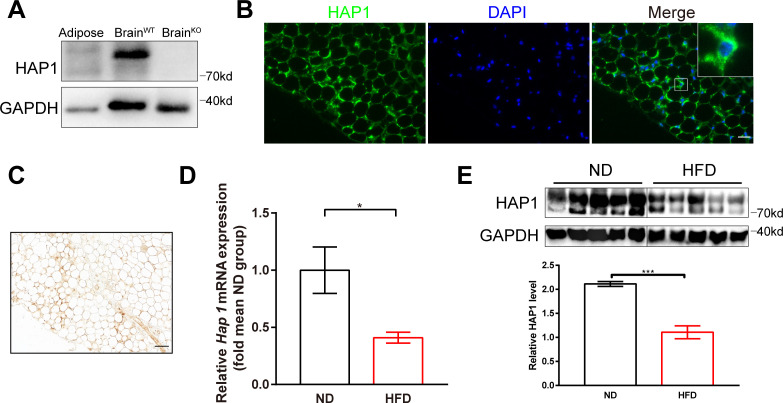
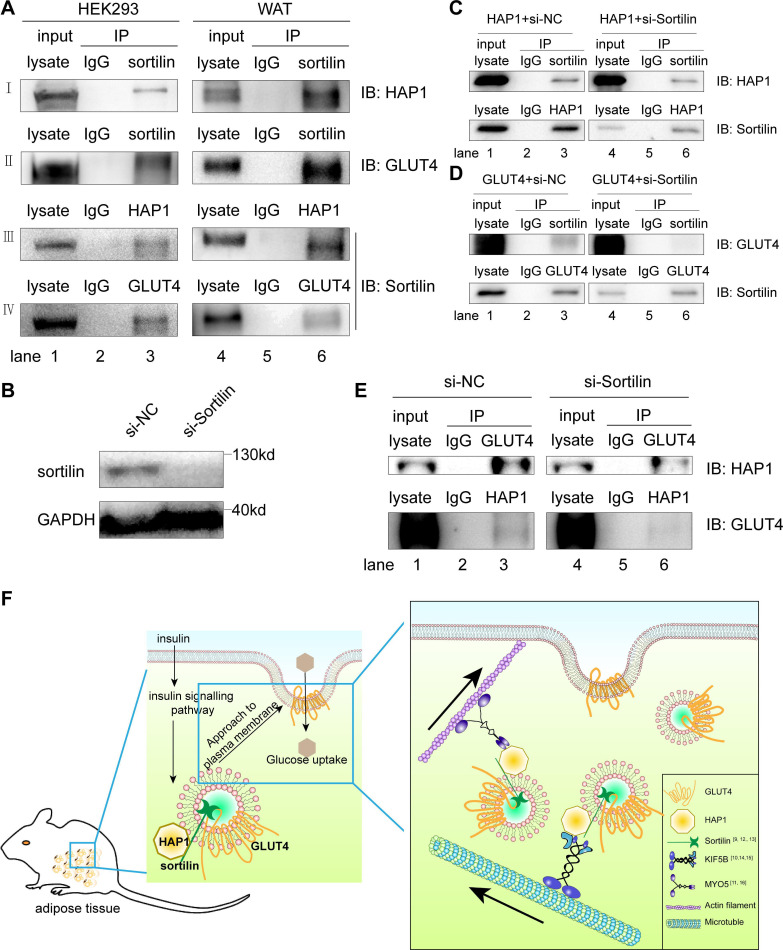
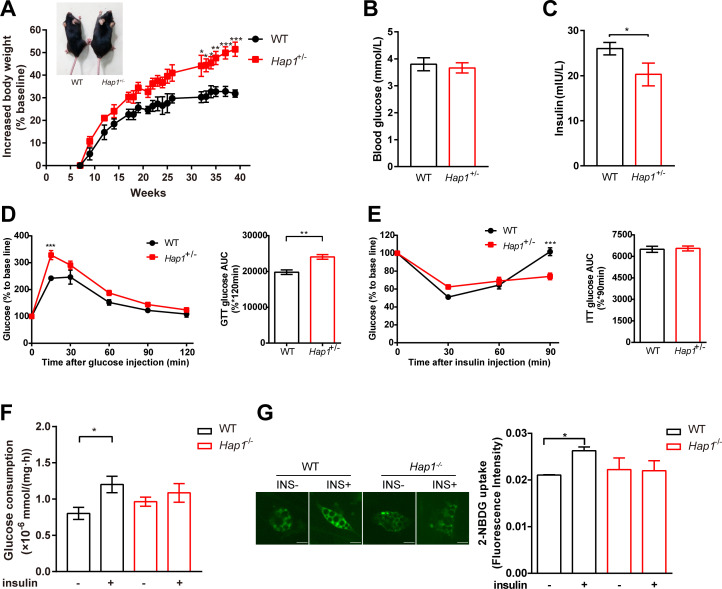
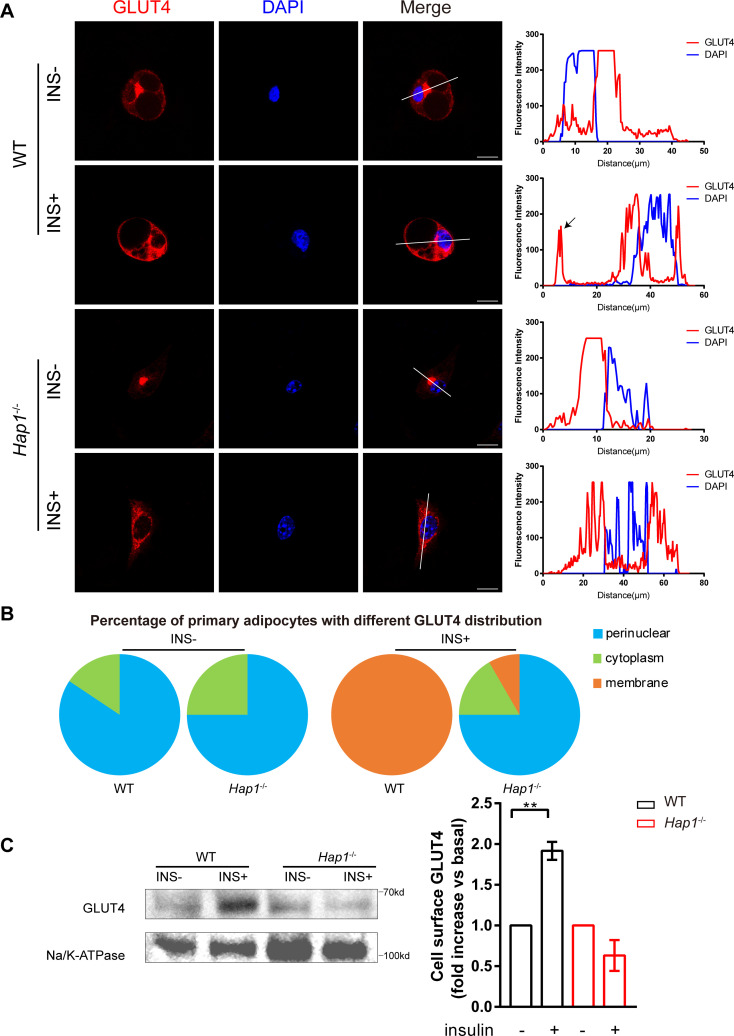
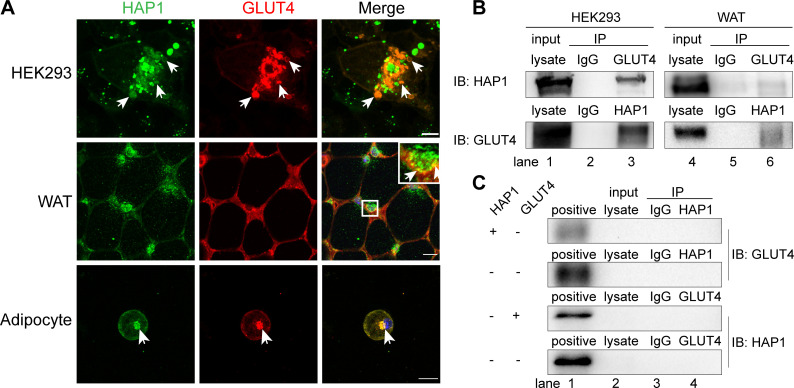
The parameters for glucose metabolism including body weight, glucose tolerance and insulin tolerance were assessed in wild-type (WT) and mice. HAP1 protein expression was verified in adipose tissue. mRNA and protein expression was monitored in adipose tissue of high-fat diet (HFD)-induced diabetic mice. Insulin-stimulated GLUT4 vesicle translocation and glucose uptake were detected using immunofluorescence techniques and quantified in primary adipocytes from mice. The interaction between HAP1 and GLUT4 was assessed by immunofluorescence colocalization and co-immunoprecipitation in HEK293 cells and adipose tissue. The role of sortilin in HAP1 and GLUT4 interaction was approved by co-immunoprecipitation and RNA interference.
The expression of mRNA and protein was detected in WT mouse adipose tissue and downregulated in adipose tissue of HFD-induced diabetic mice. mice exhibited increased body weight, pronounced glucose tolerance and significant insulin intolerance compared with the WT mice. HAP1 colocalized with GLUT4 in mouse adipocytes and cotransfected HEK293 cells. Furthermore, the insulin-stimulated GLUT4 vesicle translocation and glucose uptake were defective in adipocytes. Finally, sortilin mediated the interaction of HAP1 and GLUT4.
Our study showed that HAP1 formed a protein complex with GLUT4 and sortilin, and played a critical role in insulin-stimulated GLUT4 translocation in adipocytes. Its downregulation may contribute to the pathogenesis of diabetes.
胰岛素反应性组织对葡萄糖的处置维持着机体的葡萄糖稳态,而胰岛素抵抗会导致患2型糖尿病(T2DM)的风险增加。胰岛素刺激葡萄糖转运蛋白4(GLUT4)囊泡从细胞内区室转运至质膜,以促进葡萄糖摄取。然而,GLUT4囊泡转运的潜在机制尚未完全明确。在此,我们展示了亨廷顿蛋白相关蛋白1(HAP1)在脂肪细胞中GLUT4转运及T2DM发病机制中的作用。
评估野生型(WT)和[此处缺失具体小鼠类型]小鼠的葡萄糖代谢参数,包括体重、葡萄糖耐量和胰岛素耐量。在脂肪组织中验证HAP1蛋白表达。监测高脂饮食(HFD)诱导的糖尿病小鼠脂肪组织中的[此处缺失具体基因或蛋白名称]mRNA和蛋白表达。使用免疫荧光技术检测胰岛素刺激的GLUT4囊泡转运和葡萄糖摄取,并在来自[此处缺失具体小鼠类型]小鼠的原代脂肪细胞中进行定量分析。通过免疫荧光共定位和共免疫沉淀在HEK293细胞和脂肪组织中评估HAP1与GLUT4之间的相互作用。通过共免疫沉淀和RNA干扰验证sortilin在HAP1与GLUT4相互作用中的作用。
在WT小鼠脂肪组织中检测到[此处缺失具体基因或蛋白名称]mRNA和蛋白表达,而在HFD诱导的糖尿病小鼠脂肪组织中其表达下调。与WT小鼠相比,[此处缺失具体小鼠类型]小鼠体重增加、葡萄糖耐量显著增加且胰岛素耐受性明显降低。在小鼠脂肪细胞和共转染的HEK293细胞中,HAP1与GLUT4共定位。此外,[此处缺失具体小鼠类型]脂肪细胞中胰岛素刺激的GLUT4囊泡转运和葡萄糖摄取存在缺陷。最后,sortilin介导了HAP1与GLUT4的相互作用。
我们的研究表明,HAP1与GLUT4和sortilin形成蛋白复合物,并在胰岛素刺激的脂肪细胞GLUT4转运中起关键作用。其下调可能导致糖尿病的发病机制。