Udoro Elohor Oghenechavwuko, Anyasi Tonna Ashim, Jideani Afam I O
Department of Food Science and Technology, School of Agriculture, University of Venda, Thohoyandou, 0950 Limpopo Province, South Africa.
Department of Food Technology, School of Industrial Technology, Akanu Ibiam Federal Polytechnic, P.M.B. 1007, Afikpo-Unwana, Ebonyi State, Nigeria.
Int J Food Sci. 2020 Sep 25;2020:7234372. doi: 10.1155/2020/7234372. eCollection 2020.
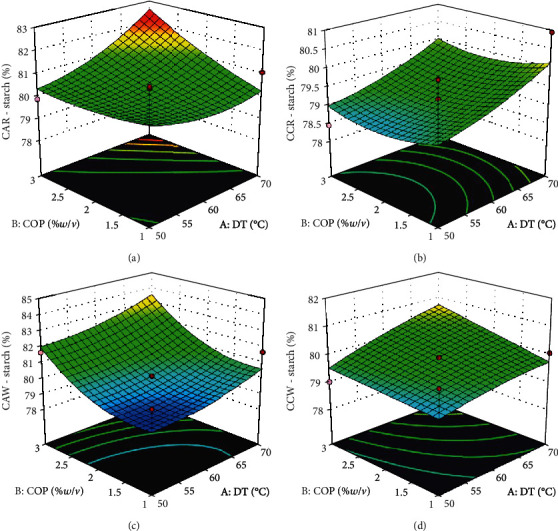
Calcium chloride and citric acid (0.6-3.4%/) were separately applied in the pretreatment of two South African cassava landraces (white and red) processed into flour at drying temperatures of 45-74°C. Optimisation using the response surface methodology showed ash (0.79-4.42%) and crude fibre (2.77-5.12%) increased as the drying temperature (DT) and concentration of pretreatment (COP) increased. Starch content (78.06-84.71%) was not influenced by the processing variables. Both pretreatments improved the lightness and whiteness index of cassava flour. Optimal processing conditions of 70°C DT and 3%/ COP were the same for the proximate composition of cassava flour from all experimental groups.
氯化钙和柠檬酸(0.6 - 3.4%)分别用于对两个南非木薯地方品种(白色和红色)进行预处理,在45 - 74°C的干燥温度下将其加工成面粉。使用响应面法进行优化表明,随着干燥温度(DT)和预处理浓度(COP)的增加,灰分(0.79 - 4.42%)和粗纤维(2.77 - 5.12%)增加。淀粉含量(78.06 - 84.71%)不受加工变量的影响。两种预处理均提高了木薯粉的亮度和白度指数。所有实验组木薯粉的近似成分的最佳加工条件均为DT 70°C和COP 3%。