Center of Physiology and Pharmacology, Medical University of Vienna, Schwarzspanierstrasse 17, 1090, Vienna, Austria.
Neurotherapeutics. 2020 Jul;17(3):784-825. doi: 10.1007/s13311-020-00937-z. Epub 2020 Oct 15.
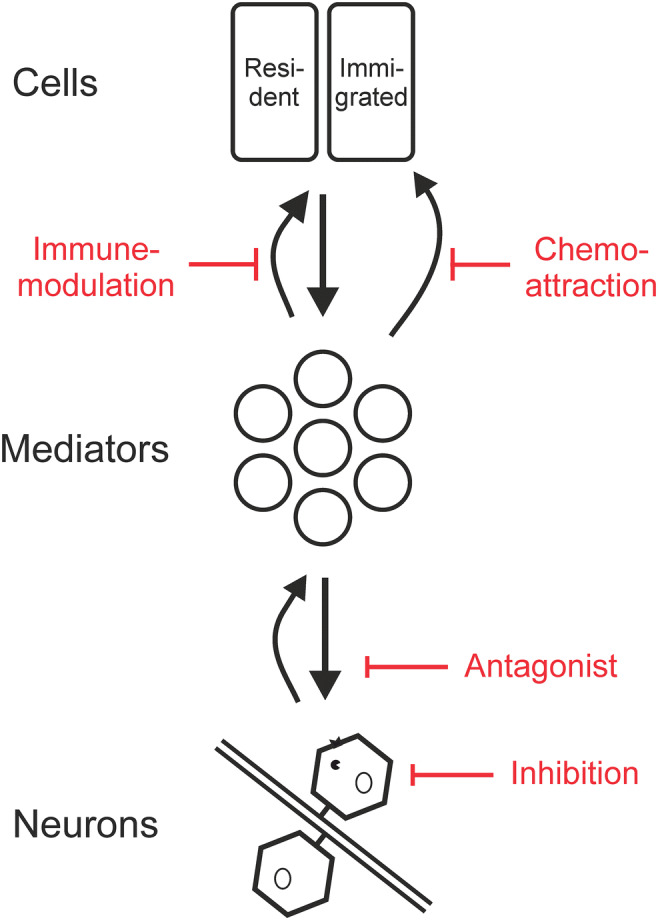
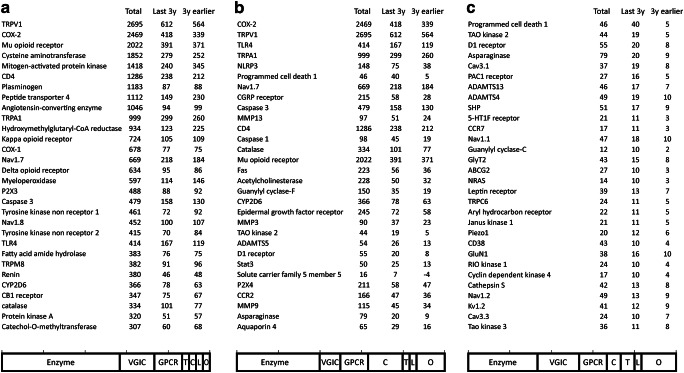
A limited number of peripheral targets generate pain. Inflammatory mediators can sensitize these. The review addresses targets acting exclusively or predominantly on sensory neurons, mediators involved in inflammation targeting sensory neurons, and mediators involved in a more general inflammatory process, of which an analgesic effect secondary to an anti-inflammatory effect can be expected. Different approaches to address these systems are discussed, including scavenging proinflammatory mediators, applying anti-inflammatory mediators, and inhibiting proinflammatory or facilitating anti-inflammatory receptors. New approaches are contrasted to established ones; the current stage of progress is mentioned, in particular considering whether there is data from a molecular and cellular level, from animals, or from human trials, including an early stage after a market release. An overview of publication activity is presented, considering a IuPhar/BPS-curated list of targets with restriction to pain-related publications, which was also used to identify topics.
数量有限的周围靶标会产生疼痛。炎症介质可以使这些靶标致敏。本次综述针对的是专门或主要作用于感觉神经元的靶标、作用于感觉神经元的炎症介质,以及作用于更广泛炎症过程的介质,这些介质可以通过抗炎作用产生镇痛效果。讨论了针对这些系统的不同方法,包括清除促炎介质、应用抗炎介质,以及抑制促炎或促进抗炎受体。将新方法与已确立的方法进行了对比;提到了当前的进展阶段,特别是考虑是否有来自分子和细胞水平、动物或人体试验的数据,包括市场推出后的早期阶段。还考虑了 IuPhar/BPS 针对与疼痛相关出版物限制的目标列表,该列表也用于识别主题,展示了出版物活动的概述。