School of Chemical Engineering, University of Campinas, Avenida Albert Einstein 500, 13083-852 Campinas, SP, Brazil.
Langmuir. 2020 Oct 27;36(42):12532-12544. doi: 10.1021/acs.langmuir.0c01980. Epub 2020 Oct 16.
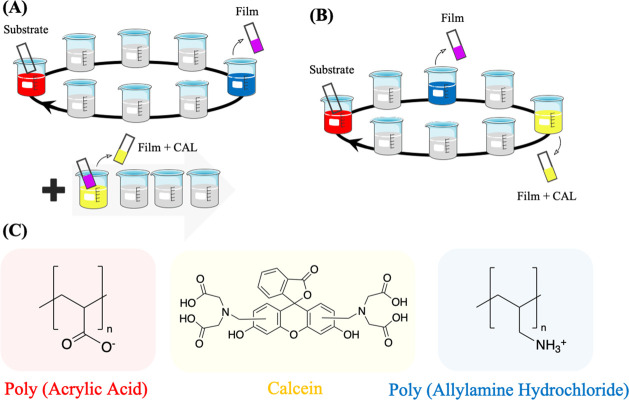
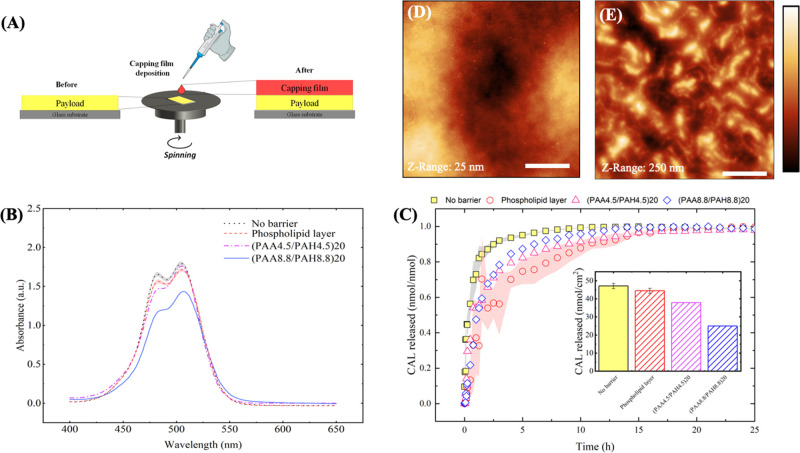
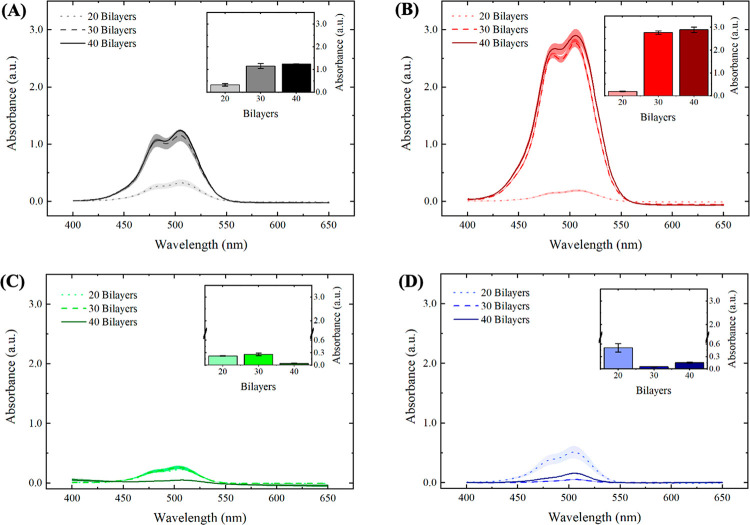
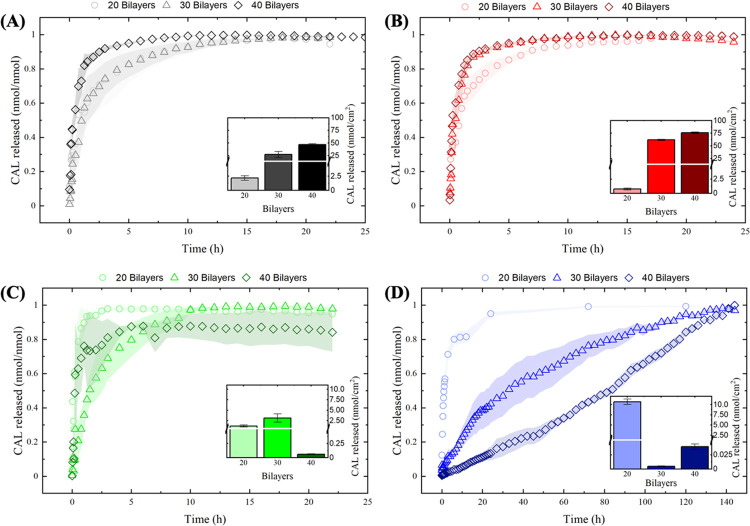
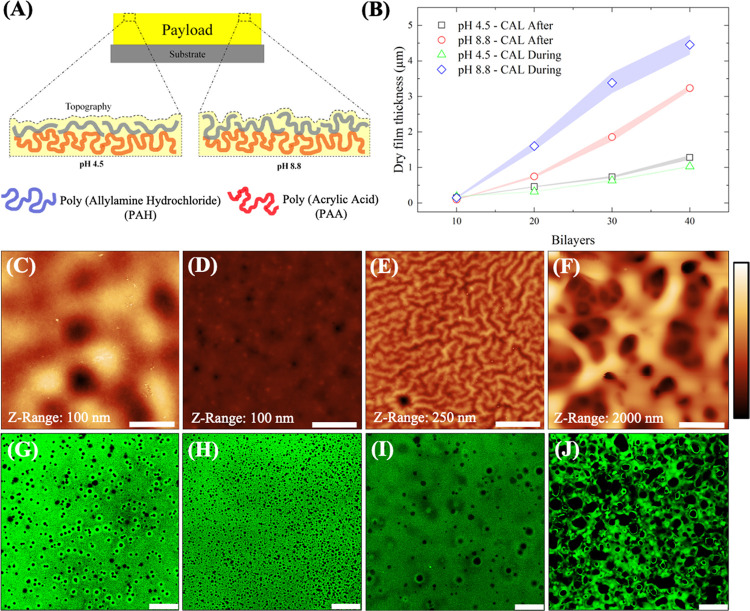
The layer-by-layer film deposition is a suitable strategy for the design and functionalization of drug carriers with superior performance, which still lacks information describing the influence of assembly conditions on the mechanisms governing the drug release process. Herein, traditional poly(acrylic acid)/poly(allylamine) polyelectrolyte multilayers (PEM) were explored as a platform to study the influence of the assembly conditions such as pH, drug loading method, and capping layer deposition on the mechanisms that control the release of calcein, the chosen model drug, from PEM. Films with 20-40 bilayers were assembled at pH 4.5 or 8.8, and the drug loading process was carried out during- or post-film assembly. Release data were fitted to three release models, namely, Higuchi, Ritger-Peppas, and Berens-Hopfenberg, to investigate the mechanism governing the drug transport, such as the apparent diffusion and the relaxation time. The postassembly drug loading method leads to a higher drug loading capacity than the during-assembly method, attributed to the washing out of calcein during film assembly steps in the latter method. Higuchi's and Ritger-Peppas' model analyses indicate that the release kinetic constant increased with the number of bilayers for the postassembly method. The opposite trend is observed for the during-assembly method. The Berens-Hopfenberg release model enabled the decoupling of each drug transport mechanism's contribution, indicating the increase of the diffusion contribution with the number of bilayers for the postassembly method at pH 4.5 and the increase of the polymer relaxation contribution for the during-assembly method at pH 8.8. Deborah's number, which represents the ratio of the polymer relaxation time to the diffusion time, follows the trends observed for the relaxation contribution for the conditions investigated. The deposition of the capping phospholipid layer over the payload also favored the polymer relaxation contribution in the drug release, featuring new strategies to investigate the drug release in PEM.
层层膜沉积是设计和功能化药物载体的一种合适策略,具有优异的性能,但仍缺乏描述组装条件对控制药物释放过程机制影响的信息。在此,我们探索了传统的聚(丙烯酸)/聚(烯丙胺)聚电解质多层膜(PEM)作为平台,研究了组装条件(如 pH 值、药物加载方法和盖帽层沉积)对控制 calcein(所选模型药物)从 PEM 中释放的机制的影响。在 pH 值为 4.5 或 8.8 下组装了 20-40 个双层膜,并在膜组装过程中或之后进行药物加载过程。将释放数据拟合到三种释放模型,即 Higuchi、Ritger-Peppas 和 Berens-Hopfenberg,以研究控制药物传输的机制,如表观扩散和弛豫时间。后组装药物加载方法比前组装药物加载方法具有更高的载药量,这归因于在后一种方法中在膜组装步骤中 calcein 被冲洗掉。Higuchi 和 Ritger-Peppas 模型分析表明,后组装方法的释放动力学常数随双层数的增加而增加。在后组装方法中观察到相反的趋势。Berens-Hopfenberg 释放模型能够分离每个药物传输机制的贡献,表明后组装方法在 pH 值为 4.5 时扩散贡献随双层数的增加而增加,而前组装方法在 pH 值为 8.8 时聚合物弛豫贡献增加。表示聚合物弛豫时间与扩散时间之比的 Deborah 数遵循所研究条件下弛豫贡献的趋势。在负载物上沉积封端磷脂层也有利于药物释放中的聚合物弛豫贡献,为研究 PEM 中的药物释放提供了新策略。