Department of Pharmacology and Toxicology, Faculty of Pharmacy in Hradec Kralove, Charles University, Akademika Heyrovskeho 1203, 500 05 Hradec Kralove, Czech Republic.
Department of Pharmaceutical Chemistry and Pharmaceutical Analysis, Faculty of Pharmacy in Hradec Kralove, Charles University, Akademika Heyrovskeho 1203, 500 05 Hradec Kralove, Czech Republic.
Int J Mol Sci. 2020 Oct 14;21(20):7578. doi: 10.3390/ijms21207578.
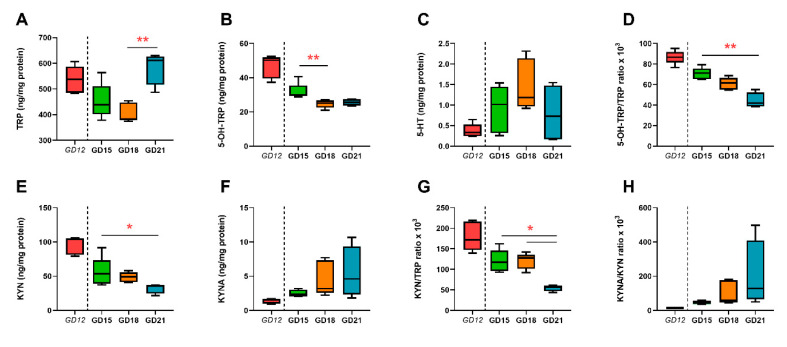
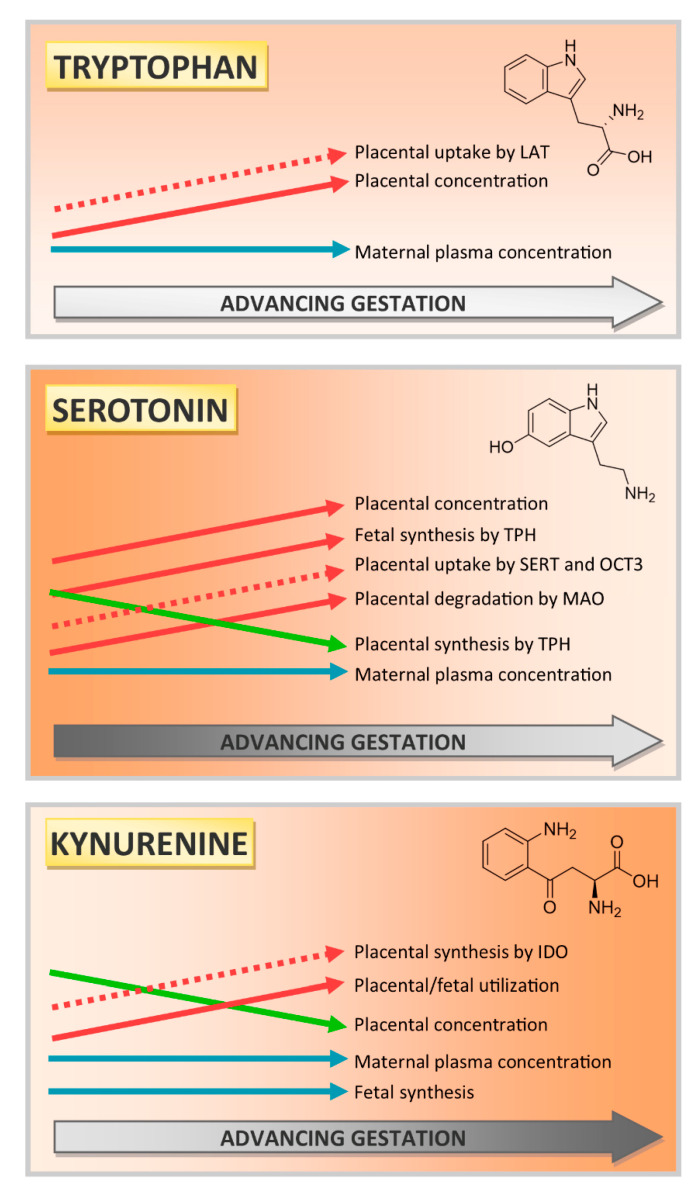
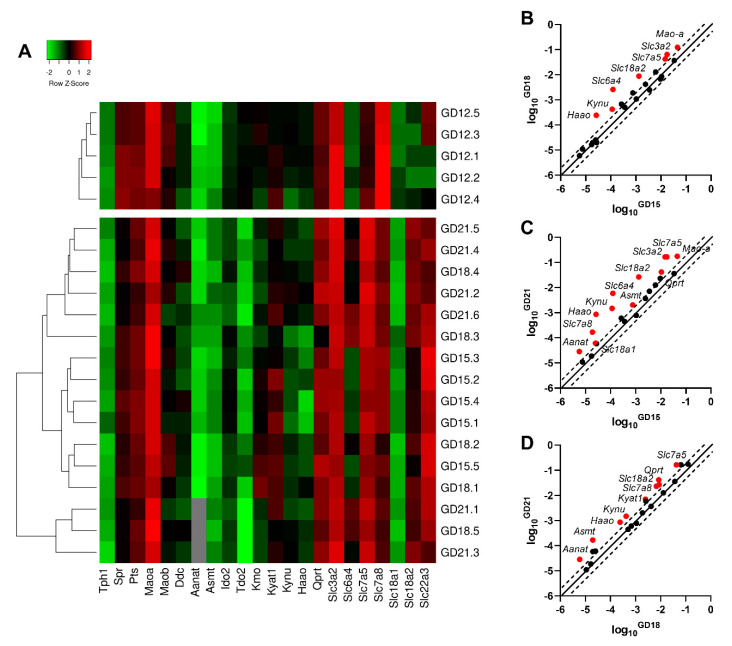
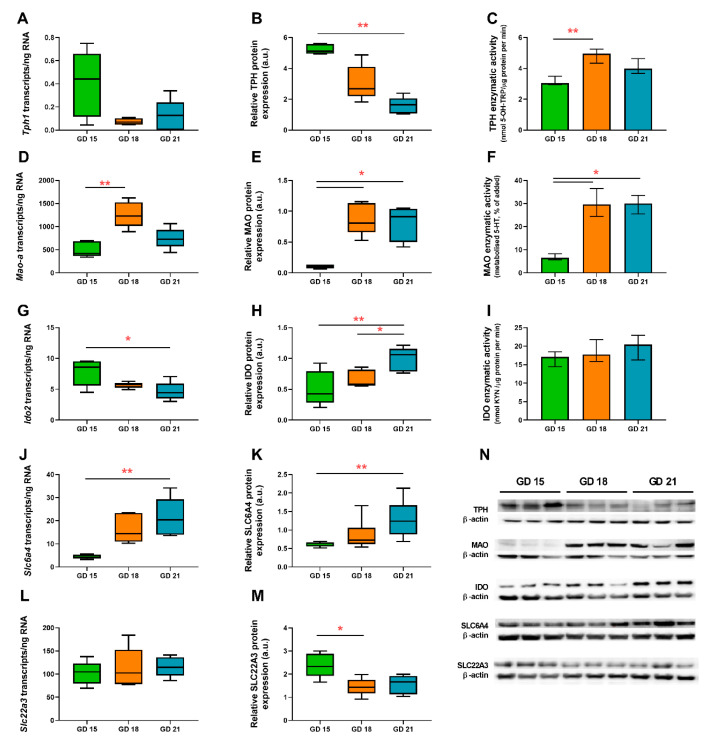
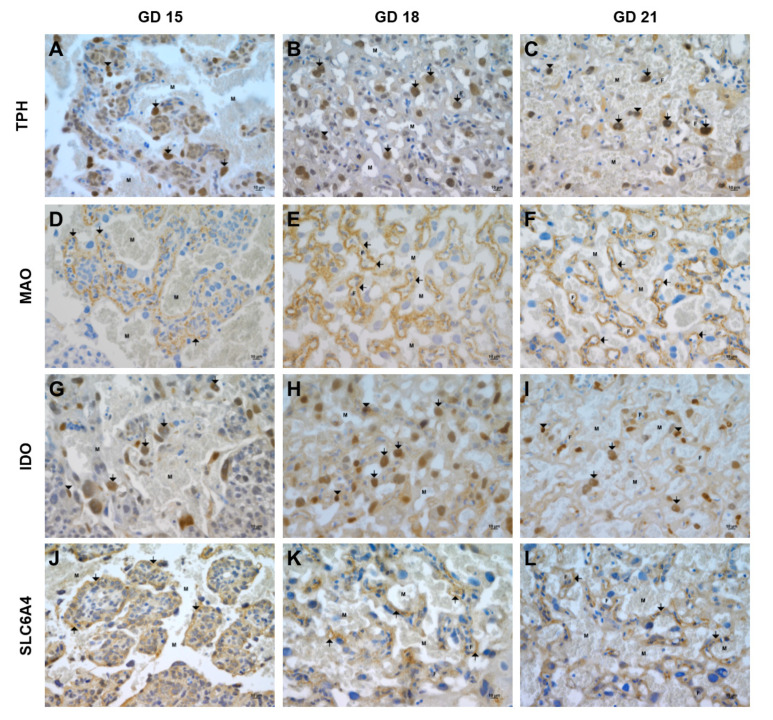
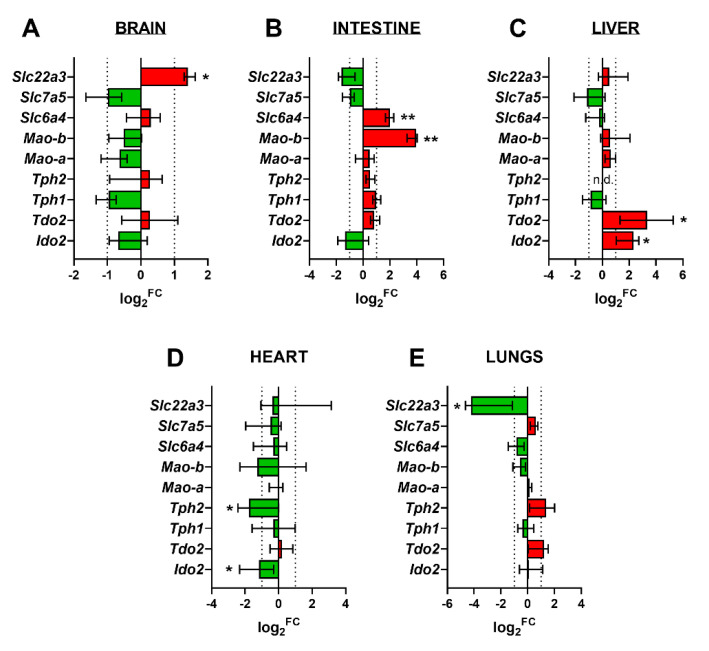
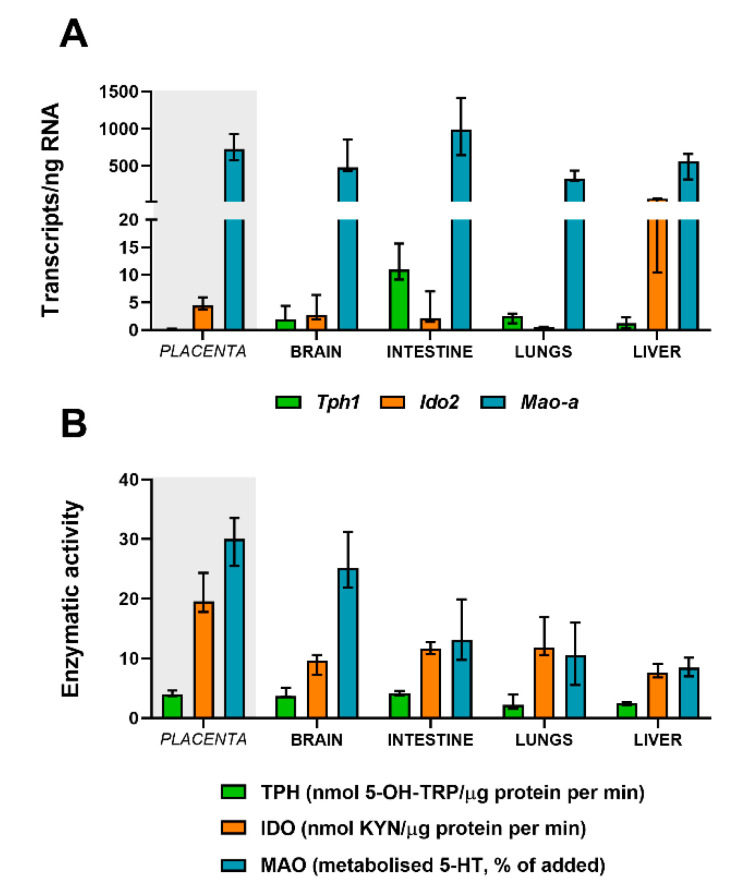
Placental homeostasis of tryptophan is essential for fetal development and programming. The two main metabolic pathways (serotonin and kynurenine) produce bioactive metabolites with immunosuppressive, neurotoxic, or neuroprotective properties and their concentrations in the fetoplacental unit must be tightly regulated throughout gestation. Here, we investigated the expression/function of key enzymes/transporters involved in tryptophan pathways during mid-to-late gestation in rat placenta and fetal organs. Quantitative PCR and heatmap analysis revealed the differential expression of several genes involved in serotonin and kynurenine pathways. To identify the flux of substrates through these pathways, Droplet Digital PCR, western blot, and functional analyses were carried out for the rate-limiting enzymes and transporters. Our findings show that placental tryptophan metabolism to serotonin is crucial in mid-gestation, with a subsequent switch to fetal serotonin synthesis. Concurrently, at term, the close interplay between transporters and metabolizing enzymes of both placenta and fetal organs orchestrates serotonin homeostasis and prevents hyper/hypo-serotonemia. On the other hand, the placental production of kynurenine increases during pregnancy, with a low contribution of fetal organs throughout gestation. Any external insult to this tightly regulated harmony of transporters and enzymes within the fetoplacental unit may affect optimal in utero conditions and have a negative impact on fetal programming.
色氨酸在胎盘的稳态对于胎儿的发育和编程至关重要。两种主要的代谢途径(血清素和犬尿氨酸途径)产生具有免疫抑制、神经毒性或神经保护特性的生物活性代谢物,其在胎盘中的浓度必须在整个妊娠期间得到严格调节。在这里,我们研究了色氨酸途径中关键酶/转运体在大鼠胎盘和胎儿器官中的表达/功能。定量 PCR 和热图分析显示了参与血清素和犬尿氨酸途径的几个基因的差异表达。为了确定这些途径中底物的通量,我们进行了液滴数字 PCR、western blot 和功能分析,以确定限速酶和转运体。我们的研究结果表明,胎盘色氨酸代谢为血清素在中期妊娠至关重要,随后胎儿开始合成血清素。同时,在足月时,胎盘和胎儿器官中转运体和代谢酶之间的密切相互作用调节了血清素的稳态,防止了高/低血清素血症。另一方面,犬尿氨酸在妊娠期间在胎盘的产生增加,而在整个妊娠期间胎儿器官的贡献较低。任何对胎盘中转运体和酶的这种严格调节平衡的外部干扰都可能影响宫内的最佳条件,并对胎儿编程产生负面影响。