Rashid Usman, Kumari Nitika, Signal Nada, Taylor Denise, Vandal Alain C
Health & Rehabilitation Research Institute, Auckland University of Technology, Auckland 1010, New Zealand.
Centre for Chiropractic Research, New Zealand College of Chiropractic, Auckland 1060, New Zealand.
Brain Sci. 2020 Oct 14;10(10):737. doi: 10.3390/brainsci10100737.
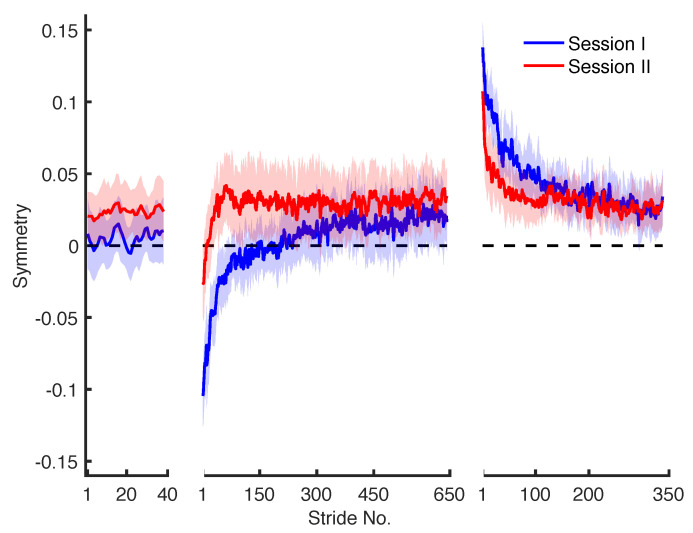
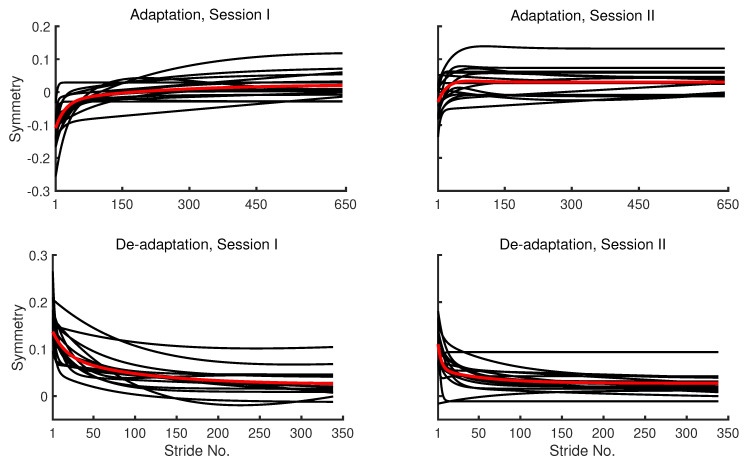
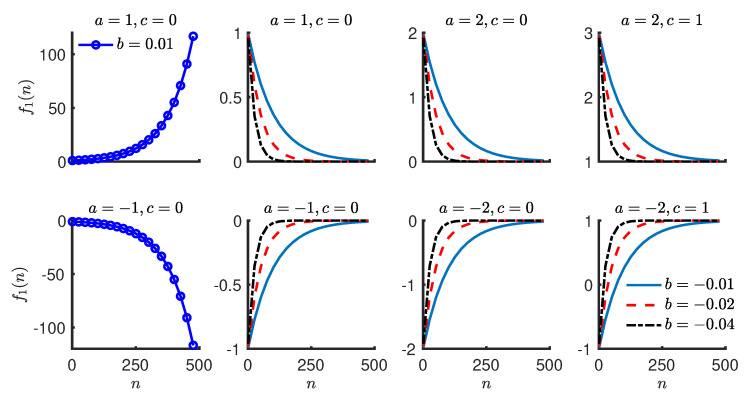
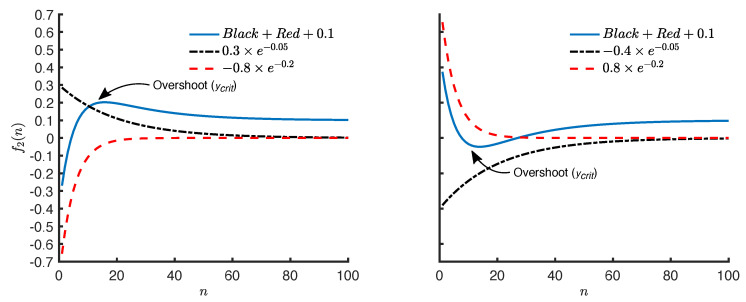
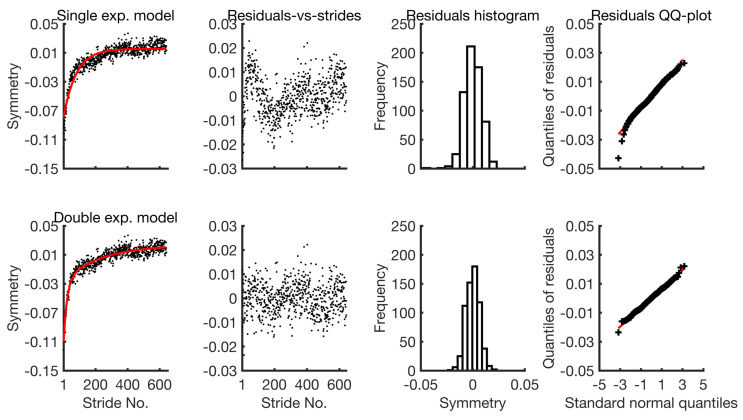
Single and double exponential models fitted to step length symmetry series are used to evaluate the timecourse of adaptation and de-adaptation in instrumented split-belt treadmill tasks. Whilst the nonlinear regression literature has developed substantially over time, the split-belt treadmill training literature has not been fully utilising the fruits of these developments. In this research area, the current methods of model fitting and evaluation have three significant limitations: (i) optimisation algorithms that are used for model fitting require a good initial guess for regression parameters; (ii) the coefficient of determination (R2) is used for comparing and evaluating models, yet it is considered to be an inadequate measure of fit for nonlinear regression; and, (iii) inference is based on comparison of the confidence intervals for the regression parameters that are obtained under the untested assumption that the nonlinear model has a good linear approximation. In this research, we propose a transformed set of parameters with a common language interpretation that is relevant to split-belt treadmill training for both the single and double exponential models. We propose parameter bounds for the exponential models which allow the use of particle swarm optimisation for model fitting without an initial guess for the regression parameters. For model evaluation and comparison, we propose the use of residual plots and Akaike's information criterion (AIC). A method for obtaining confidence intervals that does not require the assumption of a good linear approximation is also suggested. A set of MATLAB (MathWorks, Inc., Natick, MA, USA) functions developed in order to apply these methods are also presented. Single and double exponential models are fitted to both the group-averaged and participant step length symmetry series in an experimental dataset generating new insights into split-belt treadmill training. The proposed methods may be useful for research involving analysis of gait symmetry with instrumented split-belt treadmills. Moreover, the demonstration of the suggested statistical methods on an experimental dataset may help the uptake of these methods by a wider community of researchers that are interested in timecourse of motor training.
将单指数模型和双指数模型拟合到步长对称序列,用于评估在使用仪器的分带式跑步机任务中适应和去适应的时间进程。虽然随着时间的推移,非线性回归文献有了很大发展,但分带式跑步机训练文献尚未充分利用这些发展成果。在这个研究领域,当前的模型拟合和评估方法有三个显著局限性:(i)用于模型拟合的优化算法需要对回归参数有一个良好的初始猜测;(ii)决定系数(R2)用于比较和评估模型,但它被认为是一种不适合非线性回归的拟合度量;(iii)推理基于在未经检验的假设下获得的回归参数的置信区间的比较,即非线性模型具有良好的线性近似。在本研究中,我们针对单指数模型和双指数模型提出了一组具有通用语言解释的变换参数,这些参数与分带式跑步机训练相关。我们提出了指数模型的参数界限,允许在无需对回归参数进行初始猜测的情况下使用粒子群优化进行模型拟合。对于模型评估和比较,我们建议使用残差图和赤池信息准则(AIC)。还提出了一种无需假设良好线性近似即可获得置信区间的方法。还展示了为应用这些方法而开发的一组MATLAB(美国马萨诸塞州纳蒂克市MathWorks公司)函数。将单指数模型和双指数模型拟合到实验数据集中的组平均步长对称序列和参与者步长对称序列,为分带式跑步机训练带来了新的见解。所提出的方法可能对涉及使用仪器的分带式跑步机分析步态对称性的研究有用。此外,在实验数据集上展示所建议的统计方法可能有助于更广泛的对运动训练时间进程感兴趣的研究人员采用这些方法。