Au Akina, Shao Qing, White Kyra K, Lucaciu Sergiu A, Esseltine Jessica L, Barr Kevin, Laird Dale W
Department of Physiology and Pharmacology, The University of Western Ontario, London, ON N6A 5C1, Canada.
Department of Anatomy and Cell Biology, The University of Western Ontario, London, ON N6A 5C1, Canada.
Biomolecules. 2020 Oct 14;10(10):1443. doi: 10.3390/biom10101443.
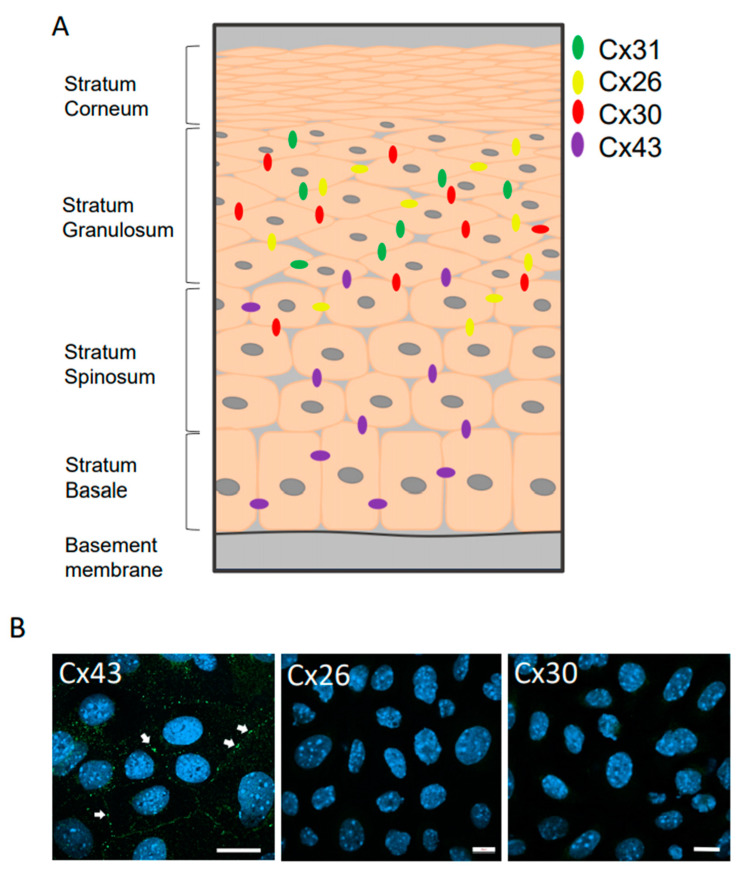
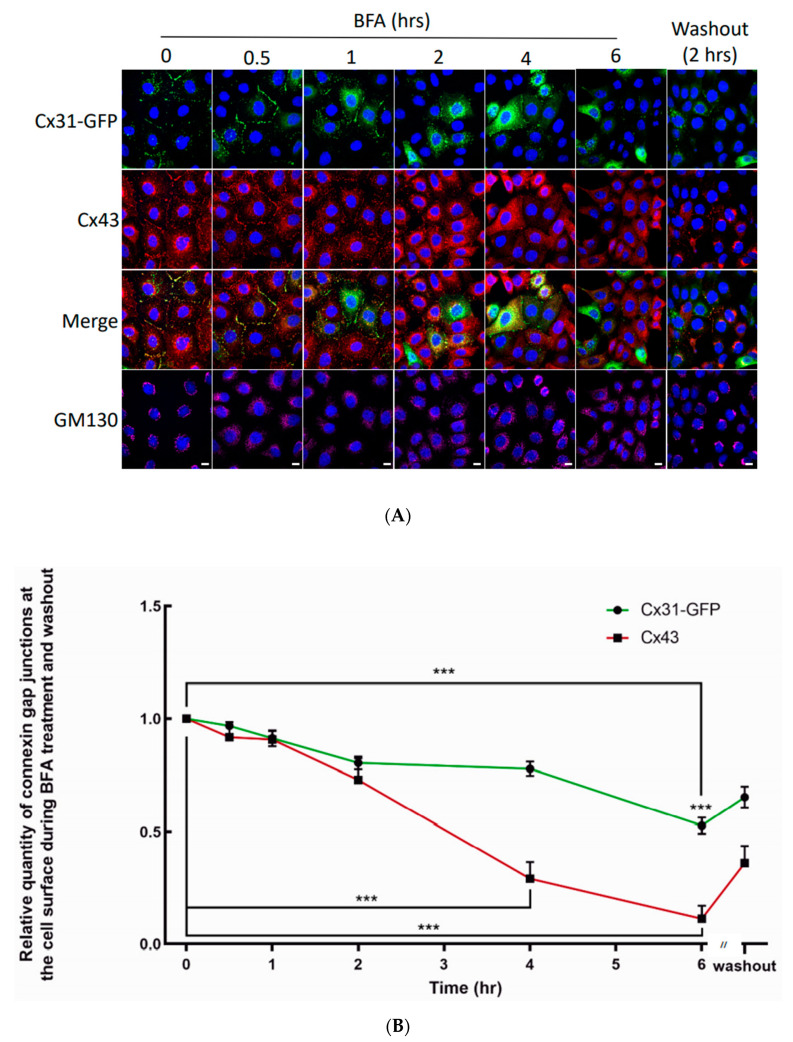
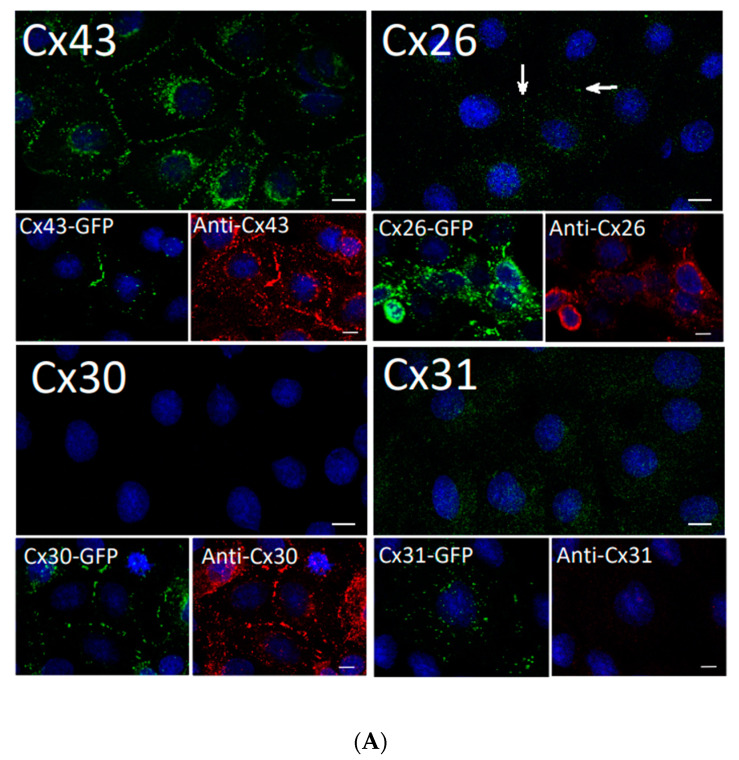
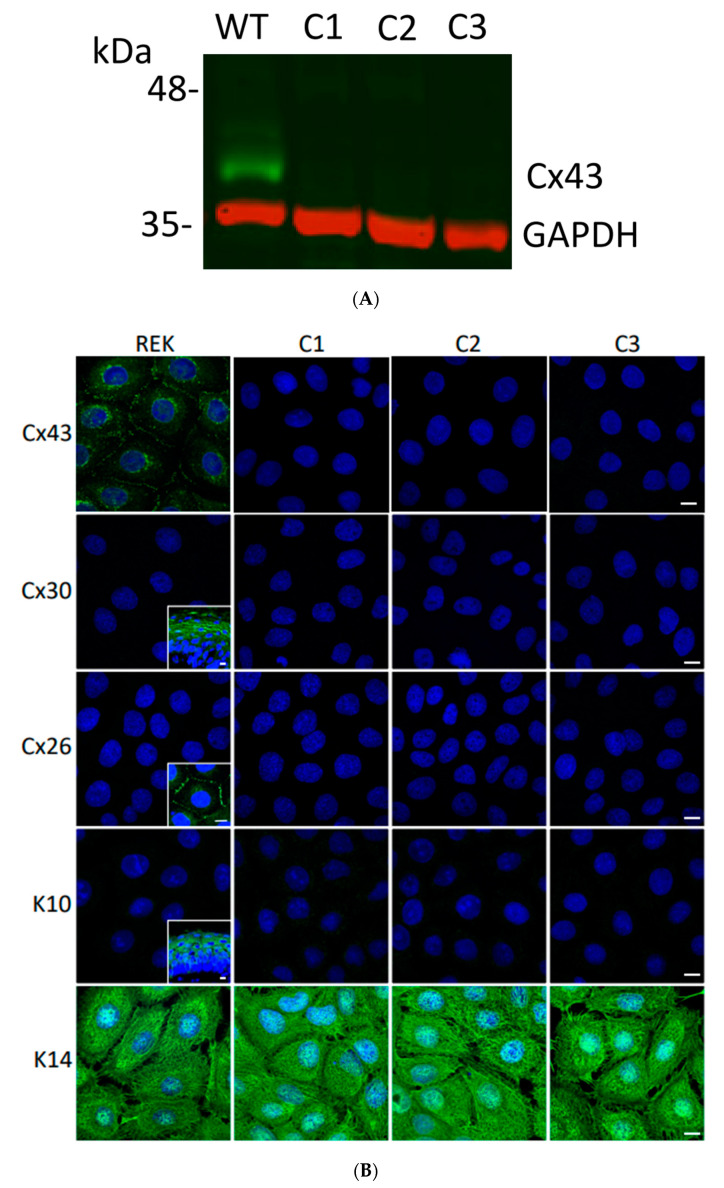
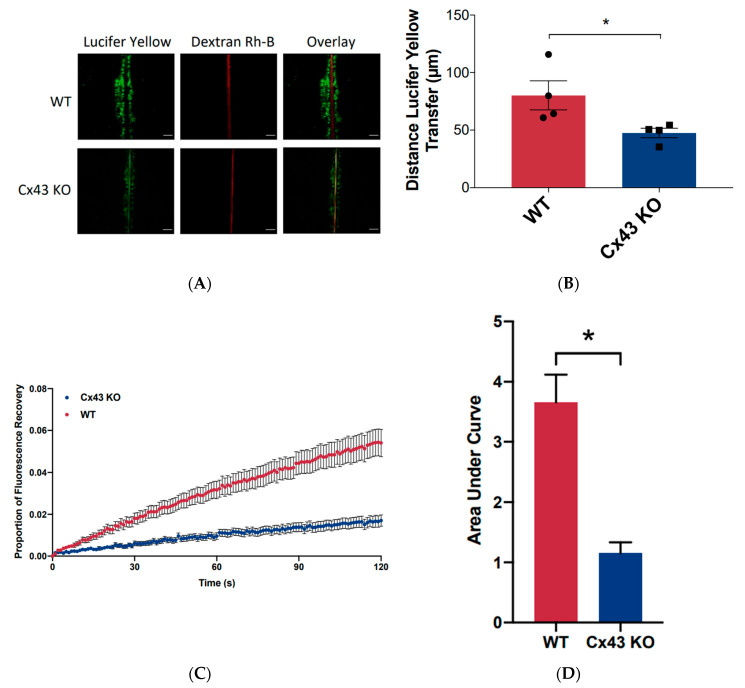
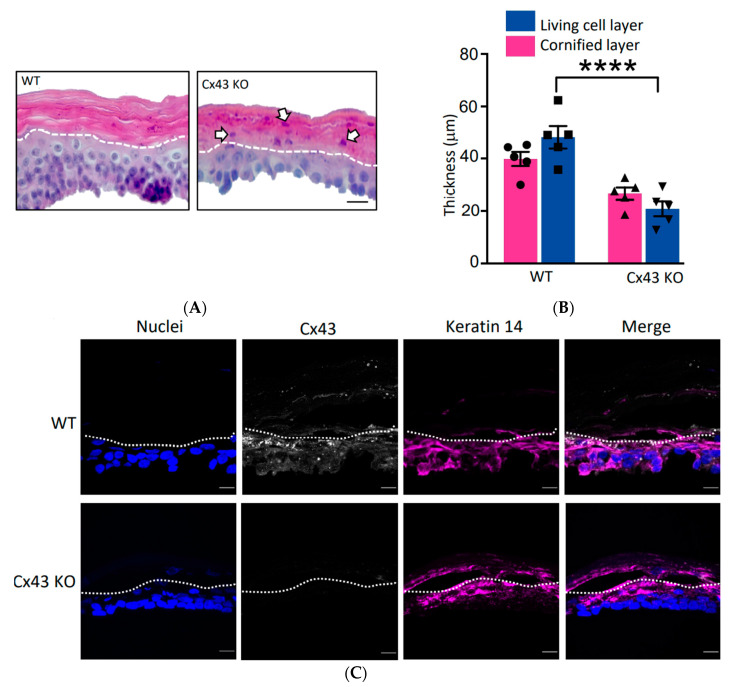
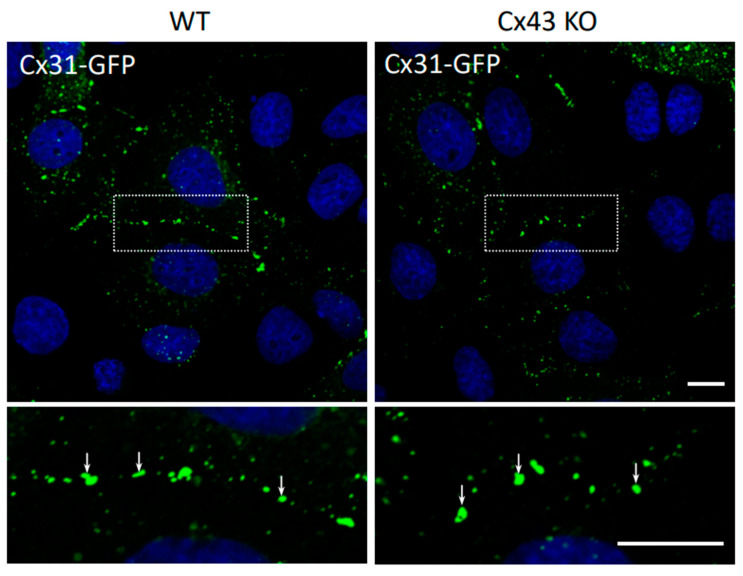
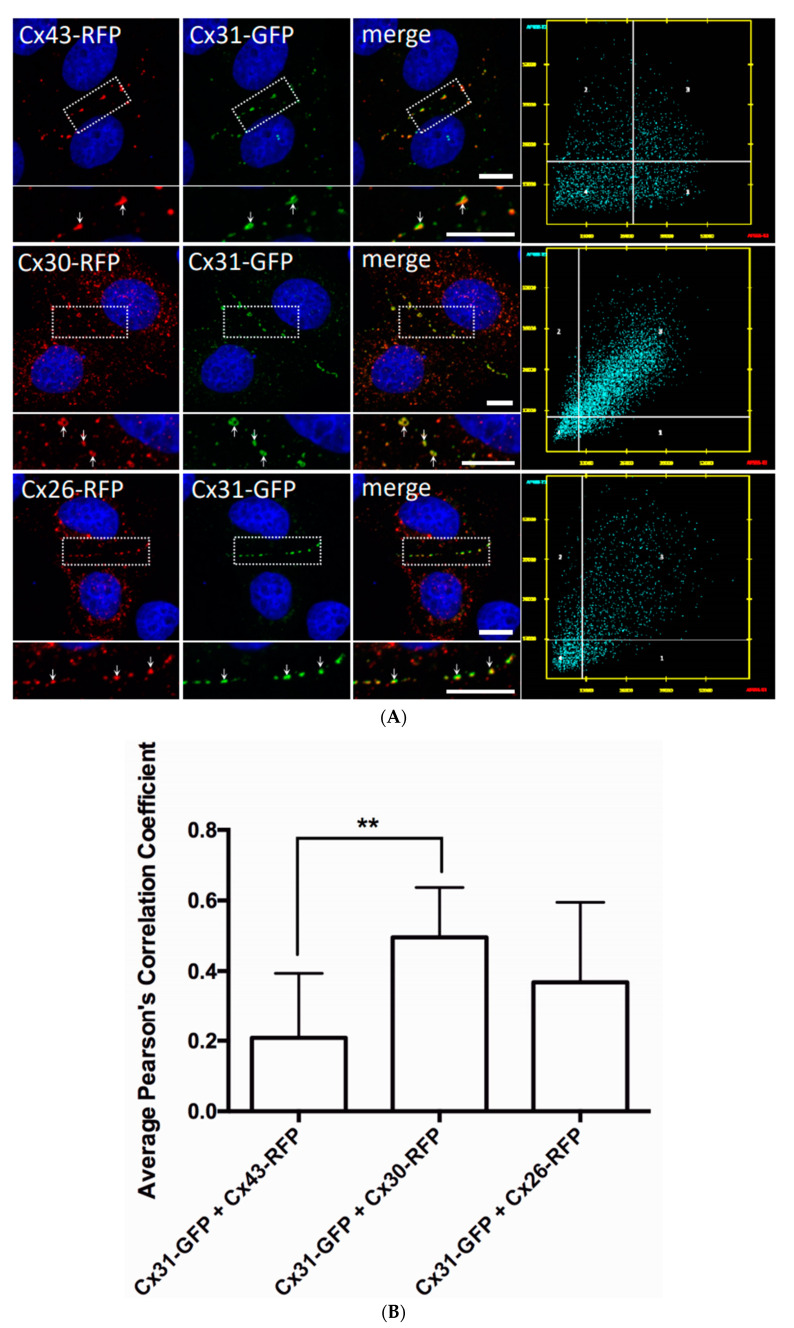
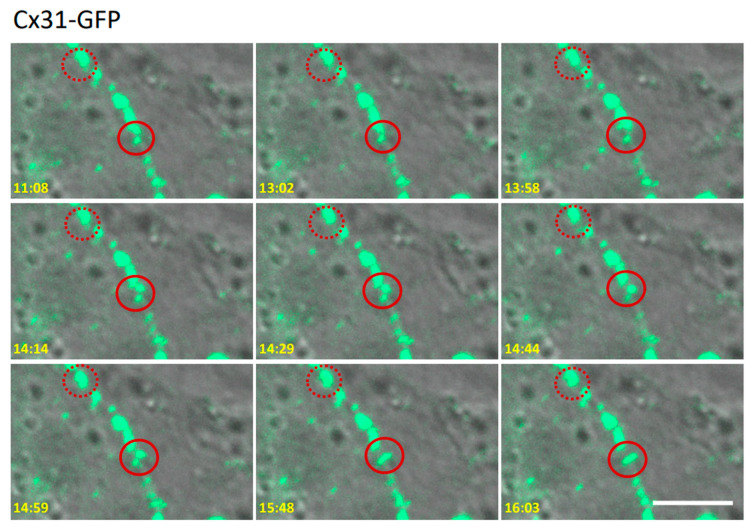
When considering connexin expression and regulation, the epidermis of the skin is one of the most complex tissues found in mammals even though it largely contains a single cell type, the keratinocyte. In the rodent epidermis, up to 9 connexin family members have been detected at the mRNA level. Many of these connexins are temporally and spatially regulated in coordination with keratinocyte progenitor cell differentiation and migration from the stratum basale to form the stratum spinosum and stratum granulosum layers before finally forming the stratum corneum. Cx43 is the principal connexin found in basal keratinocytes and to a lesser degree found in keratinocytes that have begun to differentiate where Cx26, Cx30 and Cx31 become prevalent. Here we show that the CRISPR-Cas9 ablation of Cx43 reduces overall gap junction coupling in monolayer cultures of rat epidermal keratinocytes (REKs) and dysregulates the differentiation of REKs when grown in organotypic cultures. Natively found in differentiated keratinocytes, Cx31 readily assembles into gap junctions when expressed in REKs where it can extensively co-assemble into the same gap junctions with co-expressed Cx30. Time-lapse imaging indicated that many Cx31 gap junctions are mobile within the plasma membrane undergoing both fusion and fission events. Finally, the persistence of pre-existing Cx31 gap junctions in the presence of the protein trafficking blocker, brefeldin A, is longer than that found for Cx43 gap junctions indicating that it has a distinctly different life expectancy in REKs. Collectively, this study highlights the importance of Cx43 in rodent keratinocyte differentiation and suggests that Cx31 acquires life-cycle properties that are distinct from Cx43.
在考虑连接蛋白的表达和调控时,尽管皮肤表皮主要由单一细胞类型即角质形成细胞组成,但它却是哺乳动物中最复杂的组织之一。在啮齿动物表皮中,在mRNA水平上已检测到多达9种连接蛋白家族成员。这些连接蛋白中的许多在时间和空间上与角质形成细胞祖细胞的分化以及从基底层迁移形成棘层和颗粒层,最终形成角质层的过程协同调节。Cx43是在基底角质形成细胞中发现的主要连接蛋白,在已开始分化的角质形成细胞中含量较少,而Cx26、Cx30和Cx31在这些细胞中变得普遍。在这里,我们表明,CRISPR-Cas9介导的Cx43缺失会降低大鼠表皮角质形成细胞(REK)单层培养物中的整体间隙连接偶联,并在器官型培养中生长时失调REK的分化。Cx31天然存在于分化的角质形成细胞中,当在REK中表达时,它很容易组装成间隙连接,在那里它可以与共表达的Cx30广泛共组装到相同的间隙连接中。延时成像表明,许多Cx31间隙连接在质膜内是可移动的,会经历融合和裂变事件。最后,在存在蛋白质转运阻滞剂布雷菲德菌素A的情况下,预先存在的Cx31间隙连接的持续时间比Cx43间隙连接的持续时间长,这表明它在REK中的寿命明显不同。总的来说,这项研究突出了Cx43在啮齿动物角质形成细胞分化中的重要性,并表明Cx31获得了与Cx43不同的生命周期特性。