Kauppila Joonas H, Ohtonen Pasi, Rantanen Tuomo, Tyrväinen Tuula, Toikkanen Vesa, Pääaho Minna, Valtola Antti, Räsänen Jari, Kallio Raija, Sihvo Eero, Saarnio Juha, Karttunen Tuomo J, Pohjanen Vesa-Matti, Ristimäki Ari, Laine Simo, Kokkola Arto
Upper Gastrointestinal Surgery, Department of Molecular Medicine and Surgery, Karolinska Institutet, Stockholm, Sweden
Surgery Research Unit, Medical Research Center Oulu, Oulu University Hospital and University of Oulu, Oulu, Finland.
BMJ Open. 2020 Oct 16;10(10):e039574. doi: 10.1136/bmjopen-2020-039574.
The Finnish National Esophago-Gastric Cancer Cohort (FINEGO) was established with the aim of identifying factors that could contribute to improved outcomes in oesophago-gastric cancer. The aim of this study is to describe the patients with gastric cancer included in FINEGO.
A total of 10 457 patients with gastric cancer or tumour diagnosis in the Finnish Cancer Registry or the Finnish Patient Registry during 1987-2016 were included in the cohort, with follow-up from Causes of Death Registry until 31 December 2016. All of the participants were at least 18 years of age, and had undergone either resectional or endoscopic mucosal surgery with curative or palliative intent.
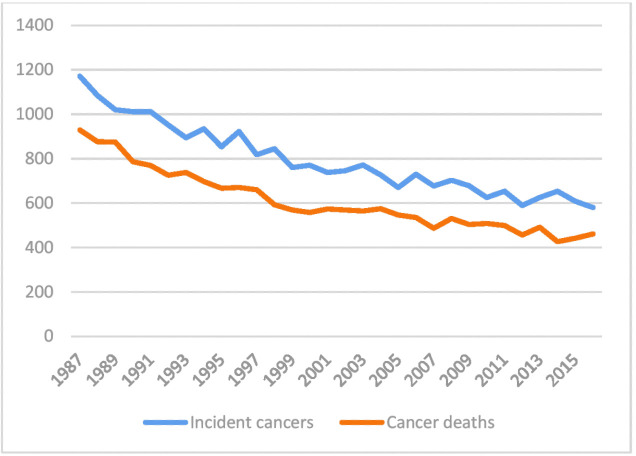
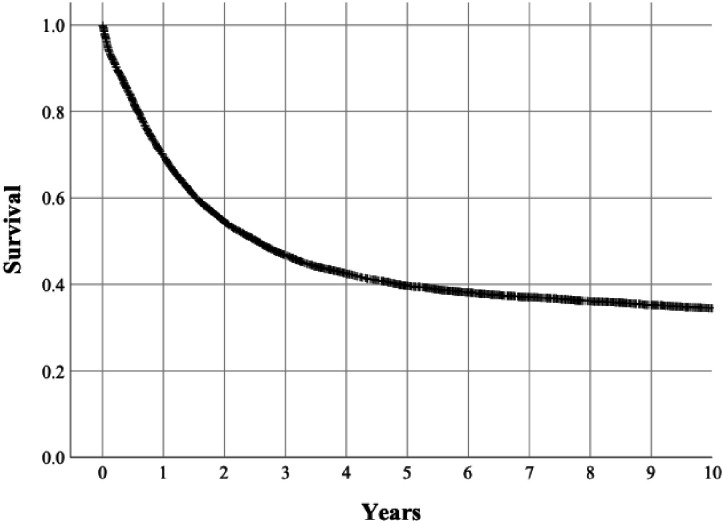
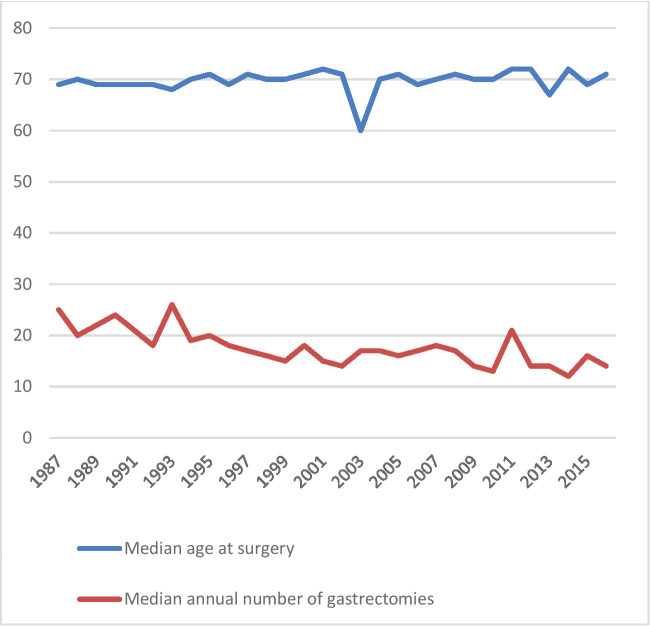
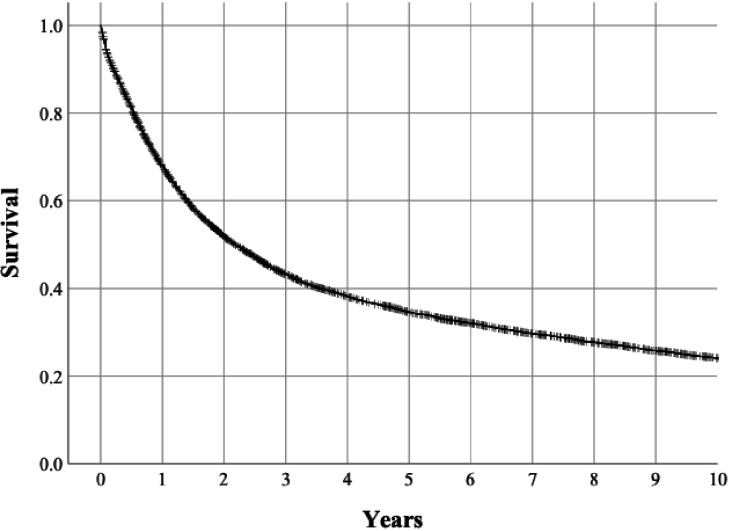
Of the 10 457 patients, 90.1% were identified to have cancer in both cancer and patient registries. In all, the median age was 70 at the time of surgery, 54.5% of the patients were men and 64.4% had no comorbidities. Education data were available for 31.1% of the patients, of whom the majority had had <12 years of formal education. Of the 7798 with cancer staging data available, 41.1% had a local cancer. Adenocarcinoma was the most common (94.2%) histological type. Almost all patients underwent open gastrectomy and 214% in hospitals with annual volume of more than 30 gastrectomies per year. A total of 8561 deaths occurred during the study period, of which 6474 were due to oesophago-gastric cancers. The 5-year survival was 34.6% and 5-year cancer-specific survival was 39.7%.
The data in FINEGO can be currently used for registry-based research but is being expanded by data extraction from patient records and scanning of histological samples from the Finnish biobanks. Initially, we are planning on studies on the national trends in treatment and mortality, and studies on the demographic factors and their influence on survival.
芬兰国家食管癌和胃癌队列研究(FINEGO)的设立旨在确定有助于改善食管癌和胃癌治疗效果的因素。本研究的目的是描述FINEGO中纳入的胃癌患者情况。
1987年至2016年期间,芬兰癌症登记处或芬兰患者登记处记录的10457例患有胃癌或肿瘤诊断的患者被纳入该队列,并从死亡原因登记处进行随访至2016年12月31日。所有参与者年龄均在18岁及以上,且接受了具有治愈或姑息意图的切除手术或内镜黏膜手术。
在10457例患者中,90.1%在癌症登记处和患者登记处均被确诊患有癌症。总体而言,手术时的中位年龄为70岁,54.5%的患者为男性,64.4%的患者无合并症。31.1%的患者有教育数据,其中大多数接受的正规教育年限不足12年。在7798例有癌症分期数据的患者中,41.1%为局部癌症。腺癌是最常见的组织学类型(94.2%)。几乎所有患者都接受了开放胃切除术,21.4%的患者在每年实施胃切除术超过30例的医院接受手术。研究期间共发生8561例死亡,其中6474例死于食管癌和胃癌。5年生存率为34.6%,5年癌症特异性生存率为39.7%。
FINEGO中的数据目前可用于基于登记处的研究,但正在通过从患者记录中提取数据以及扫描芬兰生物样本库中的组织学样本进行扩充。最初,我们计划开展关于治疗和死亡率的全国趋势研究,以及关于人口统计学因素及其对生存影响的研究。