Yang Yingjie, Liu Lei, Singh Raghvendra Pratap, Meng Chen, Ma Siqi, Jing Changliang, Li Yiqiang, Zhang Chengsheng
Marine Agriculture Research Center, Tobacco Research Institute, Chinese Academy of Agricultural Sciences, Qingdao, China.
Bureau of Agriculture and Rural Affairs of Laoshan District, Qingdao, China.
Front Microbiol. 2020 Sep 22;11:2178. doi: 10.3389/fmicb.2020.523142. eCollection 2020.
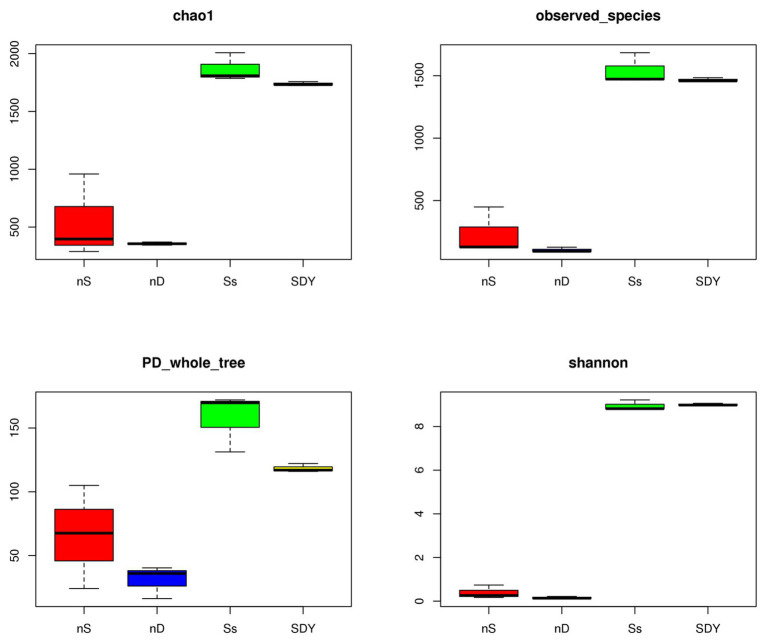
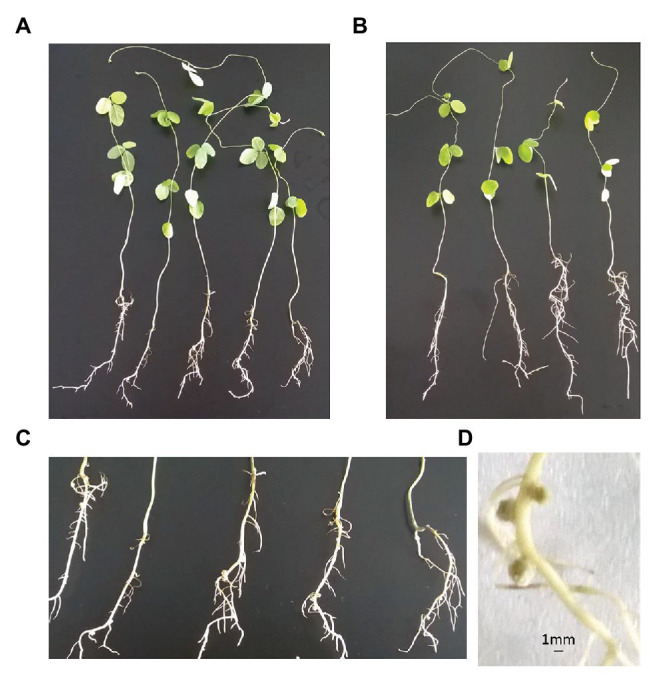
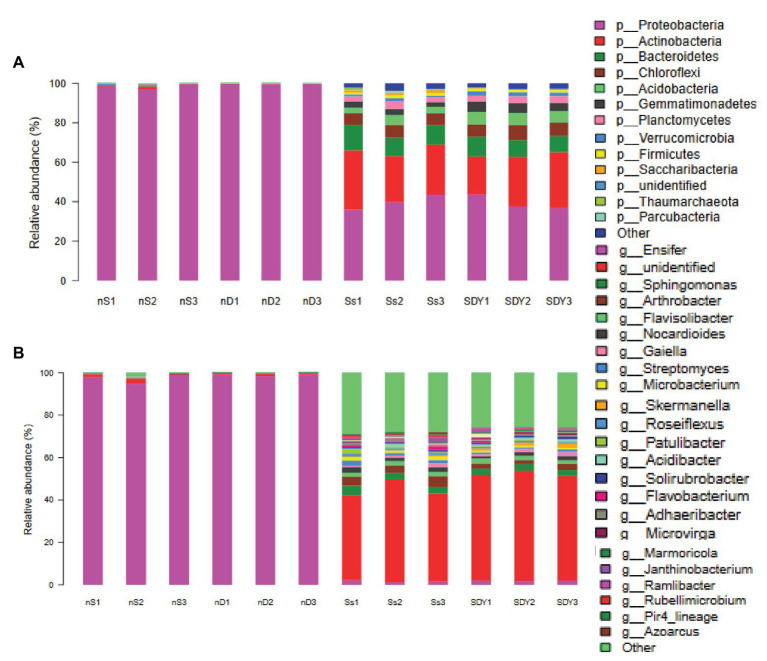
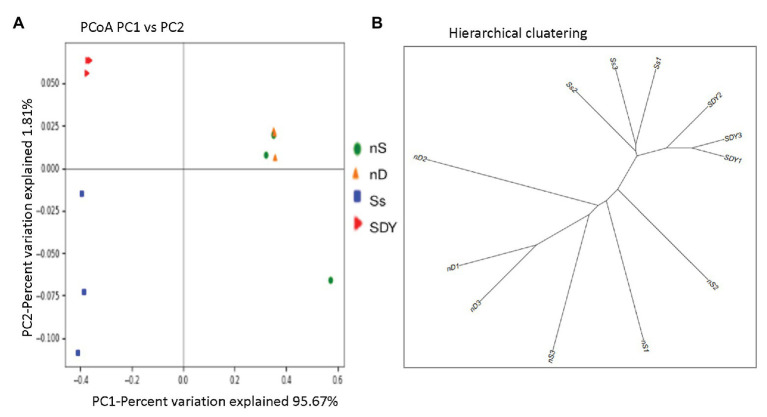
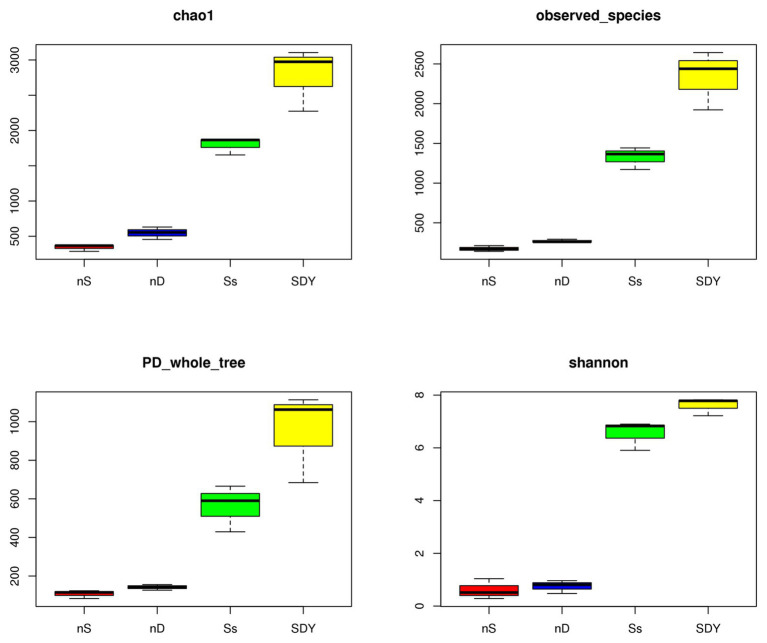
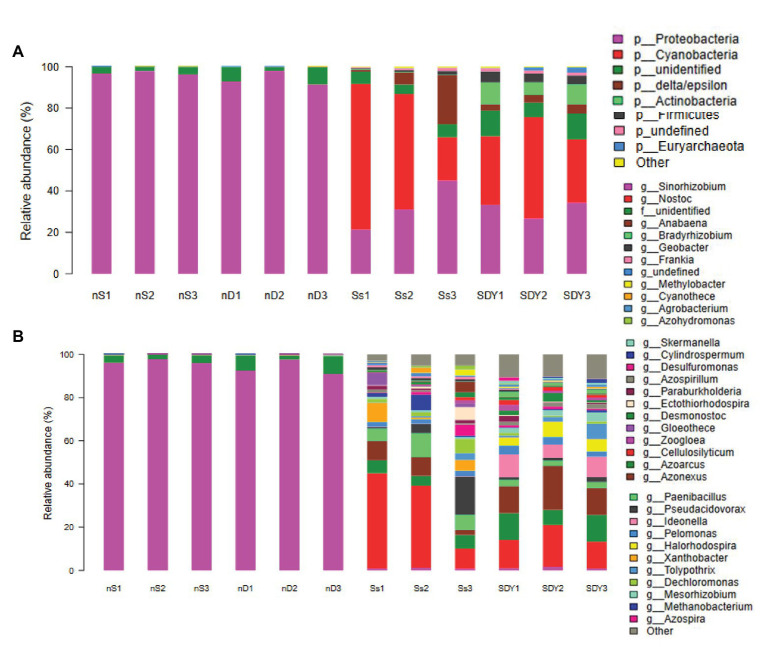
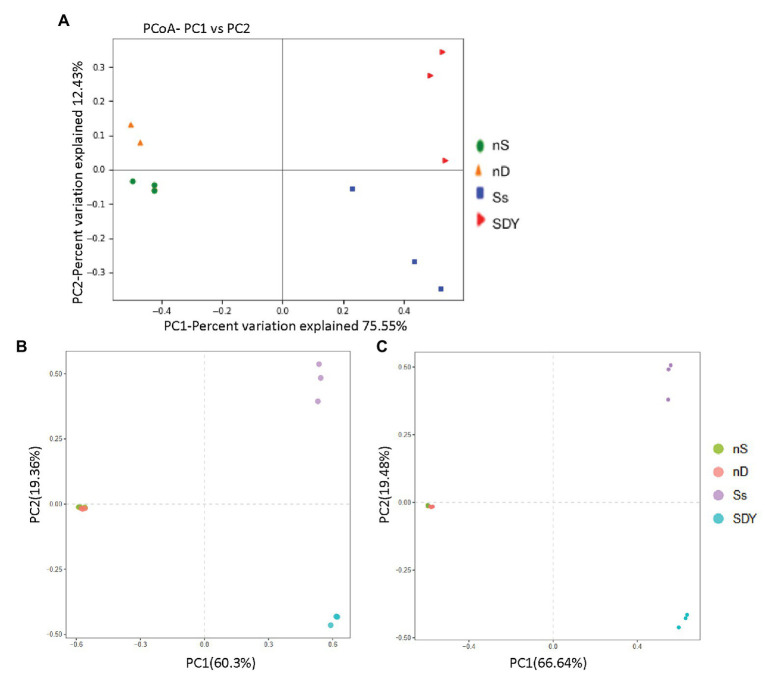
Soil salinization limits crop growth and yield in agro-ecosystems worldwide by reducing soil health and altering the structure of microbial communities. Salt-tolerant plant growth-promoting rhizobacteria (PGPR) alleviate plant salinity stress. Wild soybean ( Sieb. and Zucc.) is unique in agricultural ecosystems owing to its ability to grow in saline-alkali soils and fix atmospheric nitrogen symbiotic interactions with diverse soil microbes. However, this rhizosphere microbiome and the nodule endosymbionts have not been investigated to identify PGPR. In this study, we investigated the structural and functional rhizosphere microbial communities in saline-alkali soil from the Yellow River Delta and coastal soil in China, as well as wild soybean root nodule endosymbionts. To reveal the composition of the microbial ecosystem, we performed 16S rRNA and gene amplicon sequencing on root nodules and root zones under different environmental conditions. In addition, we used culture-independent methods to examine the root bacterial microbiome of wild soybean. For functional characterization of individual members of the microbiome and their impact on plant growth, we inoculated isolates from the root microbiome with wild soybean and observed nodulation. accounted for 97% of the root nodule microbiome, with other enriched members belonging to the phyla Actinobacteria, Bacteroidetes, Chloroflexi, Acidobacteria, and Gemmatimonadetes; the genera , , , , , , , and ; and the family Enterobacteriaceae. Compared to saline-alkali soil from the Yellow River Delta, coastal soil was highly enriched for soybean nodules and displayed significant differences in the abundance and diversity of β-proteobacteria, δ-proteobacteria, Actinobacteria, and Bacteroidetes. Overall, the wild soybean root nodule microbiome was dominated by nutrient-providing and was enriched for bacterial genera that may provide salt resistance. Thus, this reductionist experimental approach provides an avenue for future systematic and functional studies of the plant root microbiome.
土壤盐渍化通过降低土壤健康状况和改变微生物群落结构,限制了全球农业生态系统中的作物生长和产量。耐盐促植物生长根际细菌(PGPR)可缓解植物的盐胁迫。野生大豆(Sieb.和Zucc.)在农业生态系统中独具特色,因为它能够在盐碱土壤中生长,并通过与多种土壤微生物的共生相互作用固定大气中的氮。然而,尚未对这种根际微生物组和根瘤内共生体进行研究以鉴定PGPR。在本研究中,我们调查了中国黄河三角洲盐碱土壤和沿海土壤中根际微生物群落的结构和功能,以及野生大豆根瘤内共生体。为了揭示微生物生态系统的组成,我们对不同环境条件下的根瘤和根区进行了16S rRNA和基因扩增子测序。此外,我们使用非培养方法研究了野生大豆的根细菌微生物组。为了对微生物组的单个成员进行功能表征及其对植物生长的影响,我们将根微生物组的分离物接种到野生大豆上并观察结瘤情况。根瘤微生物组中占97%,其他富集成员属于放线菌门、拟杆菌门、绿弯菌门、酸杆菌门和芽单胞菌门;属、、、、、、、和;以及肠杆菌科。与黄河三角洲的盐碱土壤相比,沿海土壤中大豆根瘤高度富集,并且在β-变形菌纲、δ-变形菌纲、放线菌和拟杆菌的丰度和多样性方面存在显著差异。总体而言,野生大豆根瘤微生物组以提供养分的为主导,并富集了可能提供耐盐性的细菌属。因此,这种简化的实验方法为未来对植物根微生物组进行系统和功能研究提供了一条途径。