Department of Pharmacological and Biomolecular Sciences, Università Degli Studi di Milano, Milan, Italy.
Department of Physiology and Biomedical Physics, Medical University of Innsbruck, Innsbruck, Austria.
Front Immunol. 2020 Sep 24;11:2119. doi: 10.3389/fimmu.2020.02119. eCollection 2020.
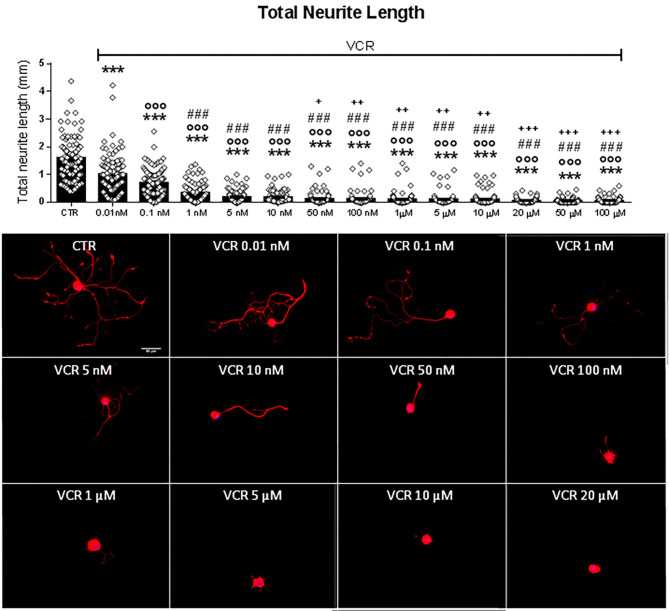
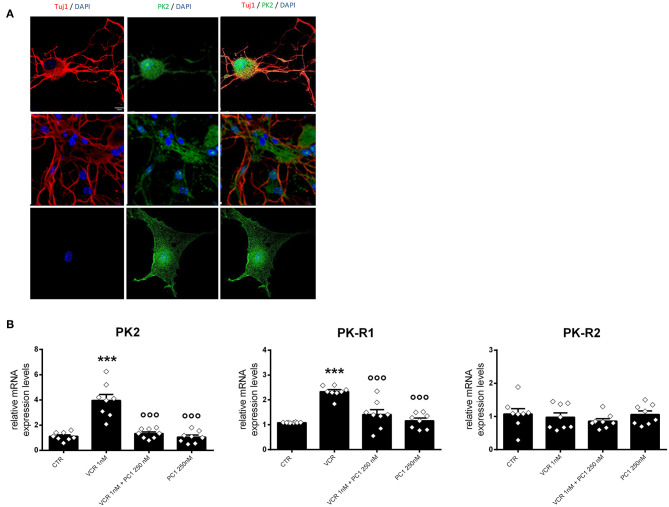
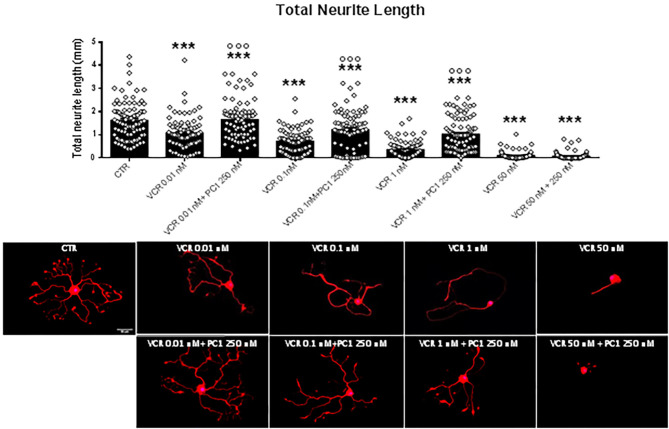
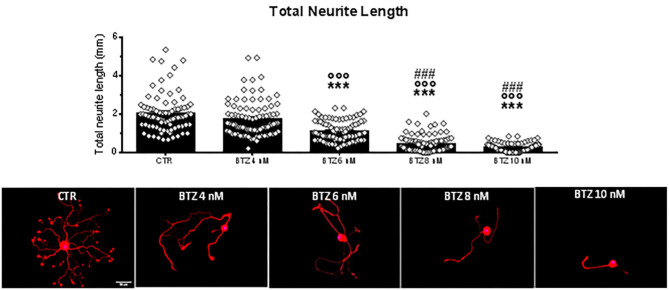
Neurotoxicity is a common side effect of chemotherapeutics that often leads to the development of chemotherapy-induced peripheral neuropathy (CIPN). The peptide Prokineticin 2 (PK2) has a key role in experimental models of CIPN and can be considered an insult-inducible endangering mediator. Since primary afferent sensory neurons are highly sensitive to anticancer drugs, giving rise to dysesthesias, the aim of our study was to evaluate the alterations induced by vincristine (VCR) and bortezomib (BTZ) exposure in sensory neuron cultures and the possible preventive effect of blocking PK2 signaling. Both VCR and BTZ induced a concentration-dependent reduction of total neurite length that was prevented by the PK receptor antagonist PC1. Antagonizing the PK system also reduced the upregulation of PK2, PK-R1, TLR4, IL-6, and IL-10 expression induced by chemotherapeutic drugs. In conclusion, inhibition of PK signaling with PC1 prevented the neurotoxic effects of chemotherapeutics, suggesting a promising strategy for neuroprotective therapies against the sensory neuron damage induced by exposure to these drugs.
神经毒性是化疗药物的常见副作用,常导致化疗引起的周围神经病(CIPN)的发生。肽类促动力素 2(PK2)在 CIPN 的实验模型中起关键作用,可被视为一种易损诱导介质。由于初级传入感觉神经元对抗癌药物高度敏感,导致感觉异常,因此我们的研究目的是评估长春新碱(VCR)和硼替佐米(BTZ)暴露在感觉神经元培养物中引起的改变,以及阻断 PK2 信号的可能预防作用。VCR 和 BTZ 均诱导浓度依赖性的总神经突长度减少,PK 受体拮抗剂 PC1 可预防这种减少。拮抗 PK 系统还降低了化疗药物诱导的 PK2、PK-R1、TLR4、IL-6 和 IL-10 表达的上调。总之,用 PC1 抑制 PK 信号可防止化疗药物的神经毒性作用,提示针对这些药物引起的感觉神经元损伤的神经保护治疗具有有前景的策略。