Reynaud Deborah, Sergent Frederic, Abi Nahed Roland, Traboulsi Wael, Collet Constance, Marquette Christel, Hoffmann Pascale, Balboni Gianfranco, Zhou Qun-Yong, Murthi Padma, Benharouga Mohamed, Alfaidy Nadia
Institut National de la Santé et de la Recherche Médicale U1292, Biologie et Biotechnologie pour la Santé, 38000 Grenoble, France.
Commissariat à l'Energie Atomique et aux Energies Alternatives (CEA), Biosciences and Biotechnology Institute of Grenoble, 38000 Grenoble, France.
Biomedicines. 2021 Mar 17;9(3):309. doi: 10.3390/biomedicines9030309.
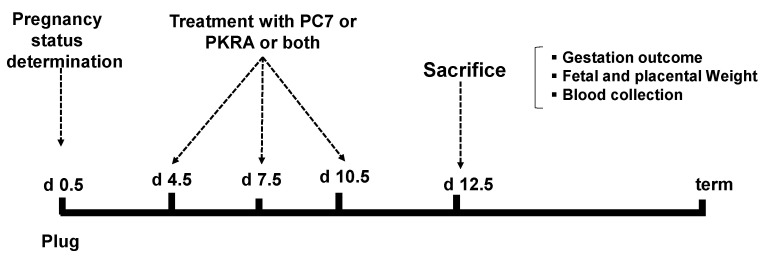
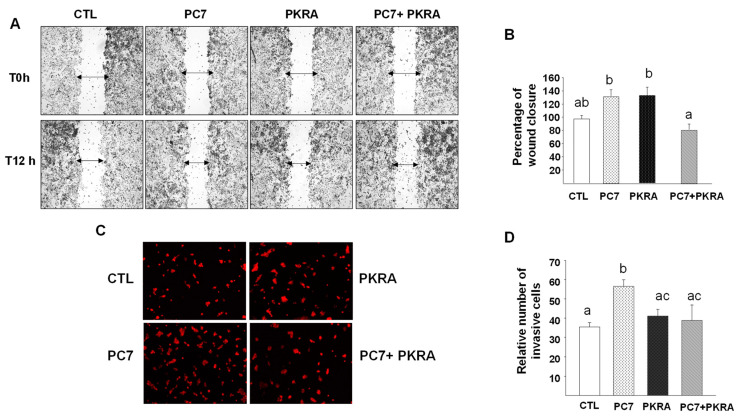
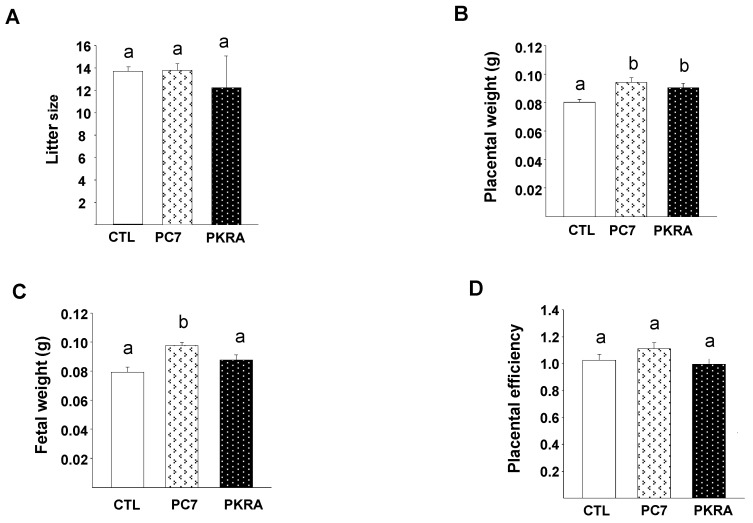
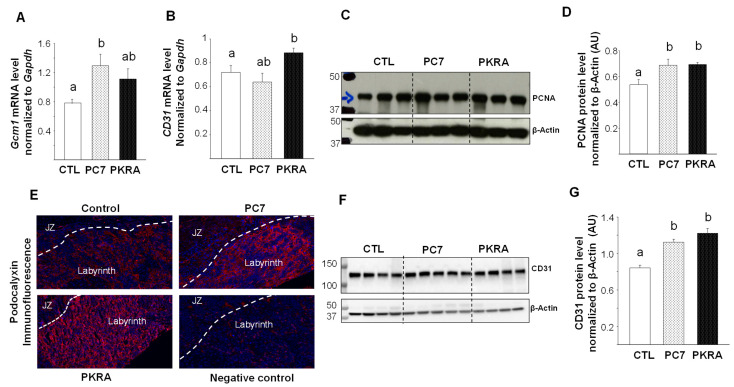
Endocrine gland derived vascular endothelial growth factor (EG-VEGF) is a canonical member of the prokineticin (PROKs) family. It acts via the two G-protein coupled receptors, namely PROKR1 and PROKR2. We have recently demonstrated that EG-VEGF is highly expressed in the human placenta; contributes to placental vascularization and growth and that its aberrant expression is associated with pregnancy pathologies including preeclampsia and fetal growth restriction. These findings strongly suggested that antagonization of its receptors may constitute a potential therapy for the pregnancy pathologies. Two specific antagonists of PROKR1 (PC7) and for PROKR2 (PKRA) were reported to reverse PROKs adverse effects in other systems. In the view of using these antagonists to treat pregnancy pathologies, a proof of concept study was designed to determine the biological significances of PC7 and PKRA in normal pregnancy outcome. PC7 and PKRA were tested independently or in combination in trophoblast cells and during early gestation in the gravid mouse. Both independent and combined treatments uncovered endogenous functions of EG-VEGF. The independent use of antagonists distinctively identified PROKR1 and PROKR2-mediated EG-VEGF signaling on trophoblast differentiation and invasion; thereby enhancing feto-placental growth and pregnancy outcome. Thus, our study provides evidence for the potential safe use of PC7 or PKRA to improve pregnancy outcome.
内分泌腺源性血管内皮生长因子(EG-VEGF)是促动力蛋白(PROKs)家族的典型成员。它通过两种G蛋白偶联受体发挥作用,即PROKR1和PROKR2。我们最近证明,EG-VEGF在人胎盘中高度表达;有助于胎盘血管形成和生长,并且其异常表达与包括子痫前期和胎儿生长受限在内的妊娠病理相关。这些发现强烈表明,拮抗其受体可能构成治疗妊娠病理的一种潜在疗法。据报道,PROKR1的两种特异性拮抗剂(PC7)和PROKR2的特异性拮抗剂(PKRA)可逆转PROKs在其他系统中的不良反应。鉴于使用这些拮抗剂治疗妊娠病理,设计了一项概念验证研究,以确定PC7和PKRA在正常妊娠结局中的生物学意义。在滋养层细胞和妊娠小鼠的早期妊娠期间,分别或联合测试了PC7和PKRA。独立和联合治疗均揭示了EG-VEGF的内源性功能。拮抗剂的单独使用独特地确定了PROKR1和PROKR2介导的EG-VEGF信号对滋养层细胞分化和侵袭的作用;从而促进胎儿-胎盘生长和妊娠结局。因此,我们的研究为PC7或PKRA潜在安全地改善妊娠结局提供了证据。