Department of Pediatric Respiratory Medicine, Children's Hospital of Chongqing Medical University, Chongqing, China.
Ministry of Education Key Laboratory of Child Development and Disorders, Chongqing, China.
Front Immunol. 2020 Sep 23;11:2150. doi: 10.3389/fimmu.2020.02150. eCollection 2020.
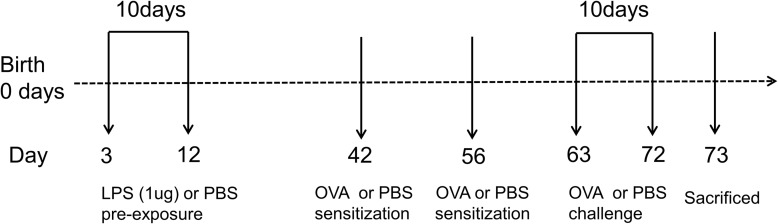
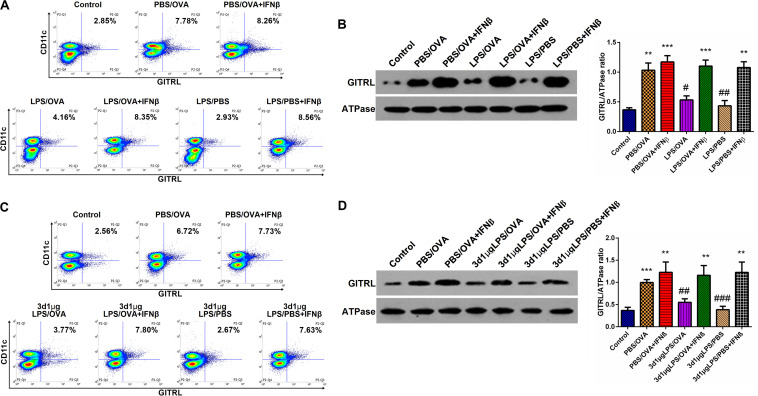
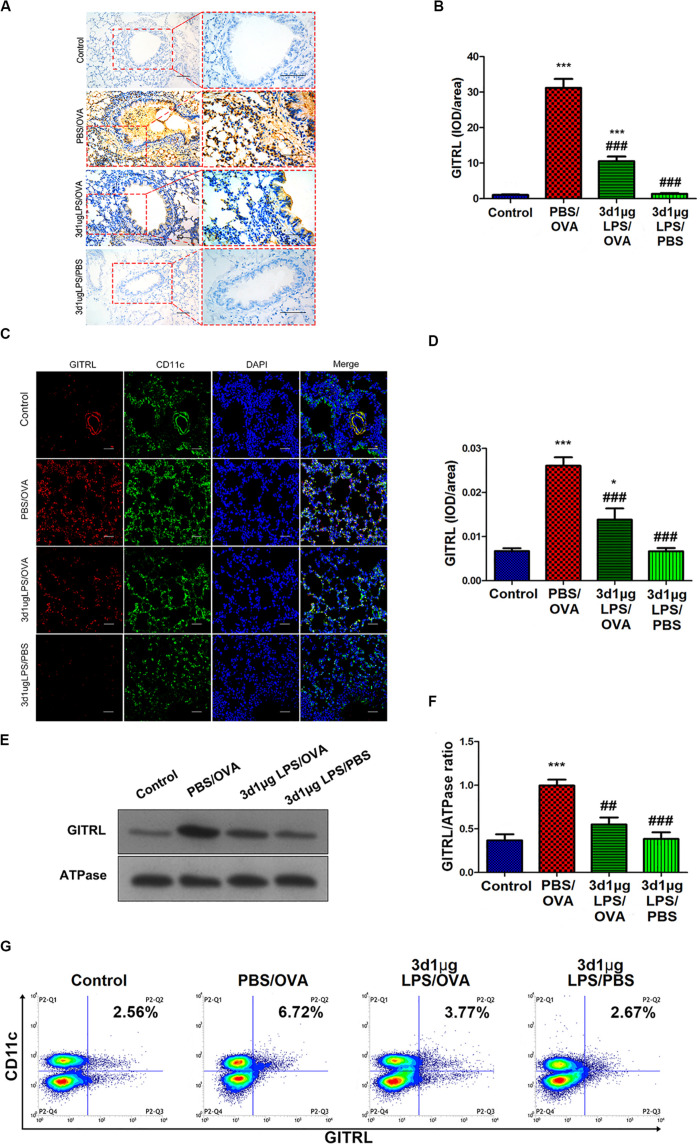
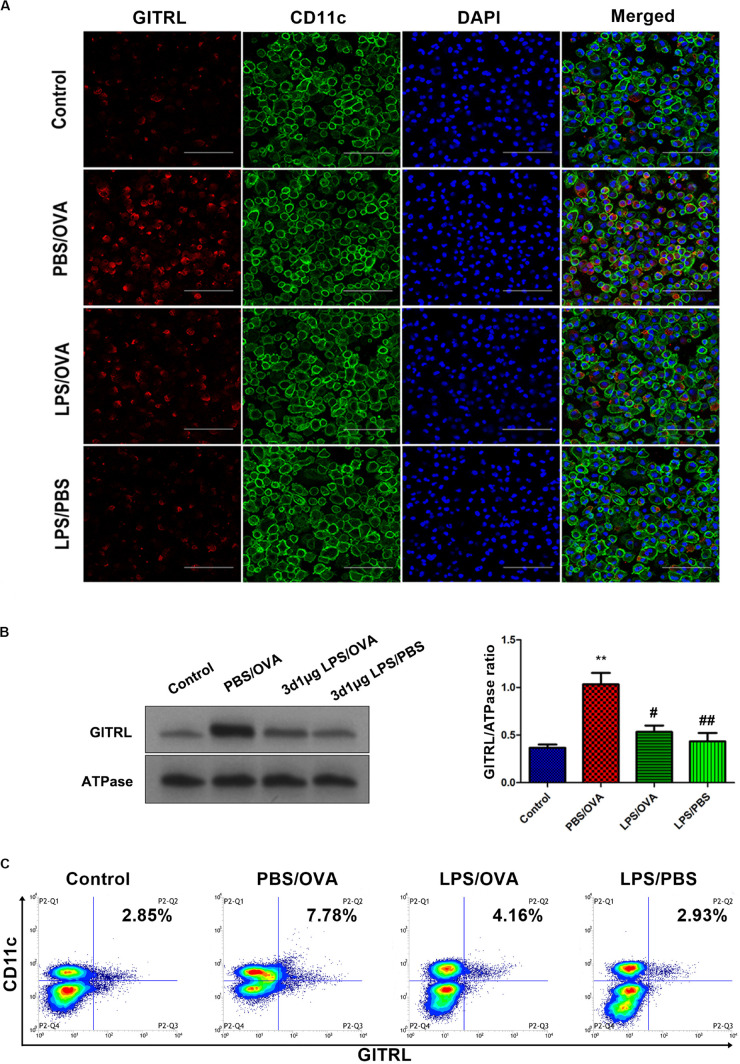
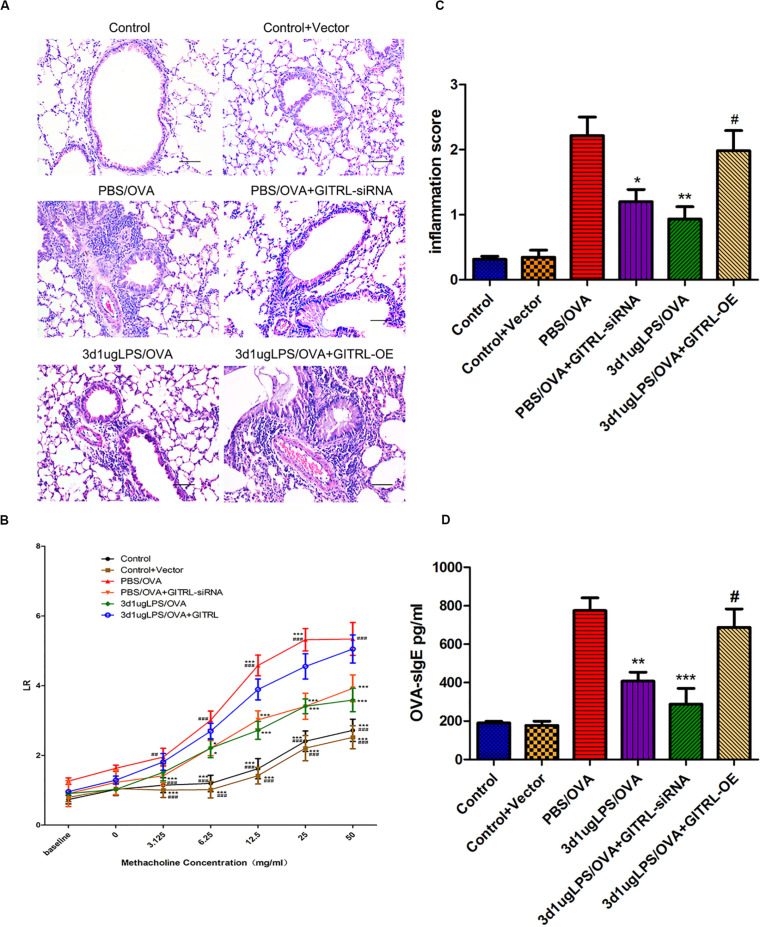
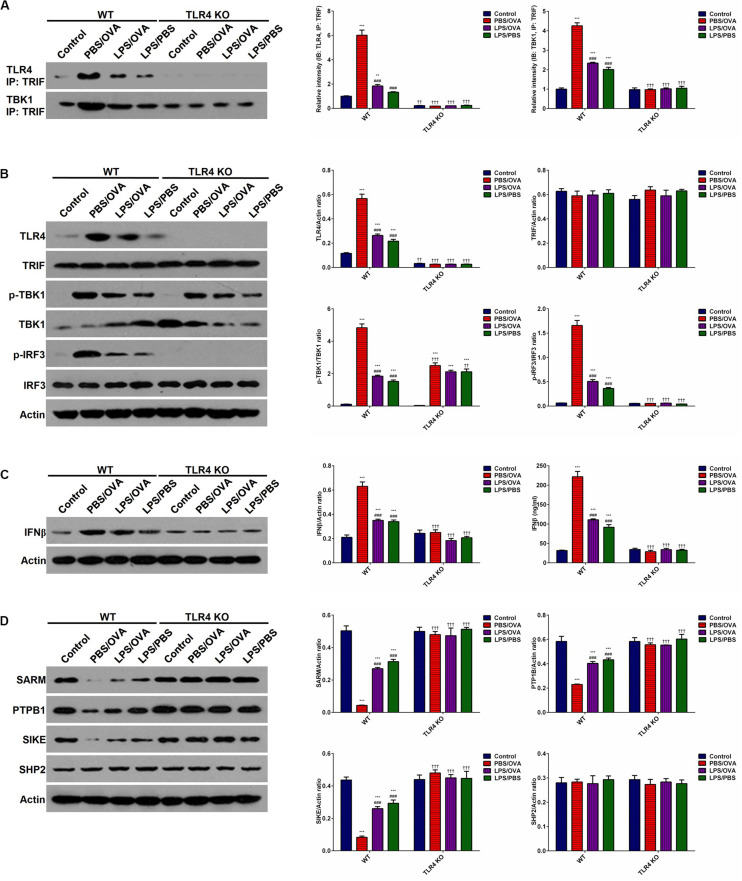
The mechanism(s) underlying endotoxin tolerance in asthma remain elusive. As the endotoxin lipopolysaccharide (LPS) affects the expression of the regulatory T-cell (Treg)-suppressive glucocorticoid-induced tumor necrosis factor receptor ligand (GITRL) on antigen-presenting dendritic cells (DCs), we hypothesized that LPS-induced changes in DC GITRL expression may impact Treg-mediated T-helper (Th) cell suppression and the induction of endotoxin tolerance. Here, we propose a novel mechanism by which low-dose LPS inhalation in neonatal mice induces endotoxin tolerance, thereby offering protection from later asthma development. Three-day old wild-type and Toll-like receptor 4 (TLR4)-deficient neonatal mice were exposed to low-dose LPS (1 μg) intranasally for 10 consecutive days prior to ovalbumin (OVA)-induced asthma to better understand the tolerogenic mechanism(s) of low-dose LPS pre-exposure. findings were validated using co-culturing studies of primary CD11c DCs and CD4 T-cells with or without low-dose LPS pre-exposure before OVA stimulation. Low-dose LPS pre-exposure upregulated the Treg response and downregulated pathogenic Th2 and Th17 responses through promoting apoptosis of Th2 and Th17 cells. Low-dose LPS pre-exposure downregulated DC GITRL expression and T-cell GITR expression. Artificial DC GITRL expression abrogated the tolerogenic Treg-skewing effect of low-dose LPS pre-exposure. Low-dose LPS pre-exposure inhibited TRIF/IRF3/IFNβ signaling and upregulated expression of tolerogenic TRIF/IRF3/IFNβ negative regulators in a TLR4-dependent manner. This tolerogenic DC GITRL downregulation was attributable to TRIF/IRF3/IFNβ signaling inhibition. Low-dose LPS pre-exposure produces tolerogenic Treg skewing in neonatal asthmatic mice, a phenomenon attributable to TLR4-dependent TRIF/IRF3/IFNβ-mediated DC GITRL downregulation.
内毒素耐受在哮喘中的作用机制仍不清楚。由于内毒素脂多糖(LPS)影响抗原呈递树突状细胞(DC)上调节性 T 细胞(Treg)抑制性糖皮质激素诱导的肿瘤坏死因子受体配体(GITRL)的表达,我们假设 LPS 诱导的 DC GITRL 表达变化可能影响 Treg 介导的辅助性 T 细胞(Th)抑制和内毒素耐受的诱导。在这里,我们提出了一种新的机制,即低剂量 LPS 吸入可诱导新生小鼠内毒素耐受,从而提供对后期哮喘发展的保护。将 3 天大的野生型和 Toll 样受体 4(TLR4)缺陷型新生小鼠暴露于低剂量 LPS(1μg),连续 10 天,然后用卵清蛋白(OVA)诱导哮喘,以更好地理解低剂量 LPS 预暴露的耐受机制。使用在 OVA 刺激前对原代 CD11c DC 和 CD4 T 细胞进行或不进行低剂量 LPS 预暴露的共培养研究验证了研究结果。低剂量 LPS 预暴露通过促进 Th2 和 Th17 细胞凋亡,上调 Treg 反应,下调致病性 Th2 和 Th17 反应。低剂量 LPS 预暴露下调了 DC GITRL 表达和 T 细胞 GITR 表达。人工 DC GITRL 表达消除了低剂量 LPS 预暴露的致耐受 Treg 偏向作用。低剂量 LPS 预暴露以 TLR4 依赖性方式抑制 TRIF/IRF3/IFNβ 信号传导并上调耐受型 TRIF/IRF3/IFNβ 负调节因子的表达。这种耐受型 DC GITRL 下调归因于 TRIF/IRF3/IFNβ 信号抑制。低剂量 LPS 预暴露在新生哮喘小鼠中产生致耐受 Treg 偏向,这种现象归因于 TLR4 依赖性 TRIF/IRF3/IFNβ 介导的 DC GITRL 下调。