Anthony Adarsh Thomas, Rahmat Shermeen, Sangle Prerna, Sandhu Osama, Khan Safeera
Internal Medicine, California Institute of Behavioral Neurosciences & Psychology, Fairfield, USA.
Cureus. 2020 Sep 14;12(9):e10436. doi: 10.7759/cureus.10436.
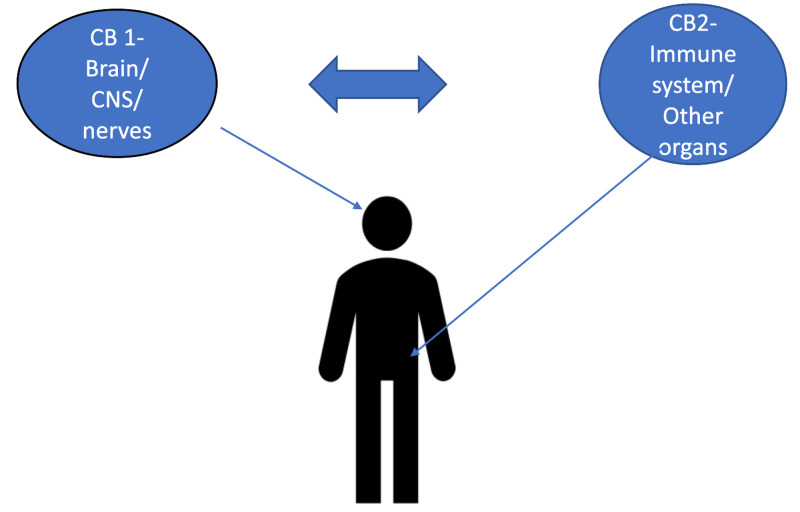
The burden of chronic pain has affected many individuals leading to distress and discomfort, alongside numerous side effects with conventional therapeutic approaches. Cannabinoid receptors are naturally found in the human body and have long been an interest in antinociception. These include CB1 and CB2 receptors, which are promising candidates for the treatment of chronic inflammatory pain. The mechanism of action of the receptors and how they approach pain control in inflammatory conditions show that it can be an adjunctive approach towards controlling these symptoms. Numerous studies have shown how the targeted approach towards these receptors has activated them promoting a release in cytokines, all leading to anti-inflammatory effects and immune system regulation. Cannabinoid activation of glycine and gamma-aminobutyric acid (GABA) models also showed efficacy in pain management. Chronic conditions such as osteoarthritis were shown to also benefit from this considerable treatment. However, it is unclear how the cannabinoid system works in relation with the pain pathway. Therefore, in this review we aim to analyse the role of the cannabinoid system in chronic inflammatory pain.
慢性疼痛的负担影响了许多人,导致痛苦和不适,同时传统治疗方法还伴有众多副作用。大麻素受体天然存在于人体中,长期以来一直是抗伤害感受研究的热点。其中包括CB1和CB2受体,它们是治疗慢性炎症性疼痛的有潜力的候选药物。这些受体的作用机制以及它们在炎症状态下如何控制疼痛表明,这可能是控制这些症状的一种辅助方法。大量研究表明,针对这些受体的靶向方法如何激活它们,促进细胞因子释放,所有这些都导致抗炎作用和免疫系统调节。大麻素对甘氨酸和γ-氨基丁酸(GABA)模型的激活在疼痛管理中也显示出疗效。骨关节炎等慢性疾病也被证明从这种显著的治疗中受益。然而,尚不清楚大麻素系统与疼痛通路之间是如何起作用的。因此,在本综述中,我们旨在分析大麻素系统在慢性炎症性疼痛中的作用。