Wang Rong, Zhang Huihui, Xu Jiawen, Zhang Ninghan, Pan Ting, Zhong Xiaomin, Zhang Huanxin, Yin Lingling, Yao Yao, Wu Qingyun, Li Zhenyu, Liu Xuejiao, Xu Kailin, Niu Mingshan
Blood Diseases Institute, Affiliated Hospital of Xuzhou Medical University, Xuzhou Medical University, Xuzhou, China.
Department of Hematology, Affiliated Hospital of Xuzhou Medical University, Xuzhou, China.
Front Oncol. 2020 Sep 23;10:558339. doi: 10.3389/fonc.2020.558339. eCollection 2020.
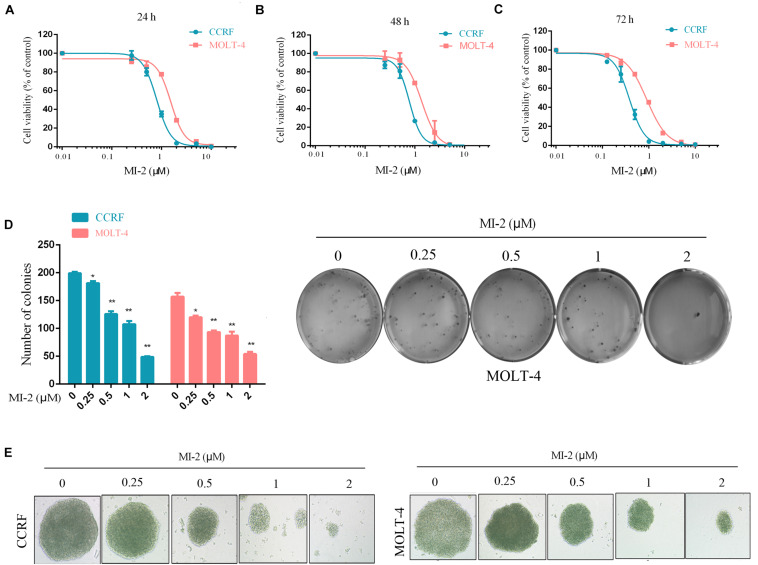
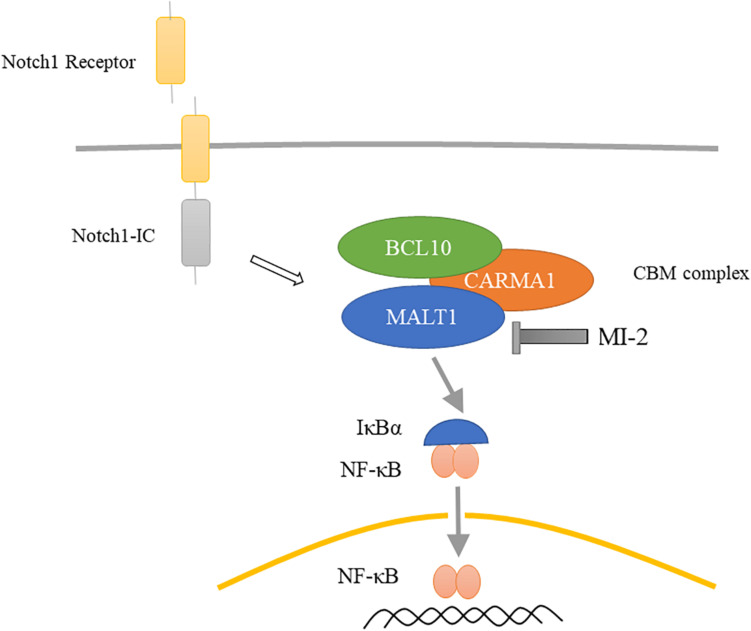
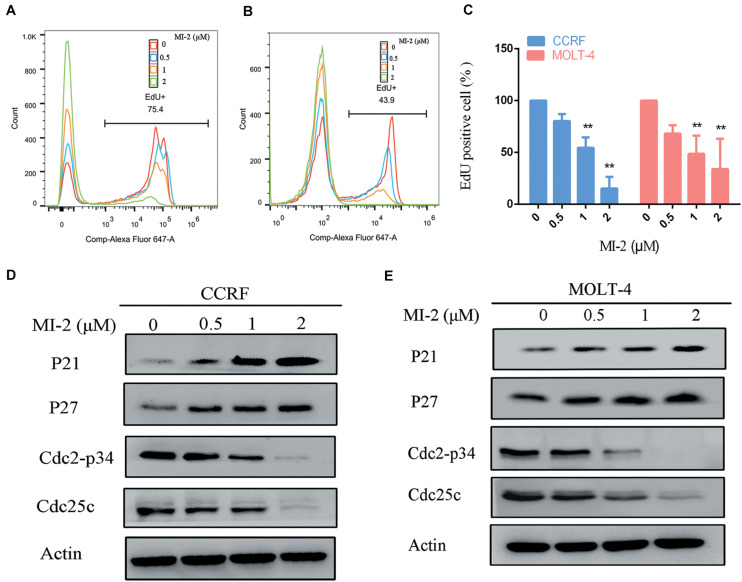
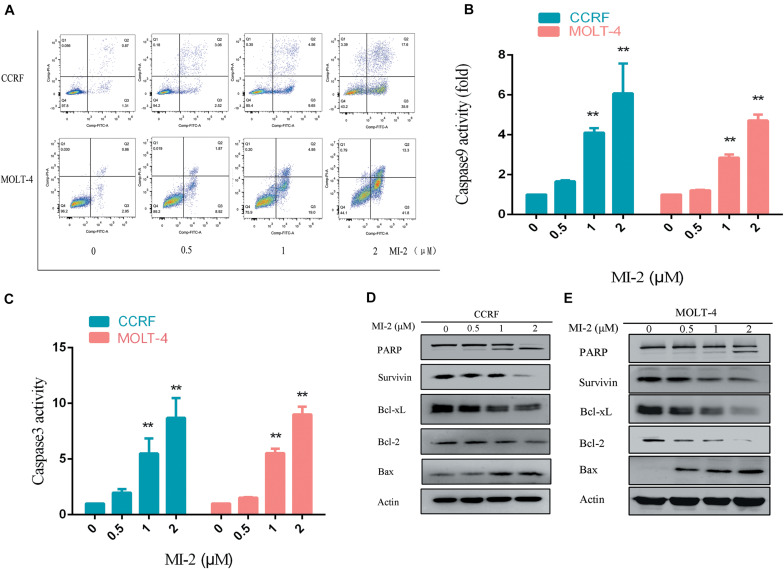
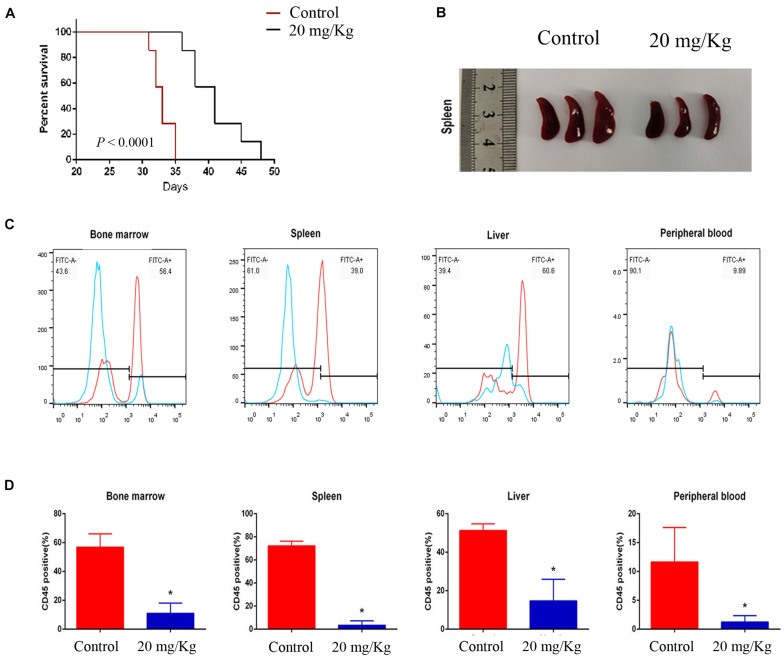
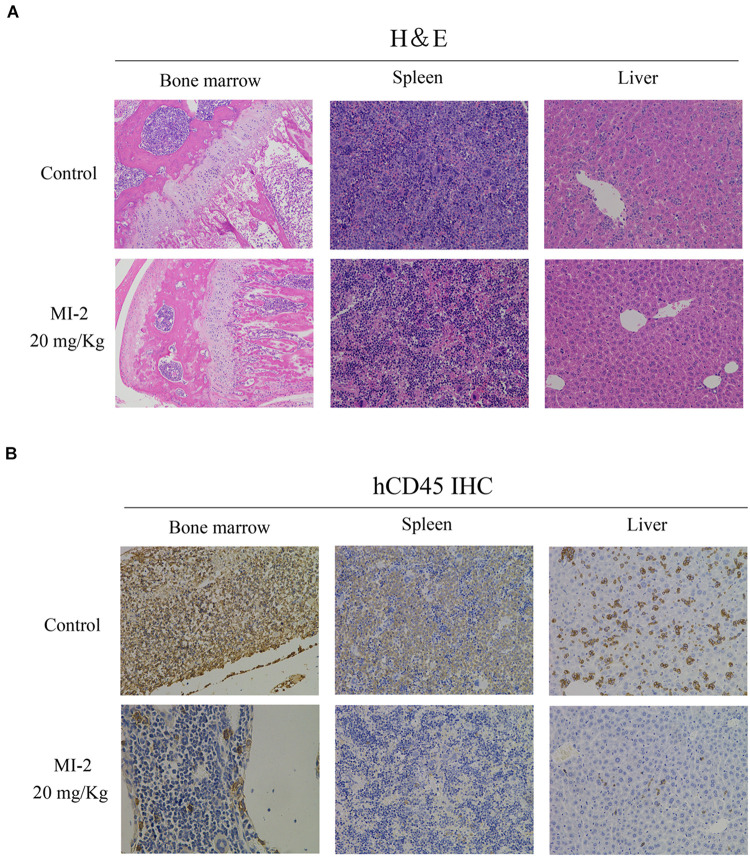
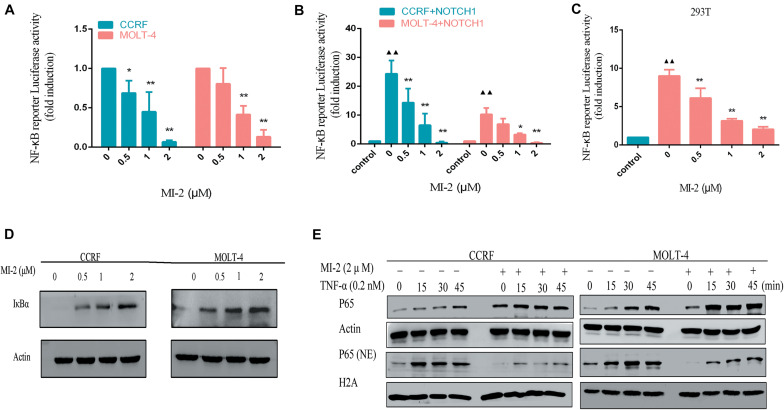
Current treatment of T-cell acute lymphoblastic leukemia (T-ALL) is primarily based on high-intensity combination chemotherapy, which has serious side effects. Therefore, developments of novel targeted therapeutics are urgently needed for treatment of T-ALL. In this study, we found that mucosa-associated lymphoid tissue lymphoma translocation protein 1 (MALT1) is a novel promising therapeutic target for treatment of T-ALL. MALT1 inhibitor MI-2 significantly suppressed the cell growth, proliferation, and colony formation of T-ALL cells. Furthermore, MI-2 induced cell apoptosis of T-ALL via a mitochondrial-dependent pathway. In a T-ALL mouse model, MI-2 significantly reduced leukemic burden and prolonged the survival of leukemia-bearing mice. Mechanistically, MALT1 inhibition effectively blocked both baseline and Notch1-induced activation of nuclear factor κB pathway, which mediates T-ALL cell survival. In conclusion, our results highlight the potential role of MALT1 as an attractive target for treatment of T-ALL and support the potential of MI-2 or other MALT1 inhibitors to clinical trials in T-ALL.
目前,T细胞急性淋巴细胞白血病(T-ALL)的治疗主要基于高强度联合化疗,但其具有严重的副作用。因此,迫切需要开发新型靶向疗法来治疗T-ALL。在本研究中,我们发现黏膜相关淋巴组织淋巴瘤易位蛋白1(MALT1)是治疗T-ALL的一个有前景的新型治疗靶点。MALT1抑制剂MI-2显著抑制了T-ALL细胞的生长、增殖和集落形成。此外,MI-2通过线粒体依赖性途径诱导T-ALL细胞凋亡。在T-ALL小鼠模型中,MI-2显著降低了白血病负荷并延长了荷瘤小鼠的生存期。机制上,抑制MALT1可有效阻断核因子κB通路的基础激活和Notch1诱导的激活,该通路介导T-ALL细胞存活。总之,我们的结果突出了MALT1作为治疗T-ALL的一个有吸引力的靶点的潜在作用,并支持MI-2或其他MALT1抑制剂在T-ALL临床试验中的潜力。