Section of Hematology and Medical Oncology, Deming Department of Medicine, Tulane University, New Orleans, LA.
Department of Medicine, Division of Hematology and Medical Oncology, Weill Cornell Medical College.
Haematologica. 2024 May 1;109(5):1348-1358. doi: 10.3324/haematol.2023.283178.
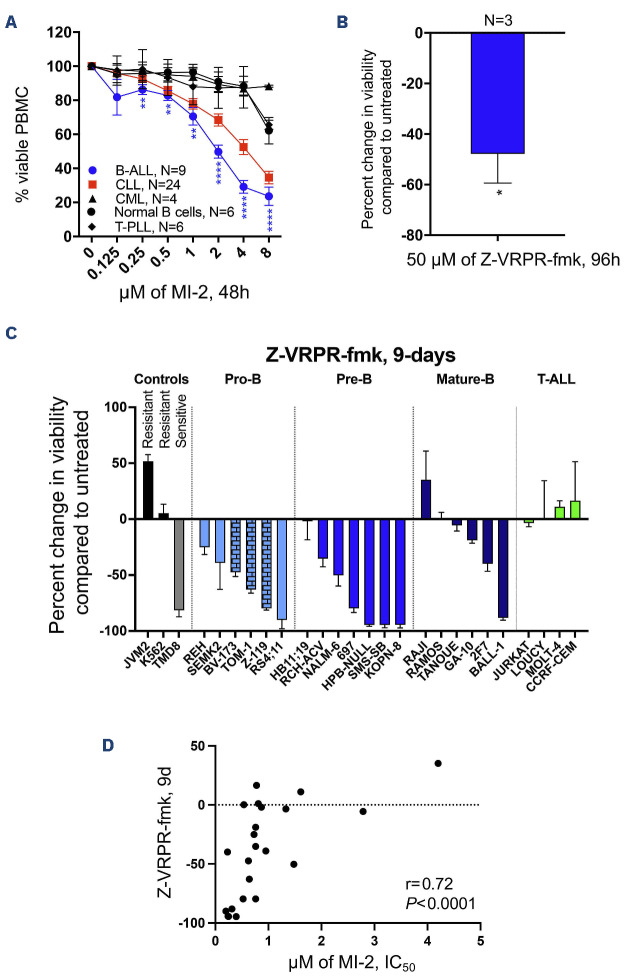
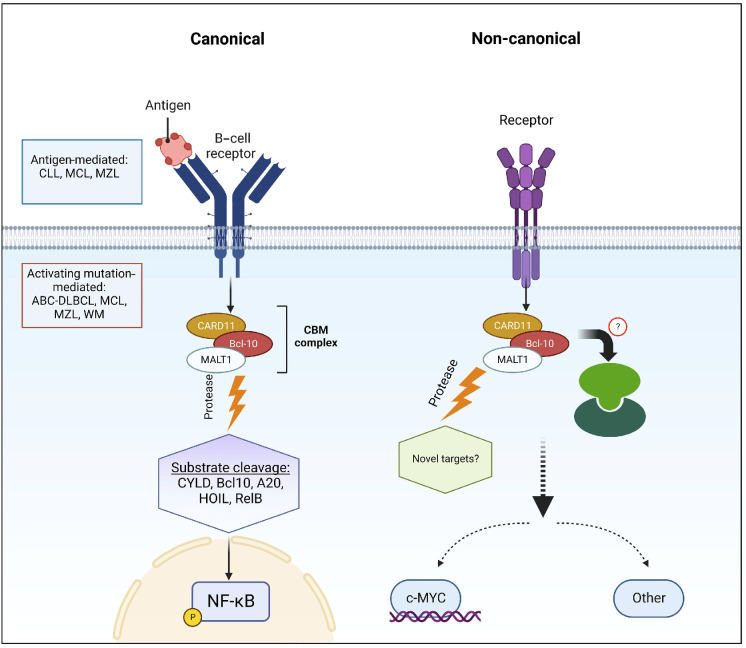
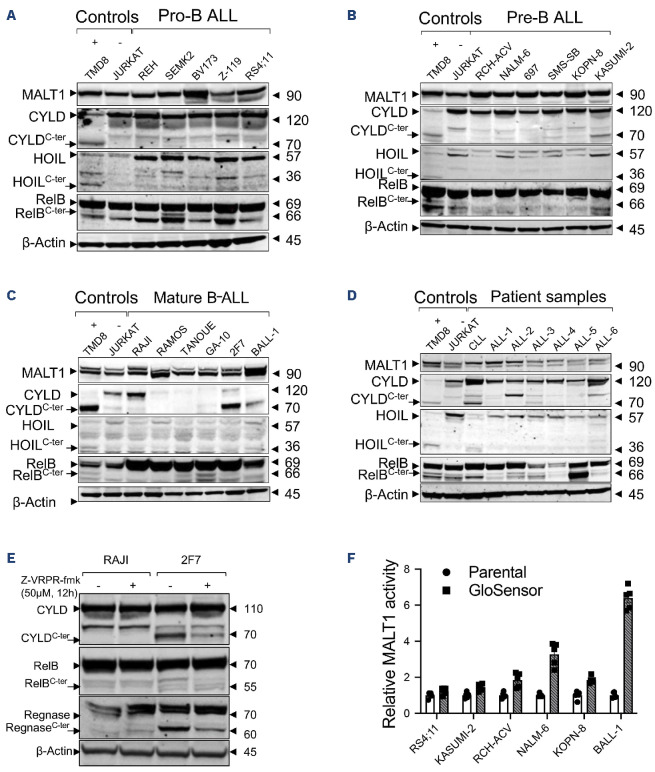
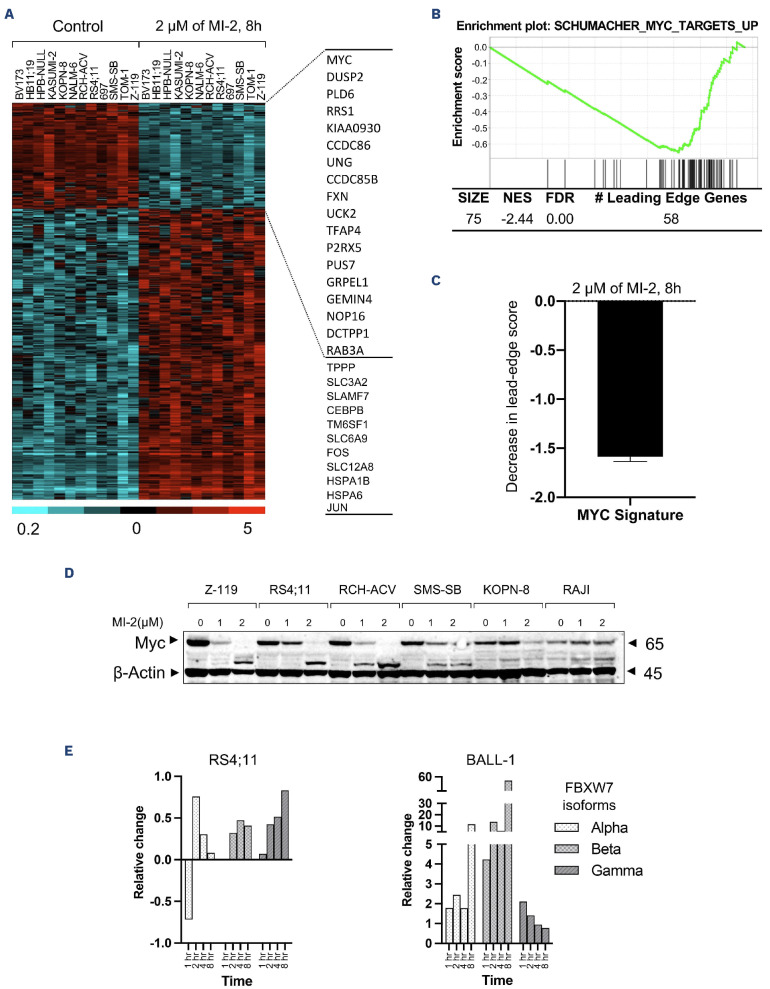
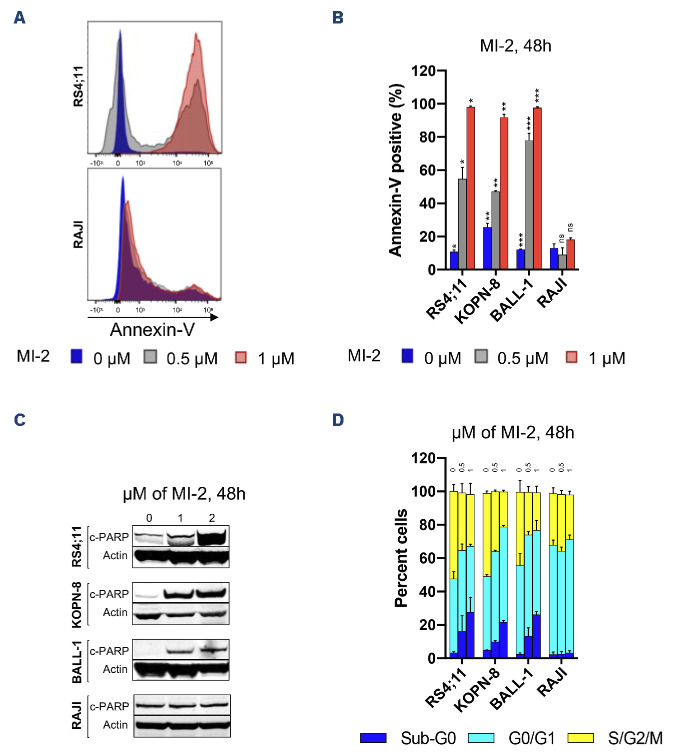
B-cell acute lymphoblastic leukemia (B-ALL) remains a hard-to-treat disease with a poor prognosis in adults. Mucosa-associated lymphoid tissue lymphoma translocation protein 1 (MALT1) is a para-caspase required for B-cell receptor (BCR)-mediated NF-κB activation. Inhibition of MALT1 in preclinical models has proven efficacious in many B-cell malignancies including chronic lymphocytic leukemia, mantle cell lymphoma and diffuse large B-cell lymphoma. We sought to examine the role of MALT1 in B-ALL and determine the biological consequences of its inhibition. Targeting MALT1 with both Z-VRPR-fmk and MI-2 efficiently kills B-ALL cells independent of the cell-of-origin (pro, pre, mature) or the presence of the Philadelphia chromosome, and spares normal B cells. The mechanism of cell death was through apoptotic induction, mostly in cycling cells. The proteolytic activity of MALT1 can be studied by measuring its ability to cleave its substrates. Surprisingly, with the exception of mature B-ALL, we did not detect cleavage of MALT1 substrates at baseline, nor after proteasomal inhibition or following activation of pre-BCR. To explore the possibility of a distinct role for MALT1 in B-ALL, independent of signaling through BCR, we studied the changes in gene expression profiling following a 24-hour treatment with MI-2 in 12 B-ALL cell lines. Our transcriptome analysis revealed a strong inhibitory effect on MYC-regulated gene signatures, further confirmed by Myc protein downregulation, concomitant with an increase in the Myc degrader FBXW7. In conclusion, our evidence suggests a novel role for MALT1 in B-ALL through Myc regulation and provides support for clinical testing of MALT1 inhibitors in B-ALL.
B 细胞急性淋巴细胞白血病 (B-ALL) 仍然是一种难以治疗的疾病,成人预后较差。黏膜相关淋巴组织淋巴瘤易位蛋白 1 (MALT1) 是一种旁半胱天冬酶,是 B 细胞受体 (BCR) 介导的 NF-κB 激活所必需的。在临床前模型中抑制 MALT1 已被证明在许多 B 细胞恶性肿瘤中有效,包括慢性淋巴细胞白血病、套细胞淋巴瘤和弥漫性大 B 细胞淋巴瘤。我们试图研究 MALT1 在 B-ALL 中的作用,并确定其抑制的生物学后果。用 Z-VRPR-fmk 和 MI-2 靶向 MALT1 可有效杀死 B-ALL 细胞,而与细胞起源(前体、前体、成熟)或费城染色体的存在无关,并可保留正常 B 细胞。细胞死亡的机制是通过凋亡诱导,主要在细胞周期中。MALT1 的蛋白水解活性可以通过测量其切割底物的能力来研究。令人惊讶的是,除了成熟的 B-ALL 外,我们在基线时没有检测到 MALT1 底物的切割,也没有在蛋白酶体抑制后或在 pre-BCR 激活后检测到。为了探索 MALT1 在 B-ALL 中可能具有独立于 BCR 信号的独特作用,我们在 12 种 B-ALL 细胞系中研究了用 MI-2 处理 24 小时后基因表达谱的变化。我们的转录组分析显示对 MYC 调控基因特征有很强的抑制作用,进一步通过 Myc 蛋白下调得到证实,同时 Myc 降解酶 FBXW7 增加。总之,我们的证据表明 MALT1 在 B-ALL 中通过 Myc 调节发挥新的作用,并为在 B-ALL 中测试 MALT1 抑制剂提供了支持。