Department of Radiology, Union Hospital, Tongji Medical College, Huazhong University of Science and Technology, Wuhan, 430022, China.
Hubei Key Laboratory of Molecular Imaging, Wuhan, 430022, China.
BMC Nephrol. 2020 Oct 19;21(1):439. doi: 10.1186/s12882-020-02105-z.
Transplant renal artery stenosis (TRAS) is a serious vascular complication that occurs after renal transplantation and can result in hypertension, renal functional impairment, and graft loss. Endovascular treatment has become the first-line treatment for TRAS because of its low invasiveness and high success rate.
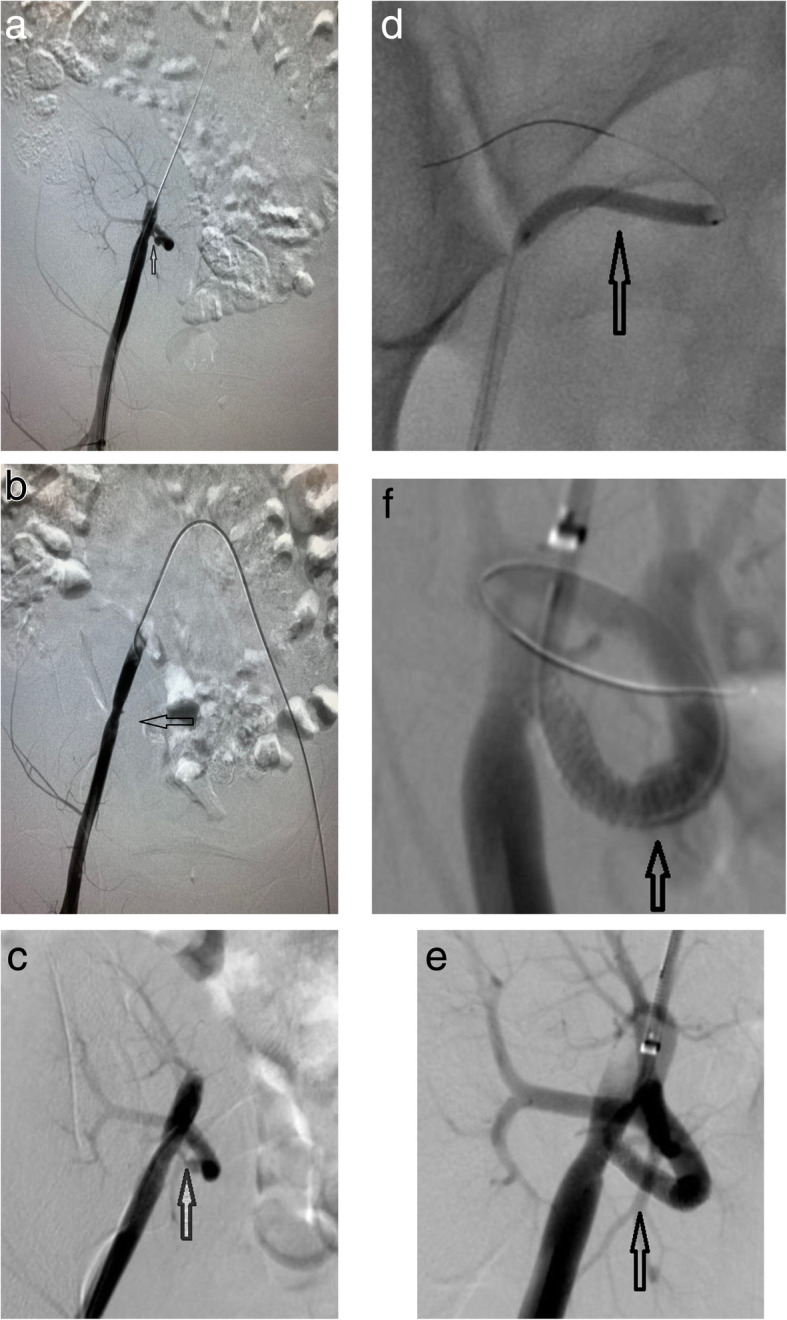
A 23-year-old female with end-stage renal disease of unknown cause received a living-donor kidney transplantation 10 months ago. Seven months after the transplantation, her blood pressure gradually deteriorated. Magnetic resonance angiography revealed bending and stenosis of the transplant renal artery, and the patient received endovascular treatment. A digital subtraction angiography revealed significant stenosis of 95% in the proximal transplant renal artery. The guidewire could not pass through the stenotic segment of the transplant renal artery even with repeated attempts by the surgeons; as a result, the transplant renal artery became occluded, and vasodilators were ineffective. After the operation, renal function gradually worsened, so she began to receive regular dialysis. Twenty-five days later, the patient's urine volume was significantly higher than that before, and ultrasound showed that the proximal transplant renal artery was not completely occluded. A re-intervention was performed, and the stent was placed successfully in the stenotic segment. After the operation, renal function gradually recovered, and dialysis was no longer needed.
Patients with iatrogenic transplant renal artery occlusion may have the possibility of spontaneous recanalization, which can help prevent the need for re-transplantation.
移植肾动脉狭窄(TRAS)是肾移植后发生的一种严重血管并发症,可导致高血压、肾功能损害和移植物丢失。由于其微创性和高成功率,血管内治疗已成为 TRAS 的首选治疗方法。
一名 23 岁女性,因不明原因的终末期肾病接受了活体供肾移植,10 个月前接受了活体供肾移植。移植后 7 个月,她的血压逐渐恶化。磁共振血管造影显示移植肾动脉弯曲和狭窄,患者接受了血管内治疗。数字减影血管造影显示近端移植肾动脉有 95%的严重狭窄。尽管外科医生反复尝试,但导丝仍无法通过移植肾动脉狭窄段;结果,移植肾动脉闭塞,血管扩张剂无效。术后肾功能逐渐恶化,因此开始定期透析。25 天后,患者的尿量明显高于术前,超声显示近端移植肾动脉未完全闭塞。再次介入治疗,成功放置支架于狭窄段。术后肾功能逐渐恢复,不再需要透析。
医源性移植肾动脉闭塞的患者可能有自发再通的可能性,这有助于防止需要再次移植。