The Key Laboratory of Molecular Target & Clinical Pharmacology, School of Pharmaceutical Sciences and the First Affiliated Hospital of Guangzhou Medical University, Guangzhou Medical University, Guangzhou, 511436, China.
School of Pharmaceutical Sciences, Zhengzhou University, No.100, Kexue Avenue, Zhengzhou, 450001, China.
J Nanobiotechnology. 2020 Oct 19;18(1):146. doi: 10.1186/s12951-020-00697-0.
Surgical resection and adjunct chemotherapy or radio-therapy has been applied for the therapy of superficial malignant tumor in clinics. Whereas, there are still some problems limit its clinical use, such as severe pains and side effect. Thus, it is urgent need to develop effective, minimally invasive and low toxicity therapy stagey for superficial malignant tumor. Topical drug administration such as microneedle patches shows the advantages of reduced systemic toxicity and nimble application and, as a result, a great potential to treat superficial tumors.
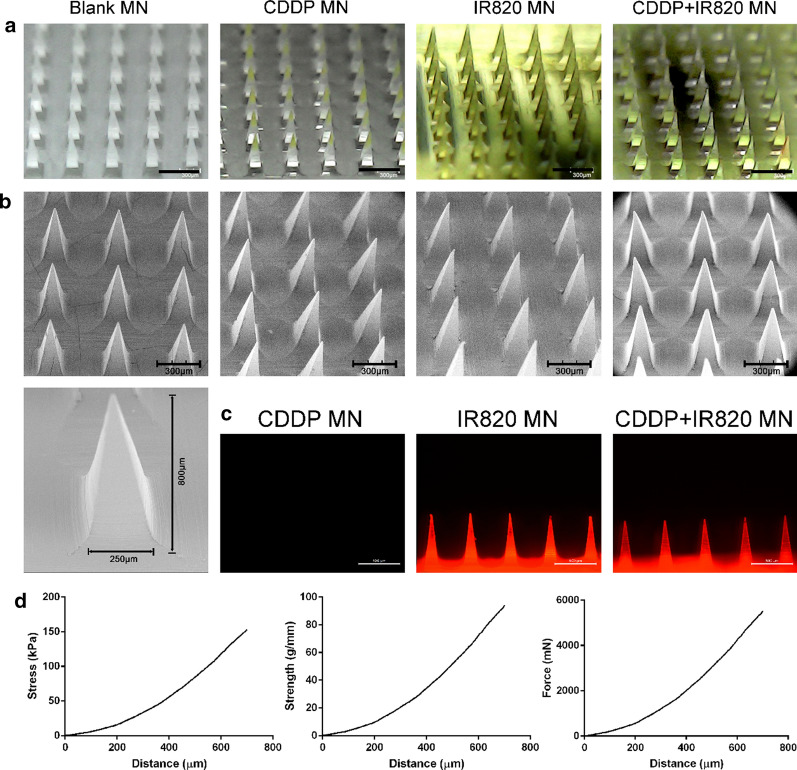
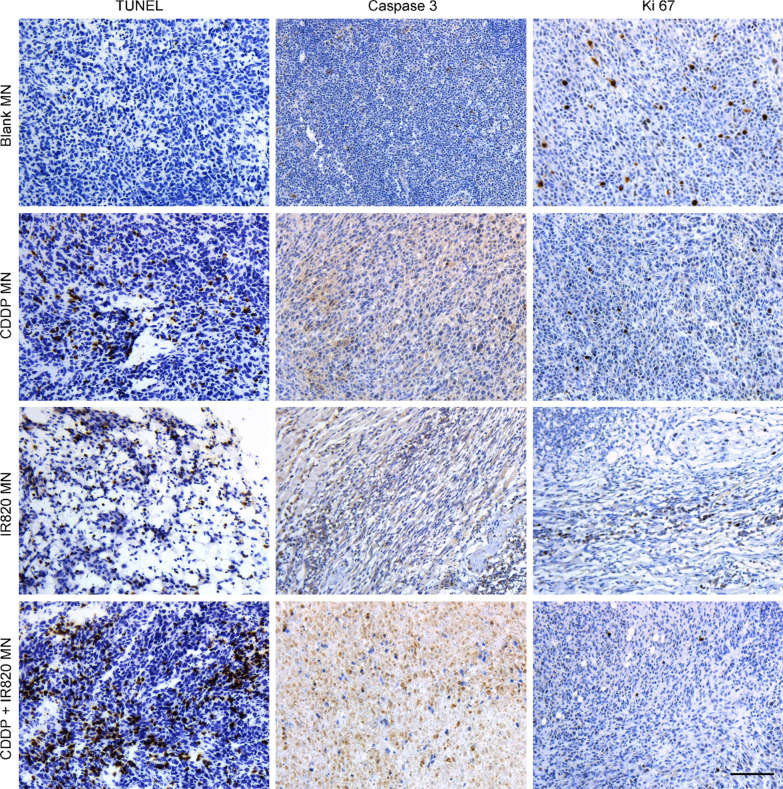
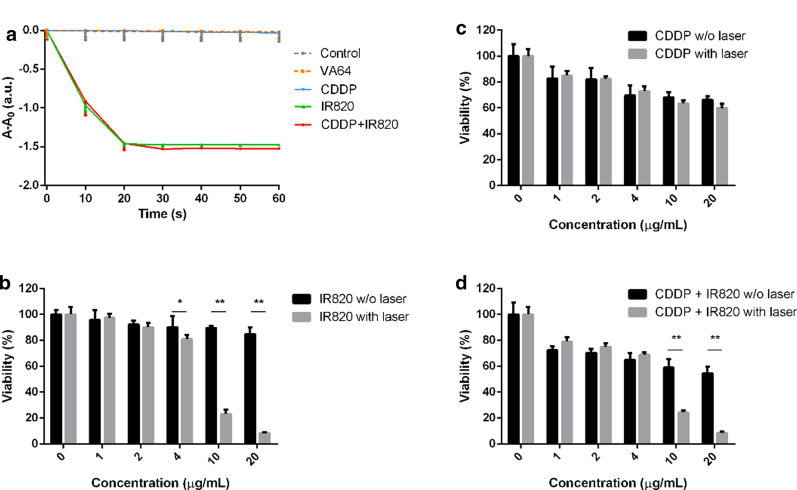
In this study, microneedle (MN) patches were fabricated to deliver photosensitizer IR820 and chemotherapy agent cisplatin (CDDP) for synergistic chemo-photodynamic therapy against breast cancer.
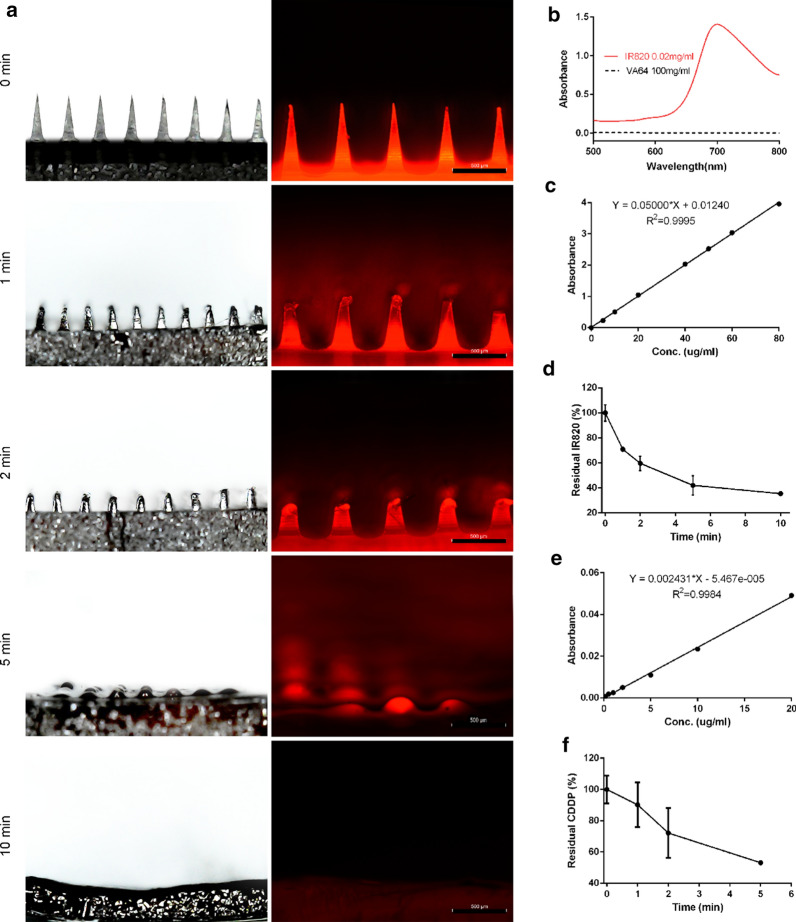
The MN could be completely inserted into the skin and the compounds carrying tips could be embedded within the target issue for locoregional cancer treatment. The photodynamic therapeutic effects can be precisely controlled and switched on and off on demand simply by adjusting laser. The used base material vinylpyrrolidone-vinyl acetate copolymer (PVPVA) is soluble in both ethanol and water, facilitating the load of both water-soluble and water-insoluble drugs.
Thus, the developed MN patch offers an effective, user-friendly, controllable and low-toxicity option for patients requiring long-term and repeated cancer treatments.
手术切除联合化疗或放疗已应用于临床治疗浅表恶性肿瘤。然而,仍存在一些限制其临床应用的问题,如严重疼痛和副作用。因此,迫切需要开发有效、微创和低毒的浅表恶性肿瘤治疗策略。局部药物给药如微针贴片具有减少全身毒性和灵活应用的优势,因此有很大潜力治疗浅表肿瘤。
本研究中,制备了微针(MN)贴片以递送电动力学治疗剂 IR820 和化疗药物顺铂(CDDP),用于协同化疗光动力治疗乳腺癌。
MN 可以完全插入皮肤,载药尖端可以嵌入目标组织中,用于局部癌症治疗。光动力学治疗效果可以通过简单地调整激光精确控制和按需开启和关闭。所用的基底材料乙烯基吡咯烷酮-醋酸乙烯酯共聚物(PVPVA)可溶于乙醇和水,有利于水溶性和水不溶性药物的负载。
因此,开发的 MN 贴片为需要长期和重复癌症治疗的患者提供了一种有效、易用、可控和低毒性的选择。