Awad Mahmoud E, Borrego-Sánchez Ana, Escamilla-Roa Elizabeth, Hernández-Laguna Alfonso, Sainz-Díaz C Ignacio
Department of Geology, Faculty of Science, Al-Azhar University, Nasr City, 11884 Cairo, Egypt.
Department of Pharmacy and Pharmaceutical Technology, Faculty of Pharmacy, University of Granada, 18071 Granada, Spain.
Appl Clay Sci. 2020 Dec 1;199:105865. doi: 10.1016/j.clay.2020.105865. Epub 2020 Oct 14.
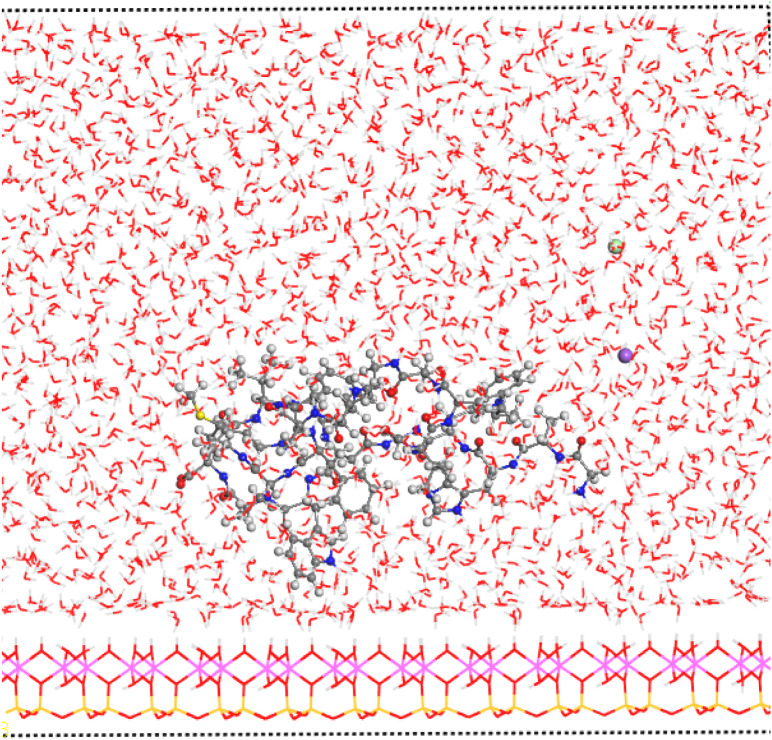
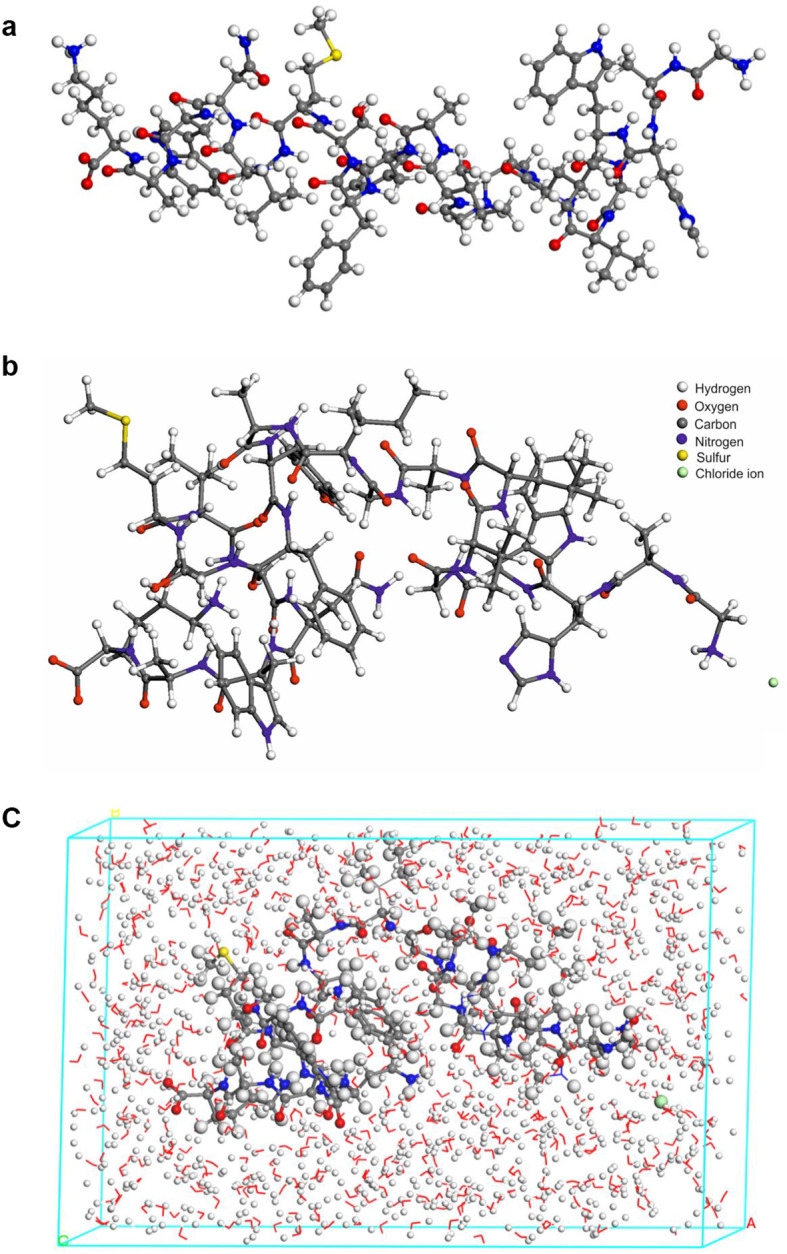
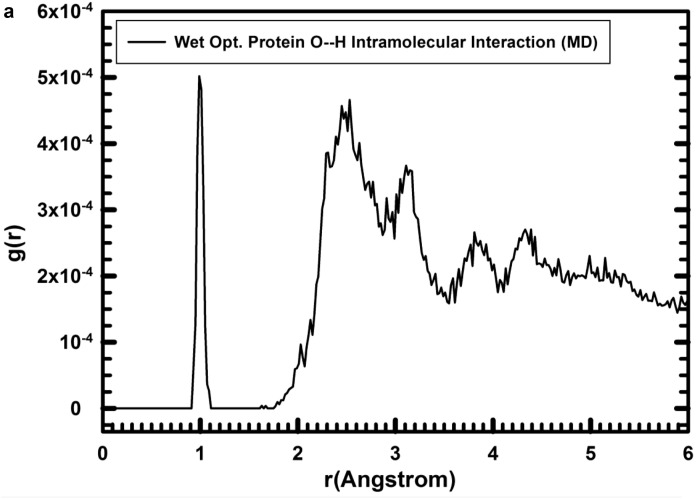
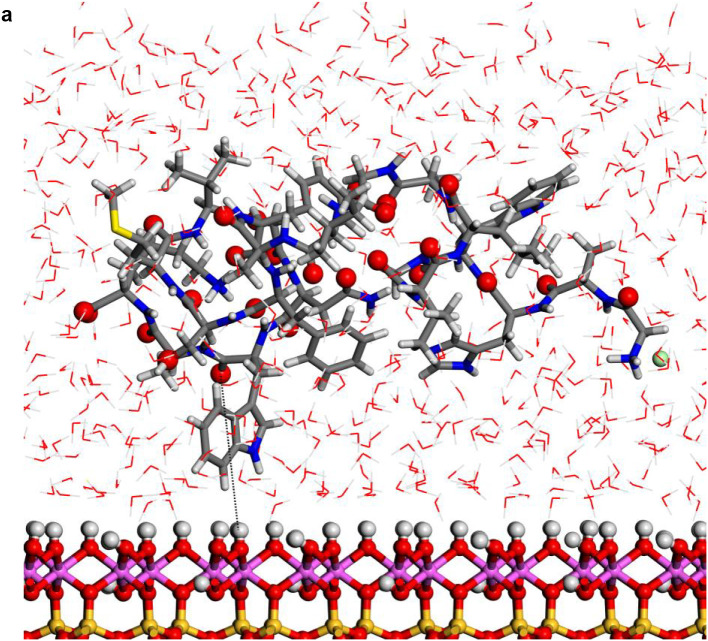
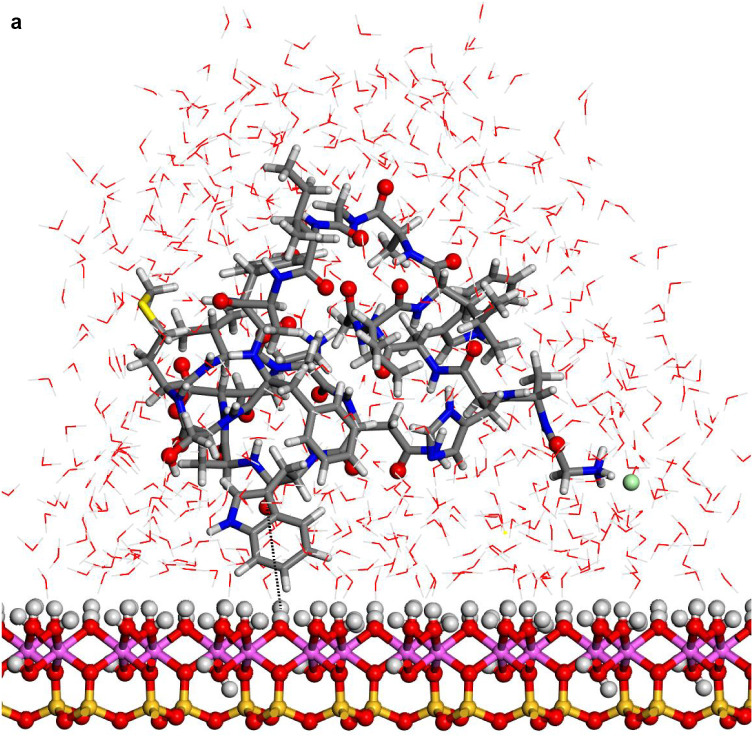
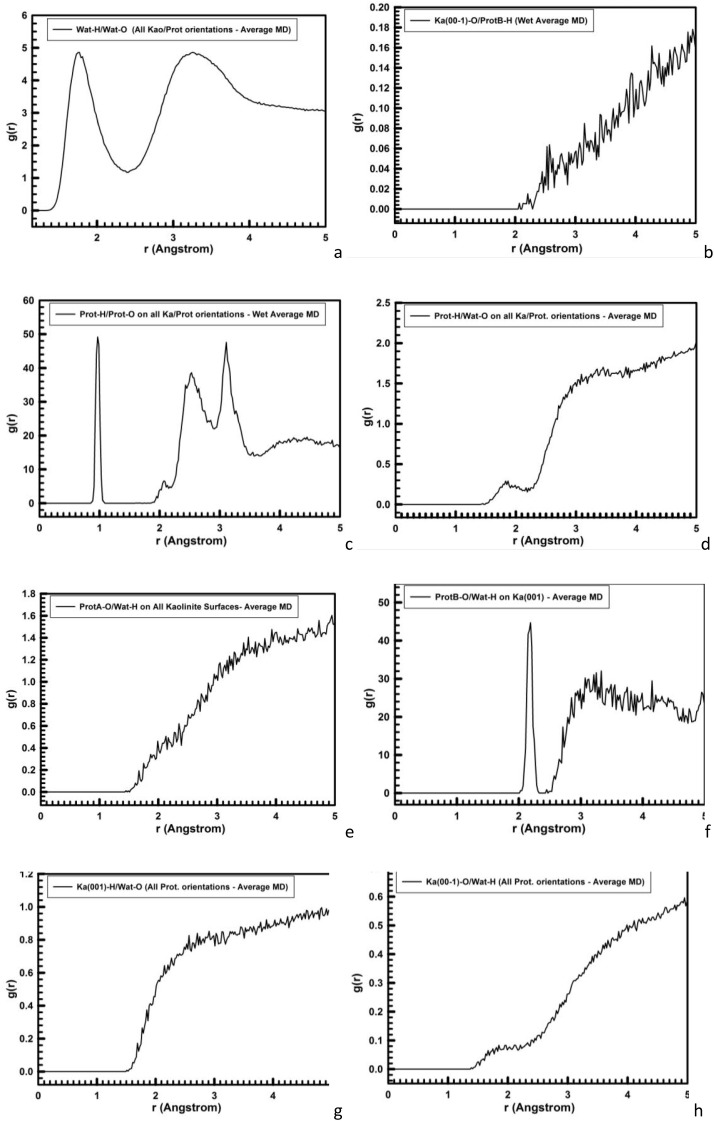
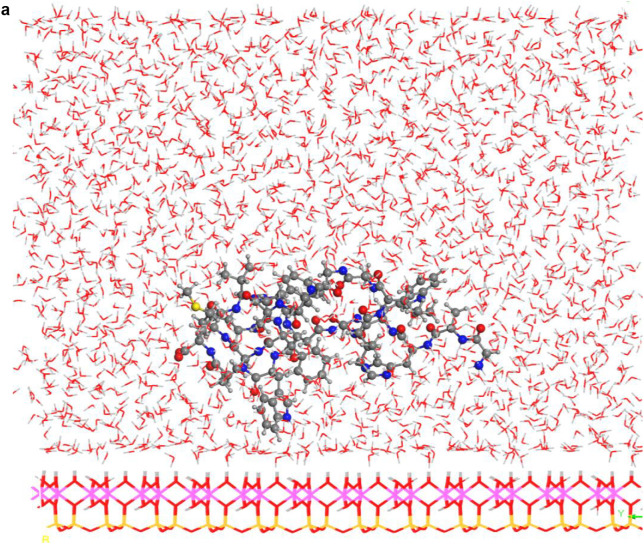
This work aimed at studying the potentiality of interactions between kaolinite surfaces and a protein-fragment (350-370 amino acid units) extracted from the glycoprotein E1 in the transmembrane domain (TMD) of hepatitis C virus capsid. A computational work was performed for locating the potential electrostatic interaction sites between kaolinite aluminol and siloxane surfaces and the residues of this protein-fragment ligand, monitoring the possible conformational changes. This hydrated neutralized kaolinite/protein-fragment system was simulated by means of molecular modeling based on atomistic force fields based on empirical interatomic potentials and molecular dynamic (MD) simulations. The MD calculations indicated that the studied protein-fragment interacted with the kaolinite surfaces with an exothermic process and structural distortions were observed, particularly with the hydrophilic aluminol surface by favorable adsorption energy. The viral units isolation or trapping by the adsorption on the kaolinite nanoparticles producing structural distortion of the peptide ligands could lead to the blockage of the entry on the receptor and hence a lack of viral activity would be produced. Therefore, these findings with the proposed insights could be an useful information for the next experimental and development studies in the area of discovering inhibitors of the global challenged hepatitis and other pathogenic viruses based on the phyllosilicate surface activity. These MD studies can be extended to other viruses like the COVID-19 interacting with silicate minerals surfaces.
这项工作旨在研究高岭石表面与从丙型肝炎病毒衣壳跨膜结构域(TMD)的糖蛋白E1中提取的蛋白质片段(350 - 370个氨基酸单元)之间相互作用的潜力。进行了一项计算工作,以确定高岭石铝醇和硅氧烷表面与该蛋白质片段配体残基之间的潜在静电相互作用位点,并监测可能的构象变化。基于经验原子间势的原子力场和分子动力学(MD)模拟,通过分子建模对这种水合中和的高岭石/蛋白质片段系统进行了模拟。MD计算表明,所研究的蛋白质片段与高岭石表面相互作用时发生放热过程,并且观察到结构扭曲,特别是与亲水性铝醇表面相互作用时,吸附能有利。通过吸附在高岭石纳米颗粒上导致肽配体结构扭曲从而分离或捕获病毒单元,可能会导致受体进入受阻,进而产生病毒活性缺失。因此,这些发现以及所提出的见解可能为基于层状硅酸盐表面活性发现全球挑战性肝炎和其他致病病毒抑制剂领域的后续实验和开发研究提供有用信息。这些MD研究可以扩展到其他病毒,如与硅酸盐矿物表面相互作用的COVID - 19。