Department of Biomedical Sciences, School of Biosciences and Technology, VIT, Vellore, Tamil Nadu 632014, India.
Department of Genetics and Molecular Biology, Vision Research Foundation, Chennai 600 006, India.
J Reprod Immunol. 2020 Nov;142:103213. doi: 10.1016/j.jri.2020.103213. Epub 2020 Sep 30.
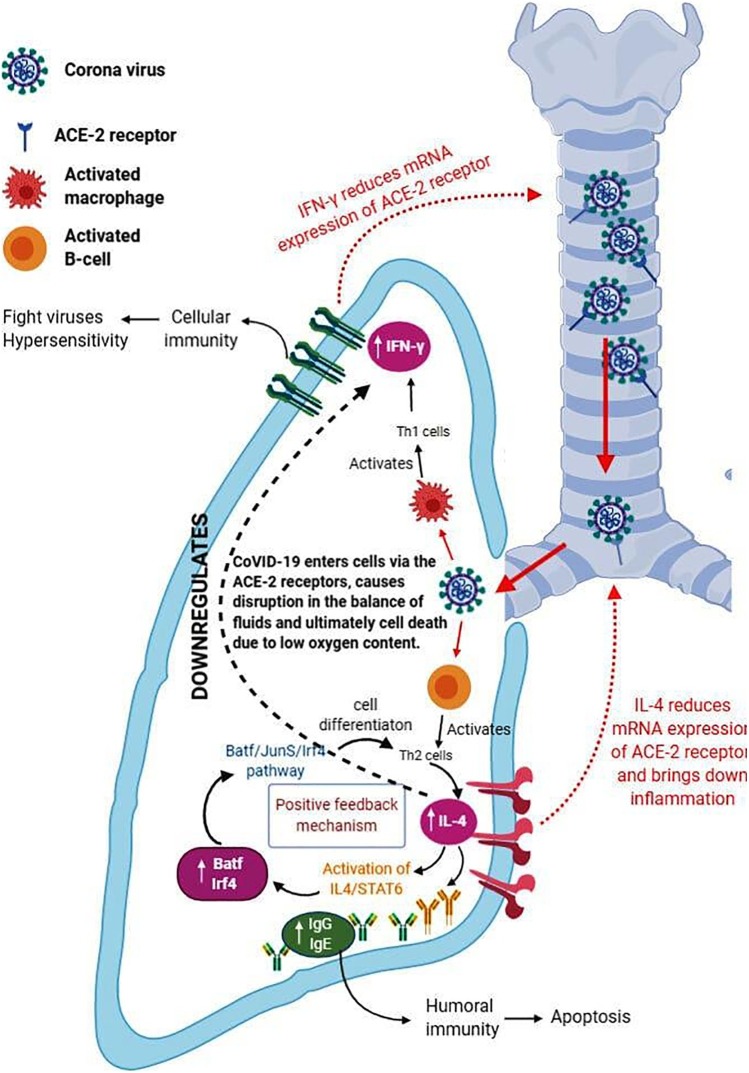
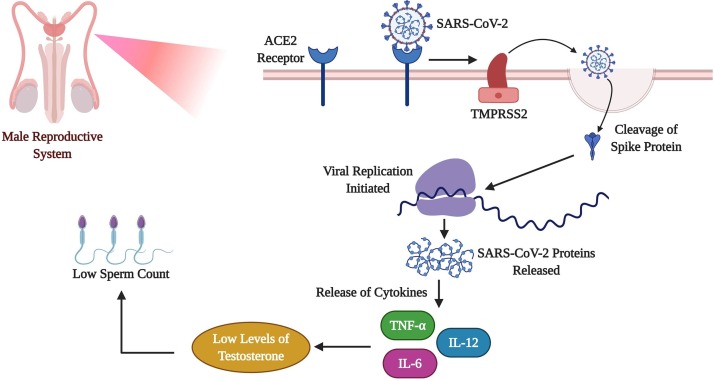
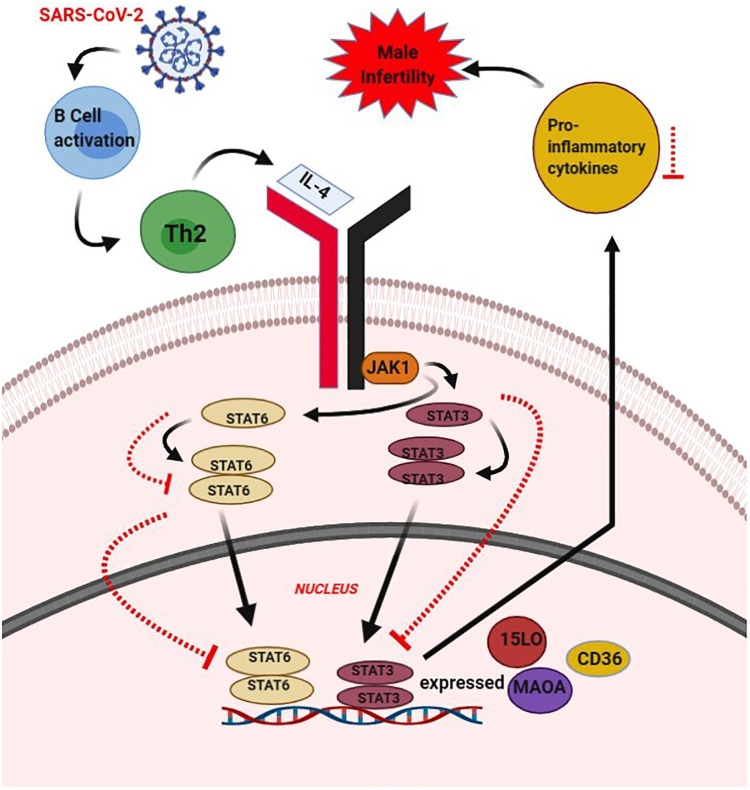
COVID-19 is a present-day complex pandemic infection with unpredictable levels of morbidity and mortality in various global populations. COVID-19 is associated with the different comorbidities with its change in biological function such as causing heart dysfunction via deregulating ACE-2 receptor, gastrointestinal risk via causing vomiting, diarrhea, and abdominal pain, chronic kidney disease via proteinuria and hematuria, diabetes mellitus, liver injury via increasing ALT, AST and bilirubin level, lung injury, CNS risk, ocular risk, and cancer risk. In this, we are focused on the COVID-19 connected with male infertility. Some of the studies show that the patients of COVID-19 are associated with impaired spermatogenesis. Impaired spermatogenesis via COVID-19 decreases the level of testosterone by disturbing cytokines such as TNF-α, IL-4, IL-6, and IL-12 and further, attenuates the sperm count. COVID-19 is causing inflammation via TNF-α and interferons. IL-4 plays an eminent role in the activation of the JAK-STAT pathway and leads to the disturbing pro-inflammatory cytokine as well as further cause's male infertility. Th2 activates the IL-4 through IgG and IgE and mediates apoptosis with the triggering of STAT signaling. The activated STAT signaling augments Batf/Irf4, and the Bach2/Batf pathway. On the other hand, SARS-CoV-2 is activating the level of Th2 cells. So, we hypothesized that the augmented Th2 cells would disturb the level of IL-4, JAK-STAT signaling, Batf/Irf4, and Bach2/Batf pathway. The disturbed IL-4 decreases the level of the ACE-2 with the inflammation. This further leads to male infertility in COVID-19 patients. So, in this hypothesis, we focused on the role of IL-4 in COVID-19 patients associated with male infertility via Th2 cells and JAK-STAT signaling.
新型冠状病毒肺炎(COVID-19)是一种目前流行的复杂传染病,在不同的全球人群中具有不可预测的发病率和死亡率。COVID-19 与多种合并症有关,其生物学功能发生变化,例如通过调节 ACE-2 受体导致心脏功能障碍、通过引起呕吐、腹泻和腹痛导致胃肠道风险、通过蛋白尿和血尿导致慢性肾脏病、通过增加 ALT、AST 和胆红素水平导致糖尿病、通过增加 ALT、AST 和胆红素水平导致肝损伤、通过增加 ALT、AST 和胆红素水平导致肺损伤、通过增加 ALT、AST 和胆红素水平导致中枢神经系统风险、通过增加 ALT、AST 和胆红素水平导致眼风险、通过增加 ALT、AST 和胆红素水平导致癌症风险。在这篇文章中,我们专注于与男性不育有关的 COVID-19。一些研究表明,COVID-19 患者的精子发生受损。通过 COVID-19 干扰 TNF-α、IL-4、IL-6 和 IL-12 等细胞因子,降低睾丸激素水平,进一步减少精子数量,从而导致精子发生受损。COVID-19 通过 TNF-α 和干扰素引起炎症。IL-4 在 JAK-STAT 途径的激活中起重要作用,并导致干扰促炎细胞因子,进一步导致男性不育。Th2 通过 IgG 和 IgE 激活 IL-4,并通过触发 STAT 信号介导细胞凋亡。激活的 STAT 信号增强 Batf/Irf4 和 Bach2/Batf 途径。另一方面,SARS-CoV-2 激活 Th2 细胞水平。因此,我们假设,增加的 Th2 细胞会干扰 IL-4、JAK-STAT 信号、Batf/Irf4 和 Bach2/Batf 途径的水平。受干扰的 IL-4 会降低 ACE-2 的水平,从而引发炎症。这进一步导致 COVID-19 患者的男性不育。因此,在这个假设中,我们专注于 IL-4 在 COVID-19 患者中通过 Th2 细胞和 JAK-STAT 信号与男性不育的关系。