Department of Toxicology, Shanxi Provincial Key Lab of Free Radical Biology and Medicine, Ministry of Education Key Lab of Hazard Assessment and Control in Special Operational Environment, School of Public Health, Fourth Military Medical University, Xi'an, 710032, PR China.
Student Brigade of Basic Medicine School, Fourth Military Medical University, Xi'an, 710032, PR China.
Redox Biol. 2020 Oct;37:101761. doi: 10.1016/j.redox.2020.101761. Epub 2020 Oct 14.
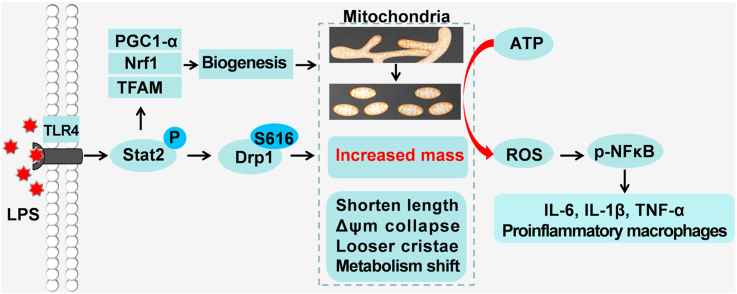
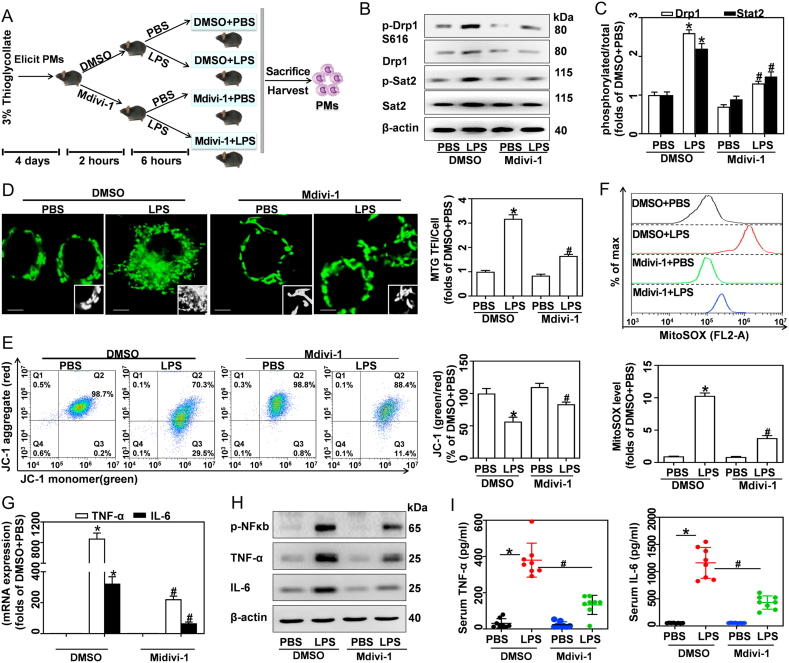
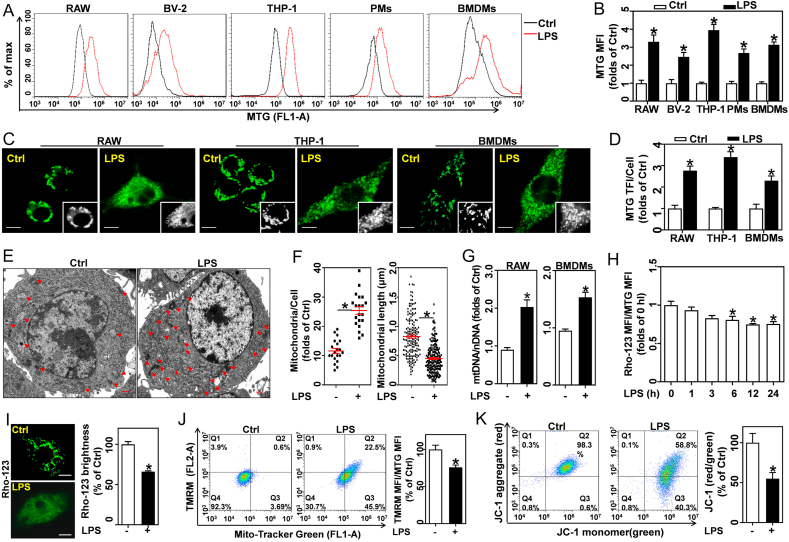
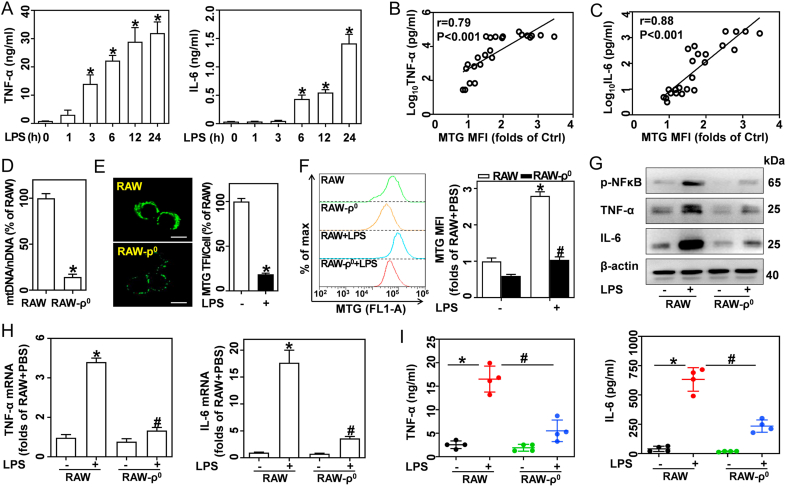
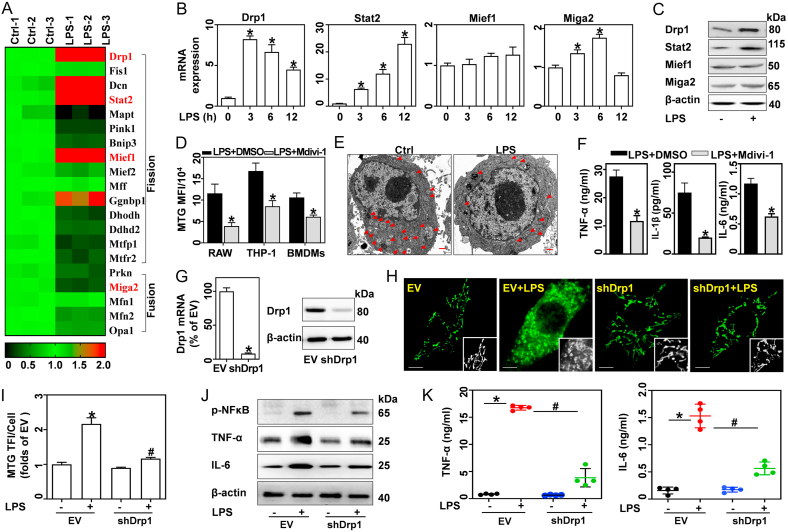
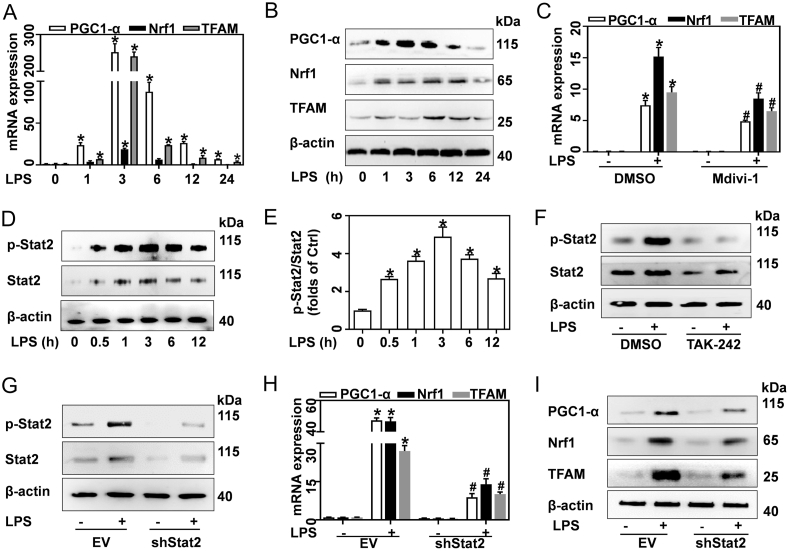
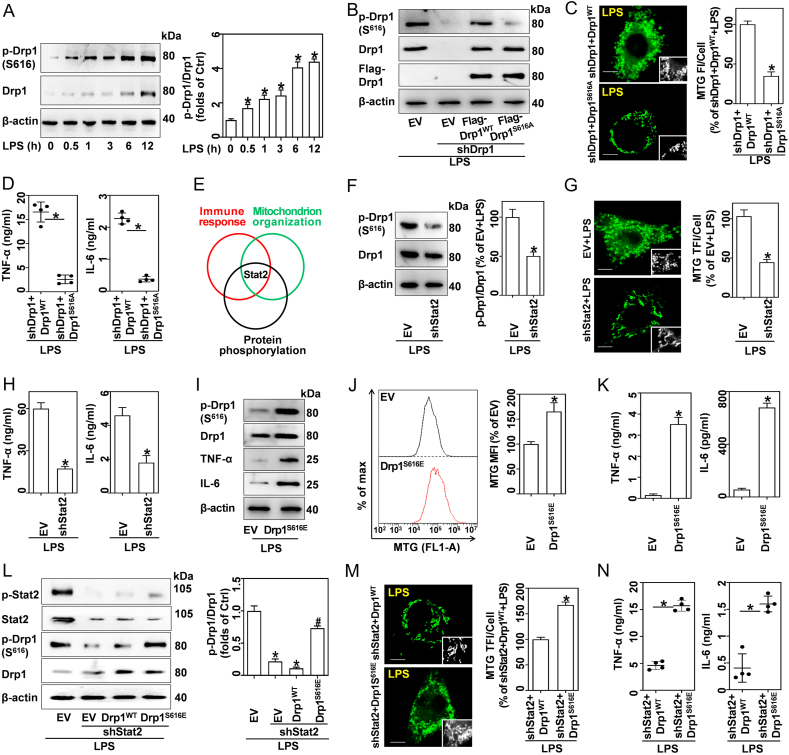
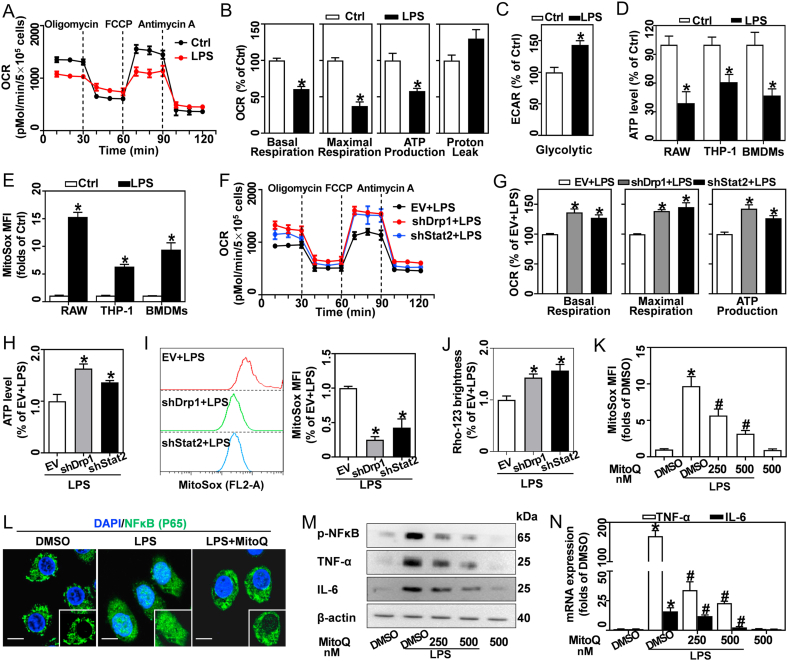
Macrophage recruitment and pro-inflammatory differentiation are hallmarks of various diseases, including infection and sepsis. Although studies suggest that mitochondria may regulate macrophage immune responses, it remains unclear whether mitochondrial mass affects macrophage pro-inflammatory differentiation. Here, we found that lipopolysaccharide (LPS)-activated macrophages possess higher mitochondrial mass than resting cells. Therefore, this study aimed to explore the functional role and molecular mechanisms of increased mitochondrial mass in pro-inflammatory differentiated macrophages. Results show that an increase in the mitochondrial mass of macrophages positively correlates with inflammatory cytokine generation in response to LPS. RNA-seq analysis revealed that LPS promotes signal transducers and activators of transcription 2 (Stat2) and dynamin-related protein 1 (Drp1) expression, which are enriched in positive mitochondrial fission regulation. Meanwhile, knockdown or pharmacological inhibition of Drp1 blunts LPS-induced mitochondrial mass increase and pro-inflammatory differentiation. Moreover, Stat2 boosts Drp1 phosphorylation at serine 616, required for Drp1-mediated mitochondrial fission. LPS also causes Stat2-and Drp1-dependent biogenesis, which contributes to the generation of additional mitochondria. However, these mitochondria are profoundly remodeled, displaying fragmented morphology, loose cristae, reduced Δψm, and metabolic programming. Furthermore, these remodeled mitochondria shift their function from ATP synthesis to reactive oxygen species (ROS) production, which drives NFκB-dependent inflammatory cytokine transcription. Interestingly, an increase in mitochondrial mass with constitutively active phosphomimetic mutant of Drp1 (Drp1) boosted pro-inflammatory response in macrophages without LPS stimulation. In vivo, we also demonstrated that Mdivi-1 administration inhibits LPS-induced macrophage pro-inflammatory differentiation. Importantly, we observed Stat2 phosphorylation and Drp1-dependent mitochondrial mass increase in macrophages isolated from LPS-challenged mice. In conclusion, we comprehensively demonstrate that a Stat2-Drp1 dependent mitochondrial mass increase is necessary for pro-inflammatory differentiation of macrophages. Therefore, targeting the Stat2-Drp1 axis may provide novel therapeutic approaches for treating infection and inflammatory diseases.
巨噬细胞的募集和促炎分化是各种疾病的特征,包括感染和败血症。虽然研究表明线粒体可能调节巨噬细胞免疫反应,但线粒体质量是否影响巨噬细胞促炎分化仍不清楚。在这里,我们发现脂多糖(LPS)激活的巨噬细胞比静止细胞具有更高的线粒体质量。因此,本研究旨在探讨巨噬细胞中增加的线粒体质量在促炎分化中的功能作用和分子机制。结果表明,巨噬细胞中线粒体质量的增加与 LPS 刺激下炎症细胞因子的产生呈正相关。RNA-seq 分析显示,LPS 促进信号转导和转录激活因子 2(Stat2)和动力相关蛋白 1(Drp1)的表达,这些蛋白富集在正向线粒体分裂调节中。同时,Drp1 的敲低或药理学抑制可减弱 LPS 诱导的线粒体质量增加和促炎分化。此外,Stat2 增强 Drp1 在丝氨酸 616 上的磷酸化,这是 Drp1 介导的线粒体分裂所必需的。LPS 还导致 Stat2 和 Drp1 依赖性生物发生,这有助于产生额外的线粒体。然而,这些线粒体发生了深刻的重塑,表现出碎片化的形态、松散的嵴、减少的 Δψm 和代谢编程。此外,这些重塑的线粒体将其功能从 ATP 合成转移到活性氧(ROS)的产生,从而驱动 NFκB 依赖性炎症细胞因子转录。有趣的是,具有组成型激活磷酸模拟突变体的 Drp1(Drp1)的线粒体质量增加增强了没有 LPS 刺激的巨噬细胞的促炎反应。在体内,我们还证明了 Mdivi-1 给药抑制 LPS 诱导的巨噬细胞促炎分化。重要的是,我们观察到 LPS 挑战的小鼠中分离的巨噬细胞中 Stat2 磷酸化和 Drp1 依赖性线粒体质量增加。总之,我们全面证明了 Stat2-Drp1 依赖性线粒体质量增加是巨噬细胞促炎分化所必需的。因此,靶向 Stat2-Drp1 轴可能为治疗感染和炎症性疾病提供新的治疗方法。