DeBlasi Janine M, DeNicola Gina M
Department of Cancer Physiology, H. Lee Moffitt Cancer Center, Tampa, FL 33612, USA.
Cancer Biology PhD Program, University of South Florida, Tampa, FL 33612, USA.
Cancers (Basel). 2020 Oct 17;12(10):3023. doi: 10.3390/cancers12103023.
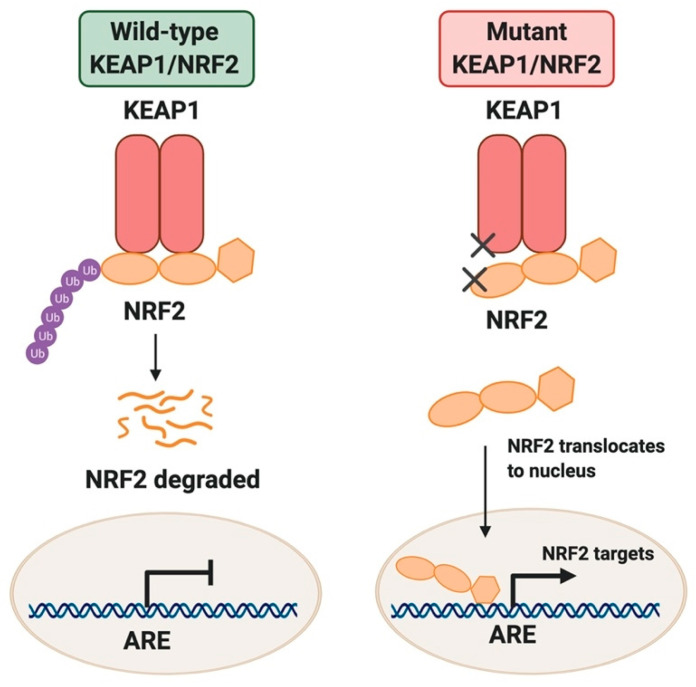
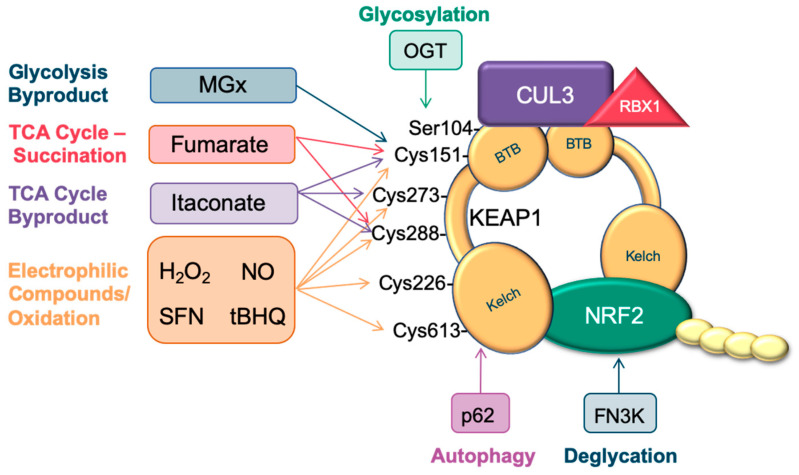
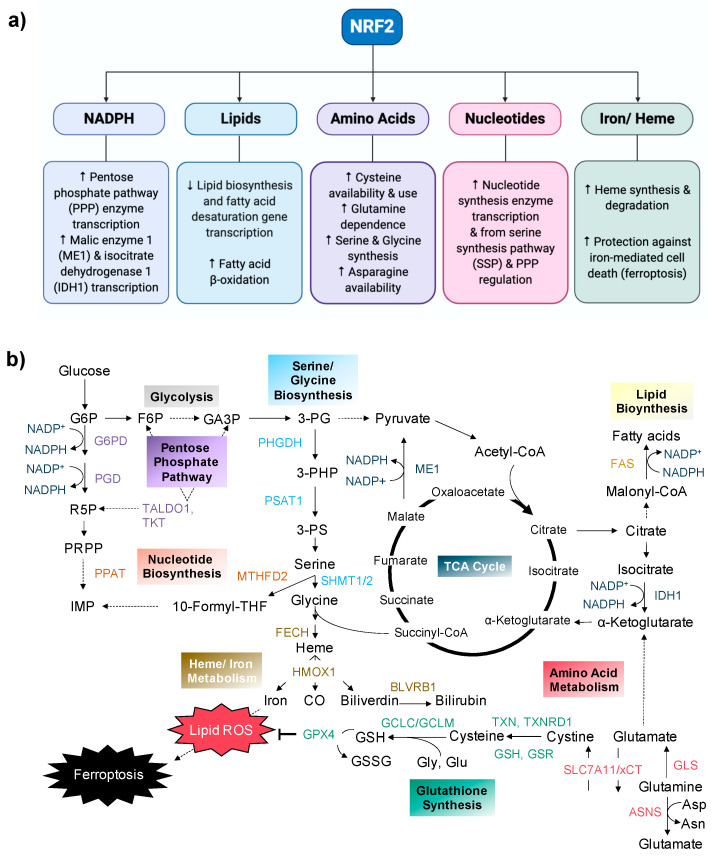
The transcription factor NRF2 (nuclear factor-erythroid 2 p45-related factor 2 or ) plays a critical role in response to cellular stress. Following an oxidative insult, NRF2 orchestrates an antioxidant program, leading to increased glutathione levels and decreased reactive oxygen species (ROS). Mounting evidence now implicates the ability of NRF2 to modulate metabolic processes, particularly those at the interface between antioxidant processes and cellular proliferation. Notably, NRF2 regulates the pentose phosphate pathway, NADPH production, glutaminolysis, lipid and amino acid metabolism, many of which are hijacked by cancer cells to promote proliferation and survival. Moreover, deregulation of metabolic processes in both normal and cancer-based physiology can stabilize NRF2. We will discuss how perturbation of metabolic pathways, including the tricarboxylic acid (TCA) cycle, glycolysis, and autophagy can lead to NRF2 stabilization, and how NRF2-regulated metabolism helps cells deal with these metabolic stresses. Finally, we will discuss how the negative regulator of NRF2, Kelch-like ECH-associated protein 1 (KEAP1), may play a role in metabolism through NRF2 transcription-independent mechanisms. Collectively, this review will address the interplay between the NRF2/KEAP1 complex and metabolic processes.
转录因子NRF2(核因子红细胞2 p45相关因子2)在细胞应激反应中起关键作用。在遭受氧化损伤后,NRF2会协调一个抗氧化程序,导致谷胱甘肽水平升高和活性氧(ROS)减少。现在越来越多的证据表明,NRF2具有调节代谢过程的能力,尤其是那些在抗氧化过程与细胞增殖之间的界面处的代谢过程。值得注意的是,NRF2调节磷酸戊糖途径、NADPH生成、谷氨酰胺分解、脂质和氨基酸代谢,其中许多过程被癌细胞利用以促进增殖和存活。此外,在正常生理和癌症生理中,代谢过程的失调均可使NRF2稳定。我们将讨论代谢途径的扰动,包括三羧酸(TCA)循环、糖酵解和自噬,如何导致NRF2稳定,以及NRF2调节的代谢如何帮助细胞应对这些代谢应激。最后,我们将讨论NRF2的负调节因子,即 Kelch样ECH相关蛋白1(KEAP1),如何通过不依赖NRF2转录的机制在代谢中发挥作用。总的来说,这篇综述将探讨NRF2/KEAP1复合物与代谢过程之间的相互作用。