Laboratory of Humoral Immunology, Department of Immunology, Institut Pasteur, Paris, France.
INSERM U1222, Paris, France.
mBio. 2020 Oct 20;11(5):e02424-20. doi: 10.1128/mBio.02424-20.
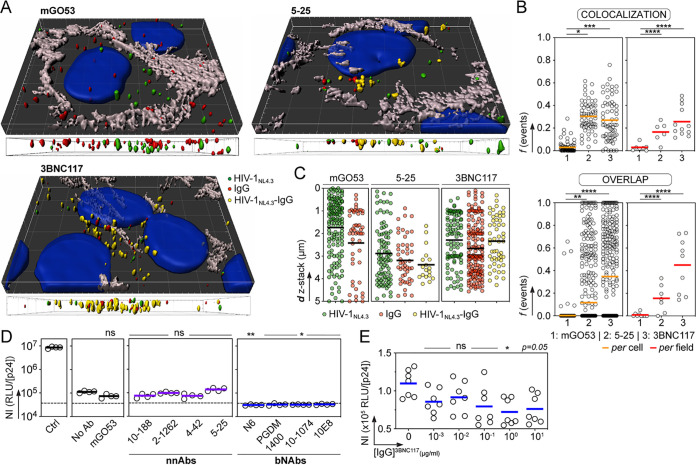
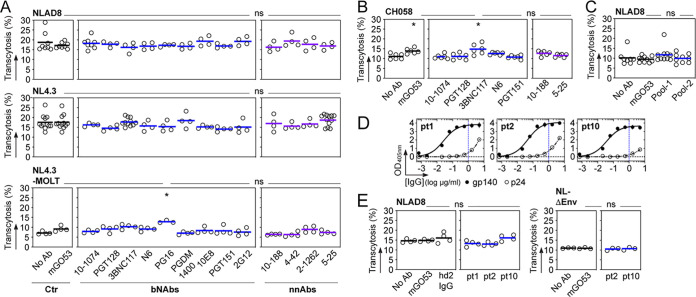
HIV-1 can cross the blood-brain barrier (BBB) to penetrate the brain and infect target cells, causing neurocognitive disorders as a result of neuroinflammation and brain damage. Here, we examined whether antibodies targeting the HIV-1 envelope glycoproteins interfere with the transcytosis of virions across the human BBB endothelium. We found that although the viral envelope spike gp160 is required for optimal endothelial cell endocytosis, no anti-gp160 antibodies blocked the BBB transcytosis of HIV-1 Instead, both free viruses and those in complex with antibodies transited across endothelial cells in the BBB model, as observed by confocal microscopy. HIV-1 infectious capacity was considerably altered by the transcytosis process but still detectable, even in the presence of nonneutralizing antibodies. Only virions bound by neutralizing antibodies lacked posttranscytosis infectivity. Overall, our data support the role of neutralizing antibodies in protecting susceptible brain cells from HIV-1 infection despite their inability to inhibit viral BBB endocytic transport. HIV-1 can cross the blood-brain barrier (BBB) to penetrate the brain and infect target cells, causing neurocognitive disorders as a result of neuroinflammation and brain damage. The HIV-1 envelope spike gp160 is partially required for viral transcytosis across the BBB endothelium. But do antibodies developing in infected individuals and targeting the HIV-1 gp160 glycoproteins block HIV-1 transcytosis through the BBB? We addressed this issue and discovered that anti-gp160 antibodies do not block HIV-1 transport; instead, free viruses and those in complex with antibodies can transit across BBB endothelial cells. Importantly, we found that only neutralizing antibodies could inhibit posttranscytosis viral infectivity, highlighting their ability to protect susceptible brain cells from HIV-1 infection.
HIV-1 能够穿过血脑屏障 (BBB) 进入大脑并感染靶细胞,导致神经认知障碍,这是由于神经炎症和脑损伤引起的。在这里,我们研究了靶向 HIV-1 包膜糖蛋白的抗体是否会干扰病毒粒子穿过人 BBB 内皮细胞的转胞吞作用。我们发现,虽然病毒包膜刺突 gp160 是内皮细胞内吞作用的最佳所需,但没有抗 gp160 抗体能阻止 HIV-1 通过 BBB 的转胞吞作用。相反,通过共聚焦显微镜观察到,游离病毒和与抗体形成复合物的病毒都穿过了 BBB 模型中的内皮细胞。HIV-1 的感染能力在转胞吞过程中发生了很大变化,但即使存在非中和抗体,仍能检测到。只有被中和抗体结合的病毒粒子缺乏转胞吞后感染性。总的来说,我们的数据支持中和抗体在保护易感染的脑细胞免受 HIV-1 感染方面的作用,尽管它们不能抑制病毒的 BBB 内吞转运。HIV-1 能够穿过血脑屏障 (BBB) 进入大脑并感染靶细胞,导致神经认知障碍,这是由于神经炎症和脑损伤引起的。HIV-1 包膜刺突 gp160 部分需要病毒穿过 BBB 内皮细胞的转胞吞作用。但是,感染个体产生并靶向 HIV-1 gp160 糖蛋白的抗体是否会阻断 HIV-1 通过 BBB 的转胞吞作用?我们解决了这个问题,发现抗 gp160 抗体不能阻止 HIV-1 的运输;相反,游离病毒和与抗体形成复合物的病毒都可以穿过 BBB 内皮细胞。重要的是,我们发现只有中和抗体可以抑制转胞吞后病毒的感染性,这突出了它们保护易感脑细胞免受 HIV-1 感染的能力。